As a parent of three, I’ve learned that anything I hold will eventually be dropped. Usually while I’m holding a baby. Or answering a question about snacks. Or stepping on Lego. So when I first considered switching to glass baby bottles, I had the exact same thought you probably did: Is this a terrible idea?
Glass. With kids. What could possibly go wrong?
Here’s the honest answer and it’s less dramatic than your imagination.
Breast-Like Teat for a Natural Feel
Before we even get to durability, let’s talk about why I switched in the first place. Feeding isn’t linear. With my babies, it’s been breastfeeding, pumping, formula, mixed feeding - sometimes all in the same week. What I needed was a baby bottle that didn’t turn every switch into a protest.
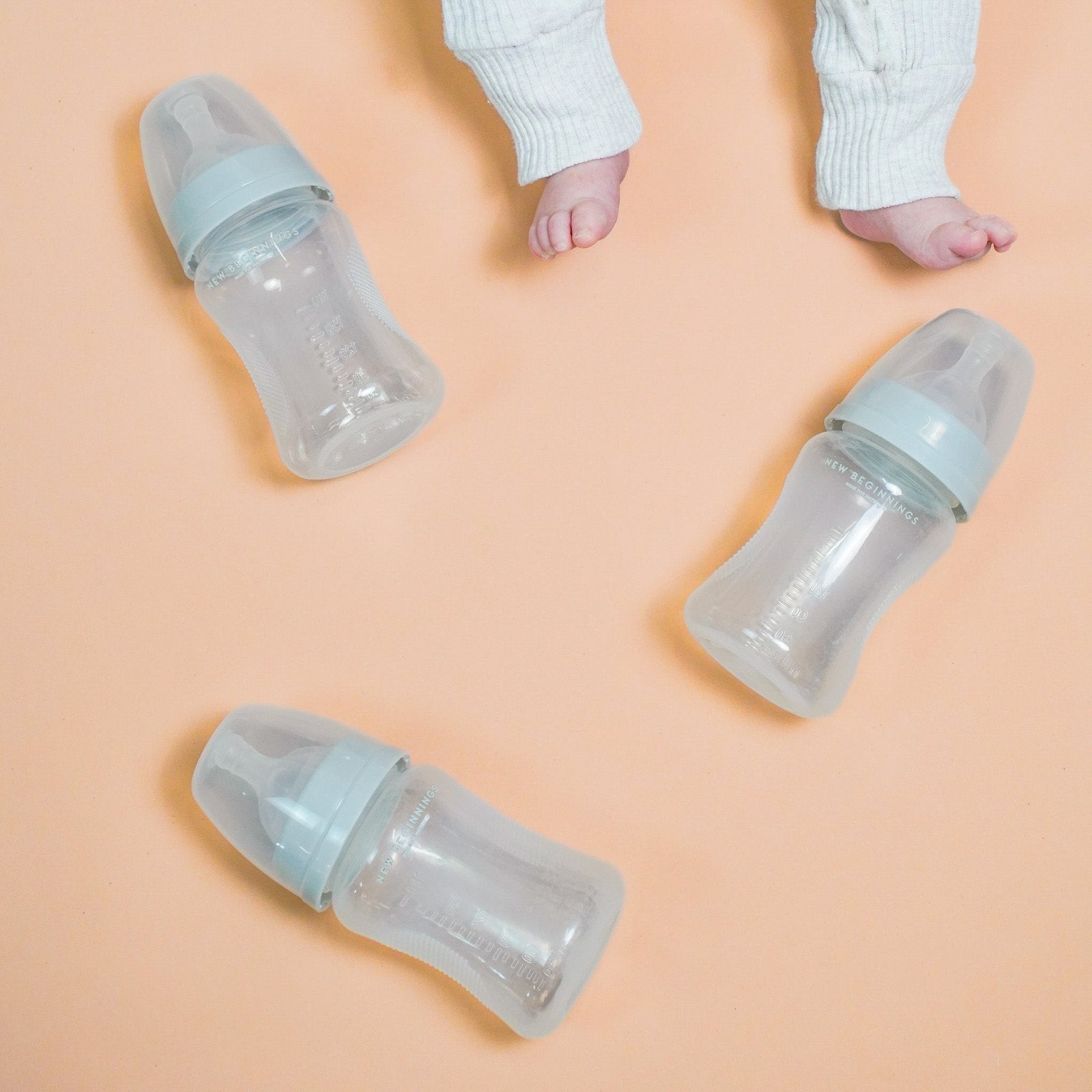
New Beginnings glass baby bottles use a soft, breast-shaped teat that mimics the natural feel and movement of breastfeeding. That matters. It means fewer confused looks, fewer mid-feed meltdowns, and less second-guessing from me. When babies can move between breast and bottle more easily, feeding feels calmer. And calm is currency in those early months.
Glass wasn’t about being fancy. It was about finding something that worked long-term.
Anti-Colic Design for Happier Tummies
If you’ve ever paced your hallway at 1am with a windy baby, you know that air bubbles are not your friend. These glass baby bottles include an anti-colic vent designed to reduce air intake during feeds. Less swallowed air can mean less gas and fewer dramatic post-feed moments.
And here’s the thing, when a baby bottle is thoughtfully designed for comfort, you start trusting the rest of its design too. It’s not just “glass instead of plastic.” It’s a whole feeding system built properly.

Glass & Silicone Coated Outer Bottles
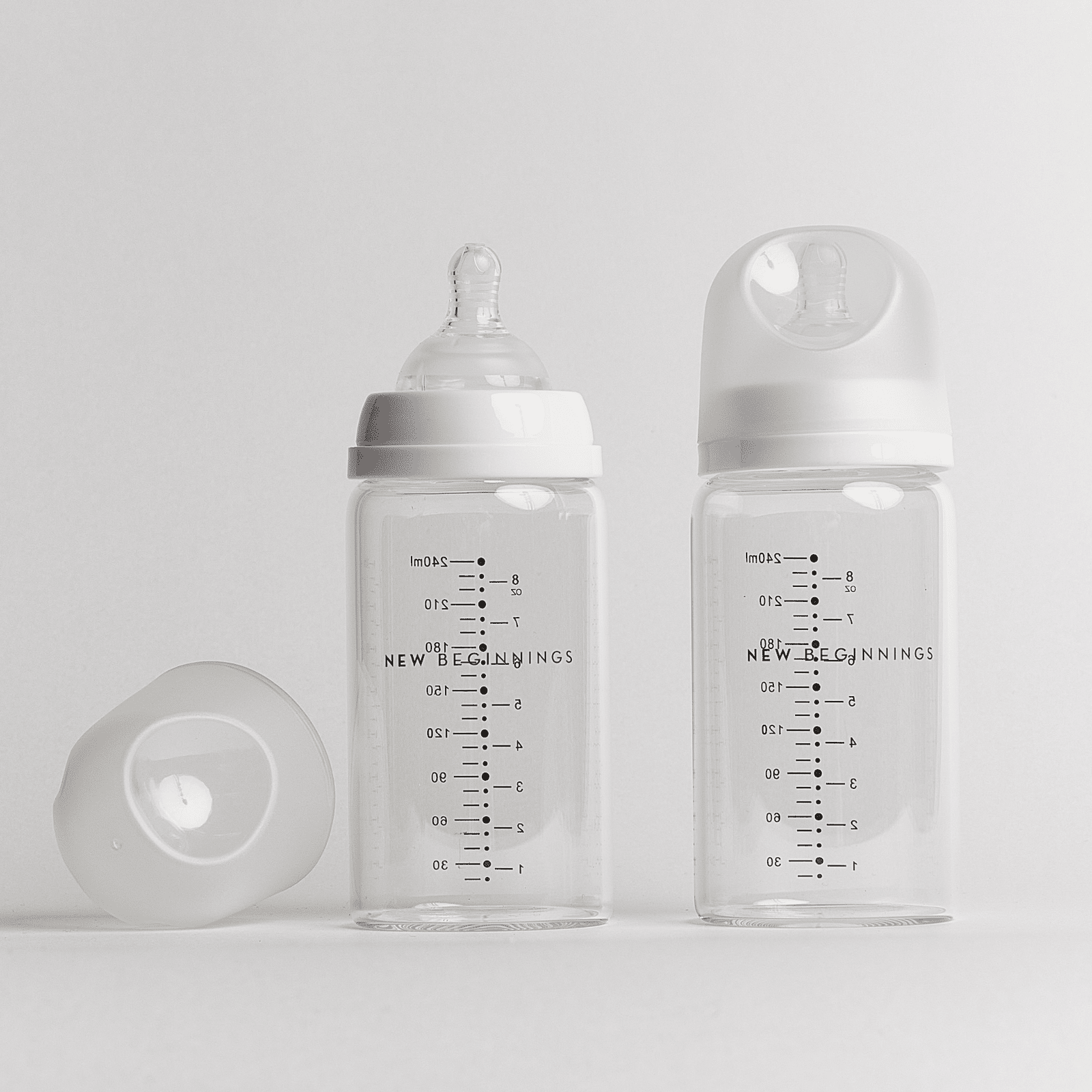
Now let’s talk about the elephant in the nursery. Yes, glass can break. But modern baby bottles aren’t made from the same glass as your wine glasses. High-quality glass baby bottles are made from tempered glass, which is heat-treated to increase strength and durability. According to materials research referenced by organisations like the Glass Packaging Institute, tempered glass is significantly stronger than regular glass and designed to withstand impact better.
Translation? It’s tougher than you think.
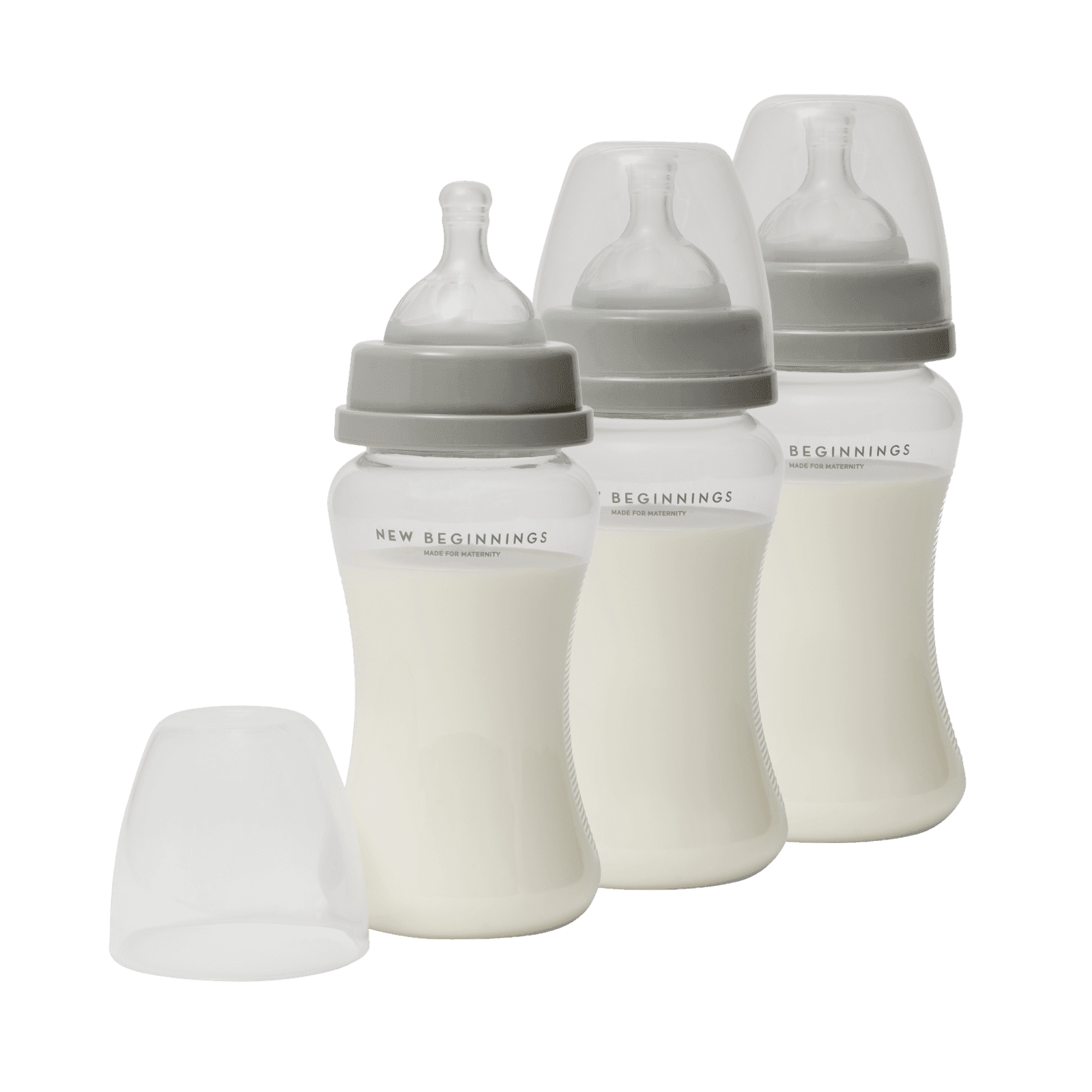
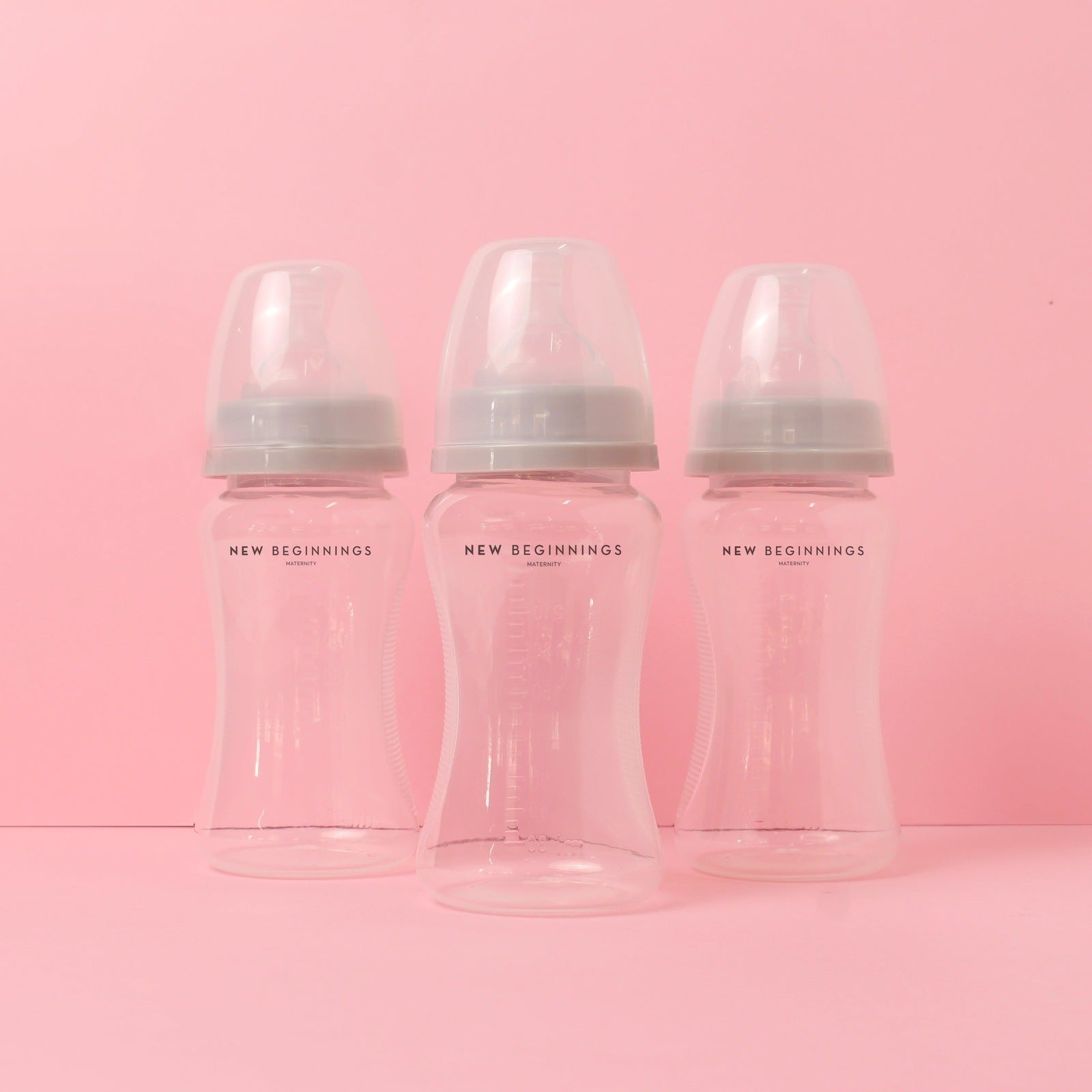
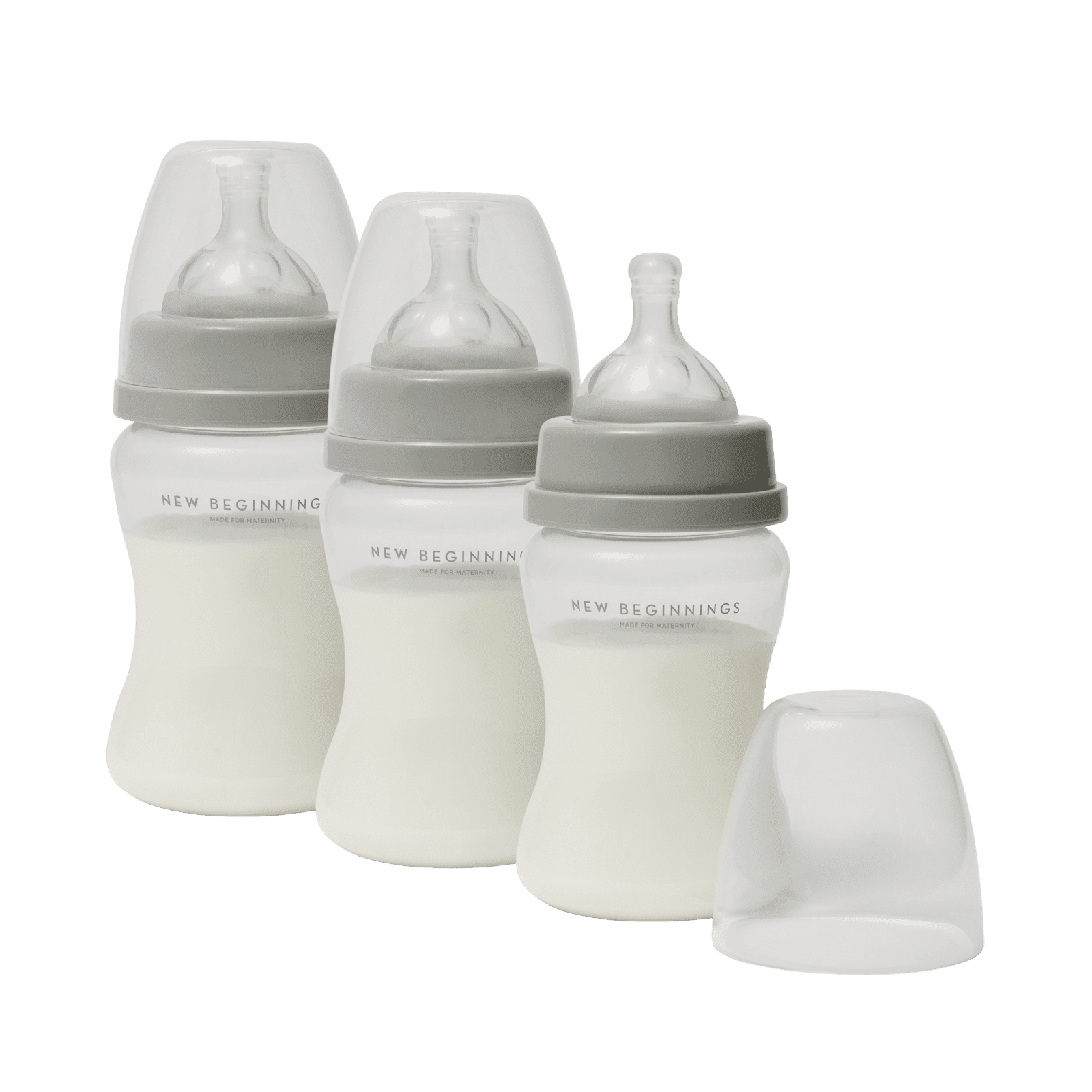
New Beginnings glass bottles are also wrapped in a soft silicone-coated outer. And as someone who has fumbled more bottles than I care to admit, that grip matters. The silicone layer makes them less slippery and adds a bit of cushioning for those inevitable knocks on the bench. In the rare case of breakage, the coating can help contain fragments rather than letting them scatter everywhere.
Are they indestructible? No.
Are they fragile? Also no.
In three kids’ worth of feeding chaos, I’ve found them surprisingly sturdy. Much sturdier than my expectations.
Designed for Growing Babies
One of the biggest surprises with glass baby bottles is how well they hold up over time. Plastic bottles can scratch, cloud, and start looking tired after months of sterilising. Glass doesn’t do that. It stays clear. It doesn’t absorb smells. It doesn’t stain. It doesn’t quietly degrade in the background.
Glass is non-porous, which means it’s easy to clean and sterilise thoroughly, something public health guidance consistently emphasises when it comes to infant feeding equipment. For me, that long-term hygiene and durability were worth the mental hurdle of “but it’s glass.”
New Beginnings glass bottles are available in multiple sizes and compatible with different teat flow rates, so they grow with your baby. You’re not buying something for a three-week phase. You’re investing in a feeding solution that sticks around.
So, Do Glass Baby Bottles Break Easily?
Here’s my parent-of-three answer: they break less easily than your imagination thinks they will.
If you drop one directly onto hard tile from height, yes, it could break. The same way a mug would. The same way your phone might. But in normal daily use, warming milk, washing, sterilising, packing them into a nappy bag, they’re durable and dependable.
The silicone-coated outer gives you grip. The tempered glass gives you strength. And real-life use proves they’re made for actual parents, not hypothetical ones.

FAQs
Do glass baby bottles break easily?
High-quality tempered glass baby bottles are designed for durability. While they can break if dropped onto hard surfaces from height, breakage is uncommon during normal feeding use when handled appropriately.
Are glass baby bottles safer than plastic bottles?
Both glass and plastic bottles can be safe when manufactured to Australian standards. Many parents prefer glass because it is non-porous, scratch-resistant, and easy to sterilise thoroughly.
Does the silicone coating stop breakage?
The silicone-coated outer improves grip and adds impact protection. It reduces everyday slips and can help contain fragments if damage occurs, but no bottle is completely unbreakable.
Are glass baby bottles too heavy?
They are slightly heavier than plastic bottles, but most babies adjust quickly. Many parents find the added weight provides stability during feeds.