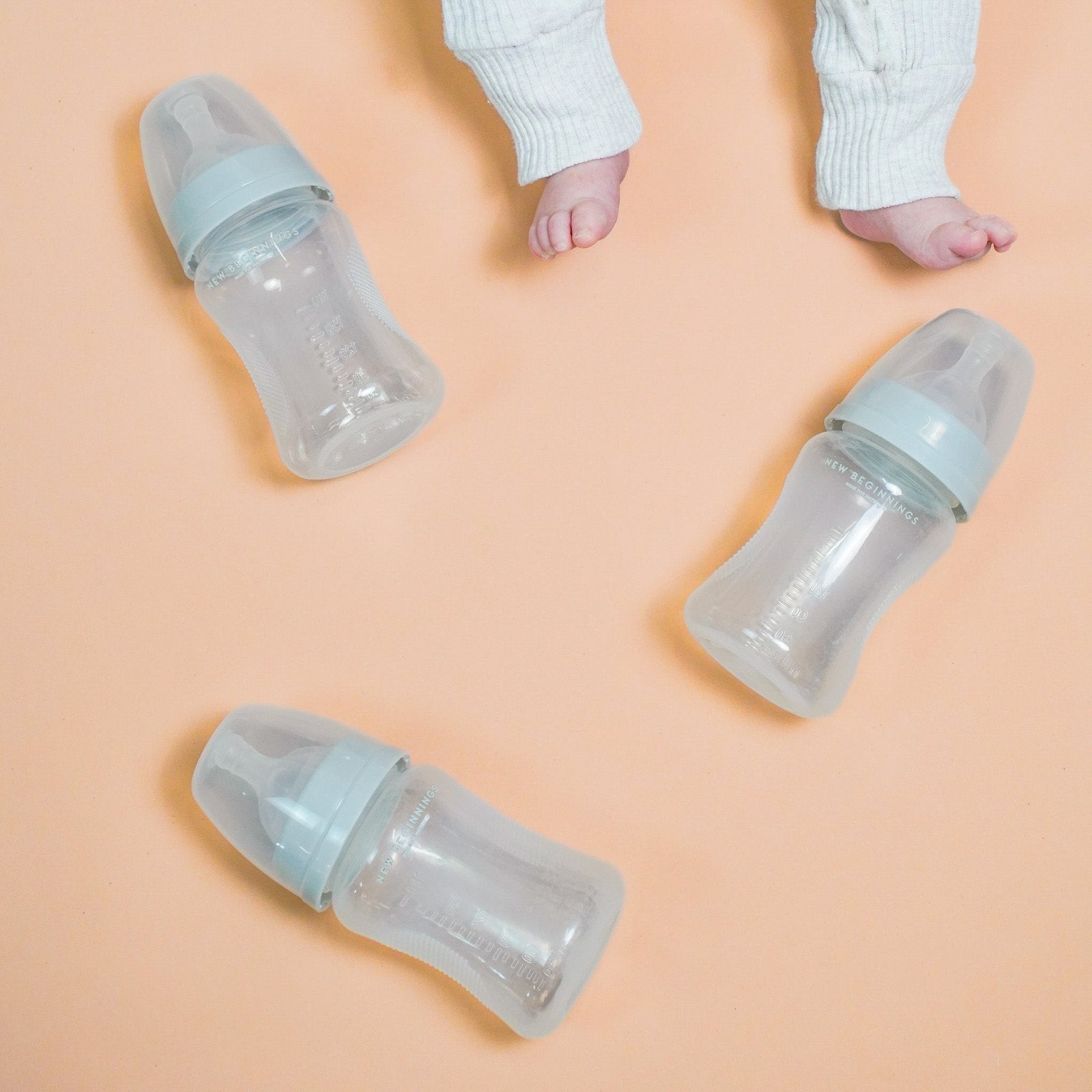
You wash them straight after every feed. You rinse them properly. You even sterilise religiously. And yet somehow, your baby bottles still end up looking foggy, dull, and a little questionable. Sound familiar?
Cloudy baby bottles are one of those things that nobody really warns you about, and when it happens, it is easy to assume you have done something wrong. Most of the time you have not. But understanding what actually causes cloudiness matters, because in some cases it is a sign your bottles need replacing, and in others it is completely fixable.
Here is what is actually going on.
What Causes Baby Bottles to Go Cloudy?

1. Detergent residue and soap build-up
This is one of the most common culprits, and it catches a lot of parents off guard. Harsh dishwashing liquids that contain surfactants like SLES (sodium laureth sulfate) can leave a chemical residue inside the bottle after washing. When that residue is not fully rinsed away, it reacts with the minerals in your water and the proteins in breast milk or formula to create a cloudy film on the bottle's interior.
It happens faster than you would expect, especially if you are doing a quick rinse rather than a thorough one, or if you are stacking bottles in the dishwasher where water pressure does not always reach every surface evenly.
The fix is to rinse bottles thoroughly in warm water immediately after washing, and to choose a gentle, plant-based cleaning liquid where possible. Avoid leaving soapy water sitting in bottles for extended periods.
2. Heat damage and sterilisation stress
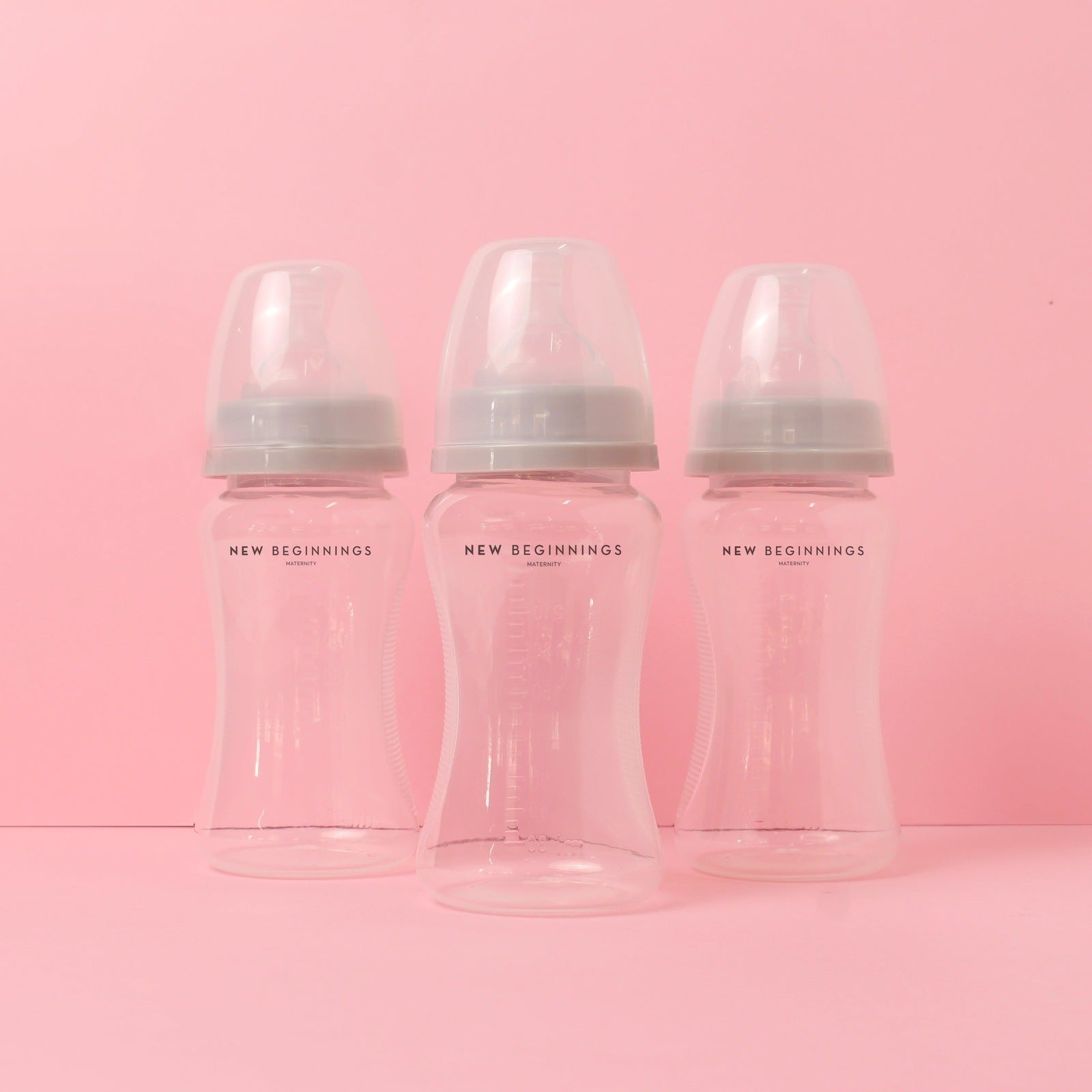
Plastic is not as resilient as it looks. When plastic baby bottles are repeatedly exposed to high heat, including boiling water, steam sterilisation on high settings, or dishwasher cycles with a heated dry function, the plastic molecules are disrupted at a structural level. This is what causes that characteristic cloudy, almost frosted appearance.
Heat also makes milk proteins stickier. When proteins unfold under heat, they cling more readily to the bottle's interior walls, accelerating build-up and cloudiness even with consistent washing. The more heat cycles a plastic bottle goes through, the faster this process happens.
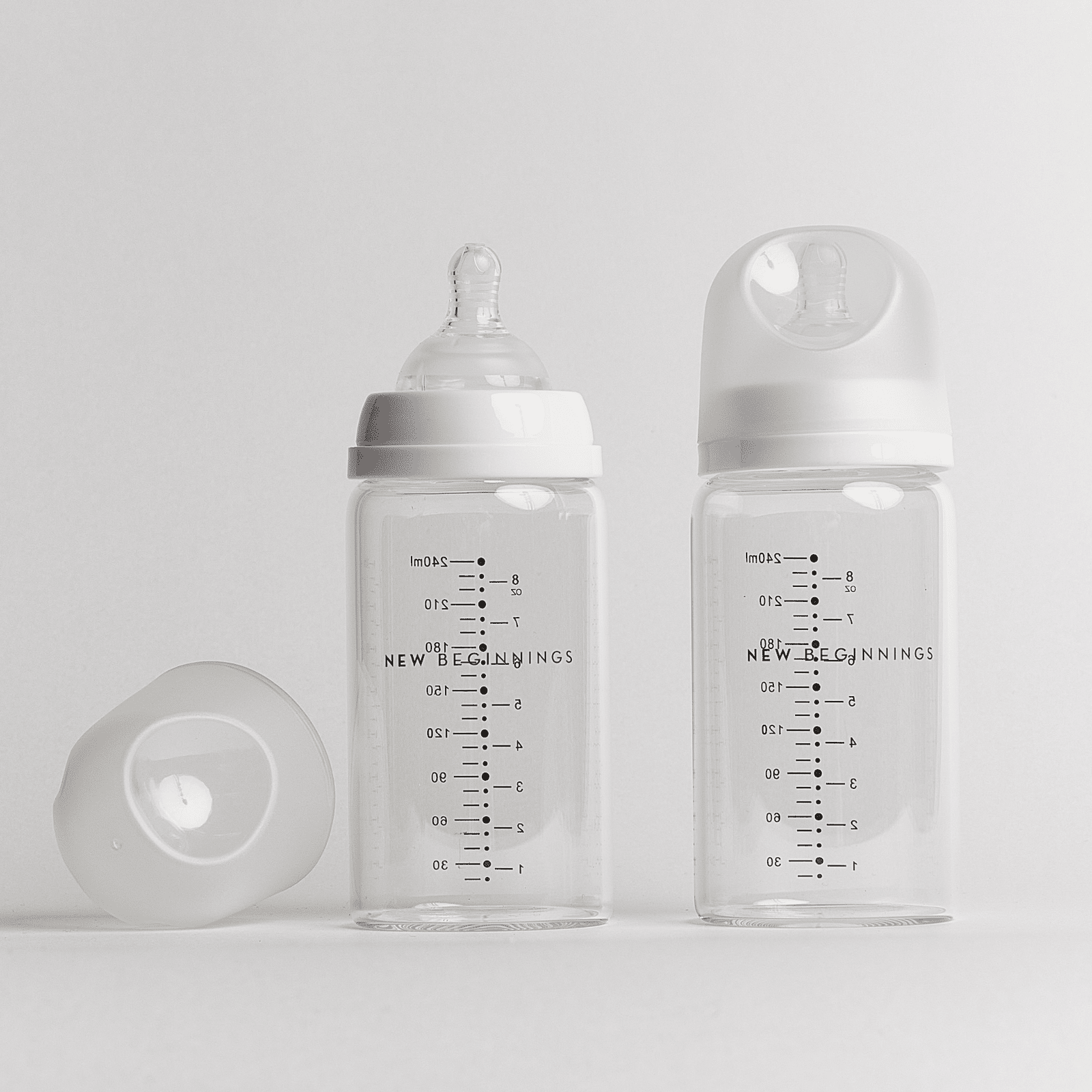
Glass handles heat differently. Borosilicate glass, which is what New Beginnings classic glass bottles and glass bottles with silicone outer are made from, is engineered for repeated exposure to extreme temperatures without degrading. It is the same material used in laboratory equipment. It does not cloud, warp, or develop that hazy finish no matter how many times you boil or steam sterilise it.
3. Brush abrasion and micro-scratches
Here is one that surprises a lot of people. A regular bottle brush with stiff nylon bristles can cause micro-scratches on the interior of a plastic bottle with repeated use. Under a microscope, plastic surfaces that look smooth actually have tiny imperfections, and those imperfections get deeper with every abrasive scrub.
Once the surface is scratched, milk fat and proteins have somewhere to settle and accumulate. Each feed adds another layer. Over time, that build-up is what you see as cloudiness. Scratched bottles are also harder to clean properly, which makes the problem self-reinforcing.
Research has confirmed that scratched and cloudy plastic bottles release significantly more microplastic particles into milk than intact ones, because the damaged surface sheds more readily when heated or agitated. [1]
This is why the type of brush you use matters. The New Beginnings Electric Baby Cleaning Brush uses soft silicone bristles rather than nylon, which scrub away residue effectively without scratching the bottle surface. The 360° rotation gets into every corner and hard-to-reach area, so you get a genuinely thorough clean without the damage that stiff brushes cause. It also comes with two interchangeable heads for both bottles and teats, plus a straw brush for sippy cups.
When Should You Replace a Cloudy Baby Bottle?
Cloudiness caused by soap residue can sometimes be cleared with a white vinegar rinse (fill the bottle with equal parts water and white vinegar, let it soak for a few hours, then wash and rinse thoroughly). Cloudiness from mild heat exposure may also reduce with careful re-washing.
But cloudiness from micro-scratches is permanent. Once the surface of a plastic bottle is compromised, the scratches do not go away. The bottle will continue to trap residue and shed particles into milk regardless of how well you clean it going forward.
A cloudy or scratched plastic bottle should be replaced. A study published in Nature Food found that polypropylene infant feeding bottles release microplastics at significantly higher levels after sterilisation and repeated use, with estimates of global infant exposure ranging from 14,600 to 4,550,000 particles per day depending on the region. [2]

Do Glass Baby Bottles Go Cloudy?
Glass does not scratch. Full stop. A borosilicate glass bottle stays smooth and clear on the interior regardless of how many times you scrub it, sterilise it, or run it through the dishwasher. Milk proteins and fats do not cling to glass the way they cling to plastic, which means there is far less residue build-up to deal with in the first place.
Glass also does not absorb odours. If you have ever noticed that a plastic bottle smells faintly of sour milk even after washing, that is because the plastic has absorbed the odour into the material itself. Glass stays completely neutral, which is particularly reassuring when you are storing expressed breast milk.
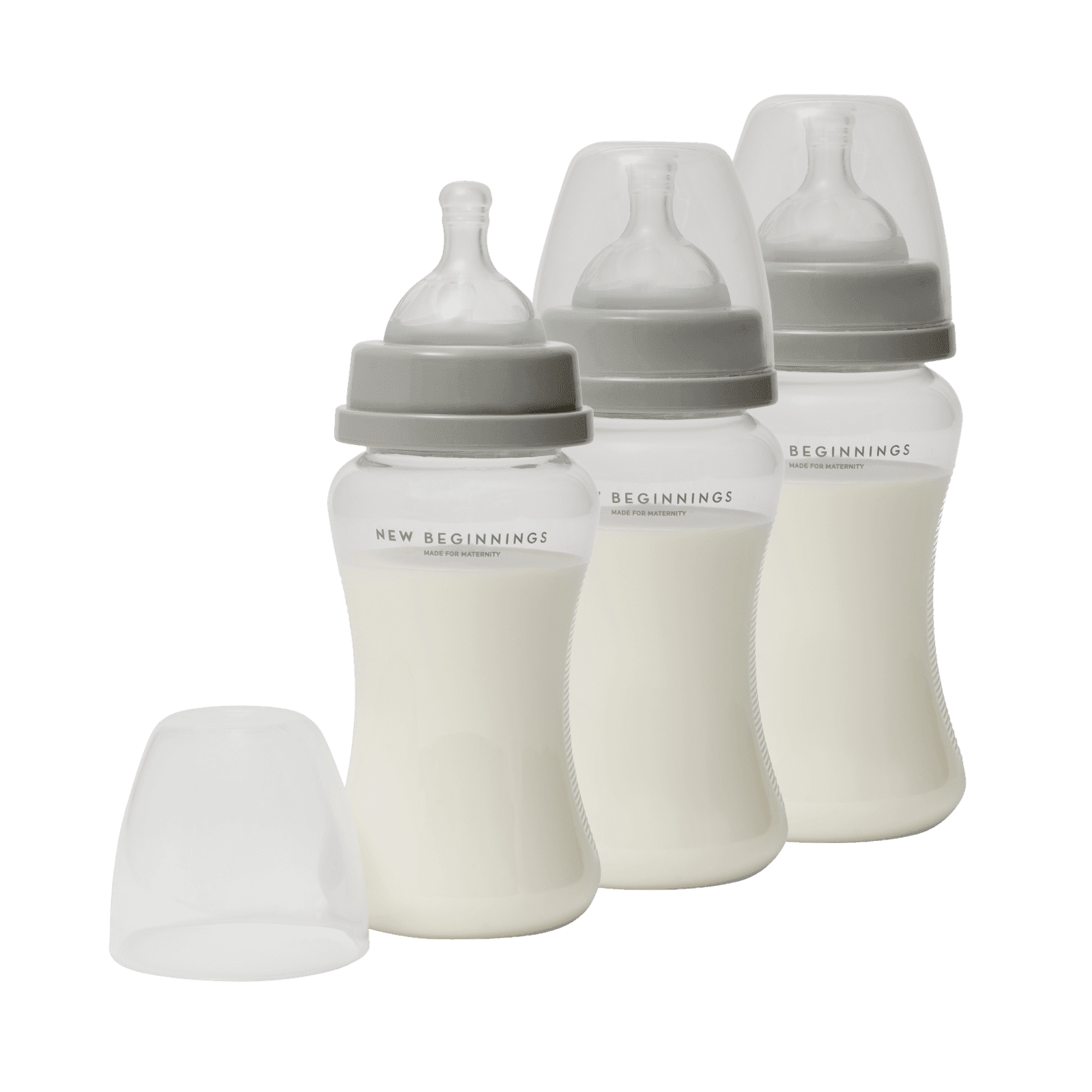
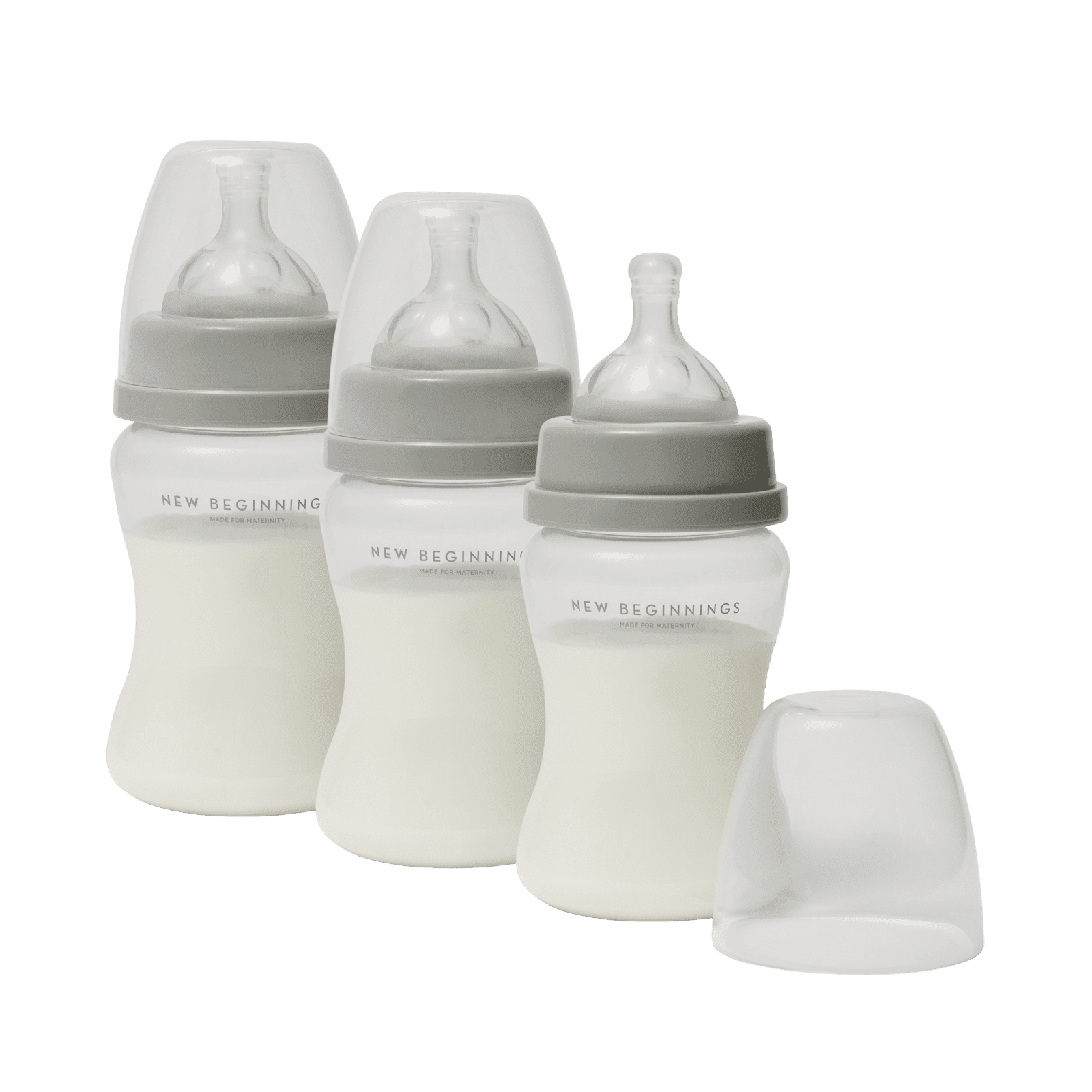
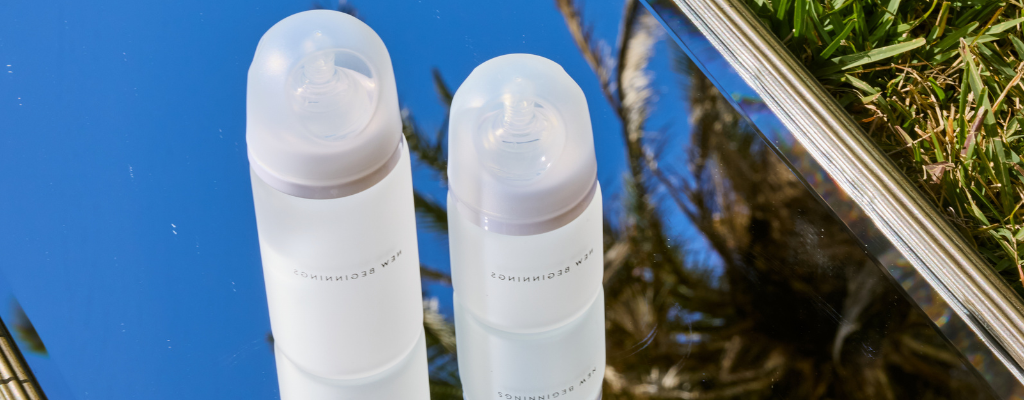
The New Beginnings glass bottle range includes options in 120ml and 240ml sizes, both in classic clear glass and in glass with a protective silicone outer coating that adds grip and drop resistance without compromising any of the benefits of glass on the inside.
If you are tired of replacing cloudy plastic bottles every few months, switching to glass is genuinely the simplest long-term solution.
How Do You Clean Baby Bottles Without Causing Damage?
Whether you are using glass or plastic, a good cleaning routine goes a long way. Here is what actually makes a difference:
Rinse immediately after every feed. Do not let milk sit in the bottle. Even a quick rinse with warm water straight after feeding prevents proteins and fats from drying onto the surface and becoming harder to remove later.
Wash with a gentle detergent. Choose a mild, plant-based liquid without harsh surfactants. This reduces chemical build-up and is gentler on bottle materials over time.
Use a soft-bristle or silicone brush. Stiff nylon brushes are the main cause of scratching. A silicone electric bottle brush like the New Beginnings Electric Baby Cleaning Brush gives you thorough cleaning without surface damage.
Rinse thoroughly. This sounds obvious, but it is where a lot of cloudiness actually starts. Rinse with warm water until there are no soap suds visible, particularly around the neck and base of the bottle.
Air dry completely before sterilising. Moisture left inside a bottle before sterilisation can contribute to residue build-up. Allow bottles to air dry fully, or use a steriliser with a built-in drying function.
Check bottles regularly. Hold the bottle up to the light and look inside. If the surface looks scratched or permanently hazy rather than just requiring a wash, it is time to replace it.
The Australian Breastfeeding Association recommends ensuring all feeding equipment is carefully washed and prepared before each use, and that storage containers are food grade and BPA-free. [3] That guidance applies equally to how you care for your bottles day to day.
Related Reading
- Glass vs Plastic Baby Bottles: Why Silicone-Coated Glass Wins for Safety and Simplicity
- UV Sterilisation vs Steam: A Parent's Guide to Cleaner, Safer Feeding
- How to Use a UV Steriliser for Baby Bottles: A Simple Guide
- Glass Baby Bottles for Mixed Feeding: Why Material Choice Still Matters
- The New Parents Guide to Sterilisation: Myths, Methods, and When to Relax
FAQs About Cloudy Baby Bottles
Are cloudy baby bottles still safe to use?
It depends on the cause. If cloudiness is from soap residue, a thorough rinse or white vinegar soak may clear it up and the bottle is likely still fine to use. If the cloudiness is from scratches or heat damage to the plastic surface, the bottle should be replaced. Damaged plastic releases more microplastics into milk and is harder to clean hygienically.
How do I get rid of cloudiness in plastic baby bottles?
Try soaking the bottle in a solution of equal parts white vinegar and water for a few hours, then wash and rinse thoroughly. This can help lift soap scum and mild mineral deposits. For cloudiness caused by scratches or structural heat damage, there is no effective fix and the bottle should be replaced.
Can I use any bottle brush without scratching the bottle?
Not all brushes are equal. Stiff nylon-bristle brushes are a common cause of micro-scratches inside plastic bottles. A silicone-bristle brush, like the New Beginnings Electric Cleaning Brush, is designed to clean thoroughly without scratching, making it a better choice for extending bottle life.
Do glass baby bottles go cloudy?
Glass does not develop the same type of structural cloudiness that plastic does. Glass will not scratch, warp, or cloud from heat or repeated sterilisation. You may notice temporary haziness from soap or mineral residue, but this rinses away cleanly unlike plastic cloudiness, which is often permanent.
How often should I replace baby bottles?
Plastic bottles should be inspected regularly and replaced at the first sign of scratches, cloudiness, or discolouration. As a general guide, many parents replace plastic bottles every few months with regular use. Glass bottles do not degrade the same way and only need replacing if they are chipped or cracked. Browse the New Beginnings bottle range to find a long-lasting option that suits your routine.