If you're pumping, breastfeeding, and bottle feeding (sometimes all in the same day) you're not alone. Mixed feeding, also called combination feeding, is one of the most common ways Australian mums nourish their babies. And while a lot of the conversation focuses on how to combine breast and bottle feeding without losing your supply (or your mind), there's one question that quietly matters a lot more than most people expect: what is your bottle actually made of?
Spoiler: it matters. Especially when pumped breast milk is involved.
What is mixed feeding, and why is it so common?
Mixed feeding simply means combining breastfeeding with bottle feeding, whether that bottle contains expressed breast milk, formula, or both. Some mums go this route from day one because of latch difficulties or supply concerns. Others introduce bottles gradually as they return to work, manage their mental load, or share night feeds with a partner.
A 2022 nationwide Australian survey found that while breastfeeding initiation rates are high, exclusive breastfeeding to six months is far less common, with the majority of families introducing some form of supplemental feeding well before that mark [1]. Mixed feeding is normal, incredibly common, and for many mums, it is what makes continuing any form of breastfeeding possible at all.
But once bottles enter the picture, the question of material genuinely matters, particularly for mums who are pumping and storing their milk before it hits the bottle.
Does material matter more when you're pumping?
When you breastfeed directly, milk goes straight from you to baby. When you pump, your milk travels through a lot more surfaces before it reaches your little one: the pump, storage bags or containers, and then the bottle itself.
Each of those surfaces is an opportunity for contamination, chemical leaching, or odour absorption, and that's where bottle material becomes relevant.
Plastic bottles are convenient and lightweight, but they can scratch and cloud over time with repeated sterilisation. A widely cited study published in Nature Food found that polypropylene infant feeding bottles release significant quantities of microplastic particles during formula preparation, with sterilisation and exposure to high-temperature water increasing that release considerably [2]. This does not mean plastic bottles are dangerous in every situation, but for mums who are already going to the effort of pumping and carefully storing breast milk, it is worth thinking about what your milk is sitting in before bub drinks it.
Glass, on the other hand, does not absorb odours, does not cloud or scratch, and does not leach chemicals regardless of how many times you boil or steam sterilise it. It stays exactly as it was on day one: clear, smooth, and completely neutral. For mums who have put real effort into expressing their milk, that kind of purity feels worth it.

How Does Glass Fit Into a Pumping-to-Bottle Routine?
Here is a routine a lot of mixed feeding mums end up in: pump, transfer milk to a storage bag or container, refrigerate or freeze, then thaw and warm before offering in a bottle. That is a multi-step chain, and glass supports it at every stage.
Step 1: Pumping
Whether you are using a double electric pump or a wearable breast pump, the goal is to express efficiently and store hygienically. A hands-free wearable pump is particularly good for busy mums who need to keep moving during a session.
Step 2: Storage
Once expressed, breast milk should be stored in clean, sealed containers. According to the Australian Breastfeeding Association, freshly expressed breast milk can be kept at room temperature for up to six to eight hours, in the fridge for up to 72 hours, and in the freezer for up to three months [3]. Using containers that do not absorb odours or leach anything into the milk during storage is important here.
Step 3: Warming and feeding
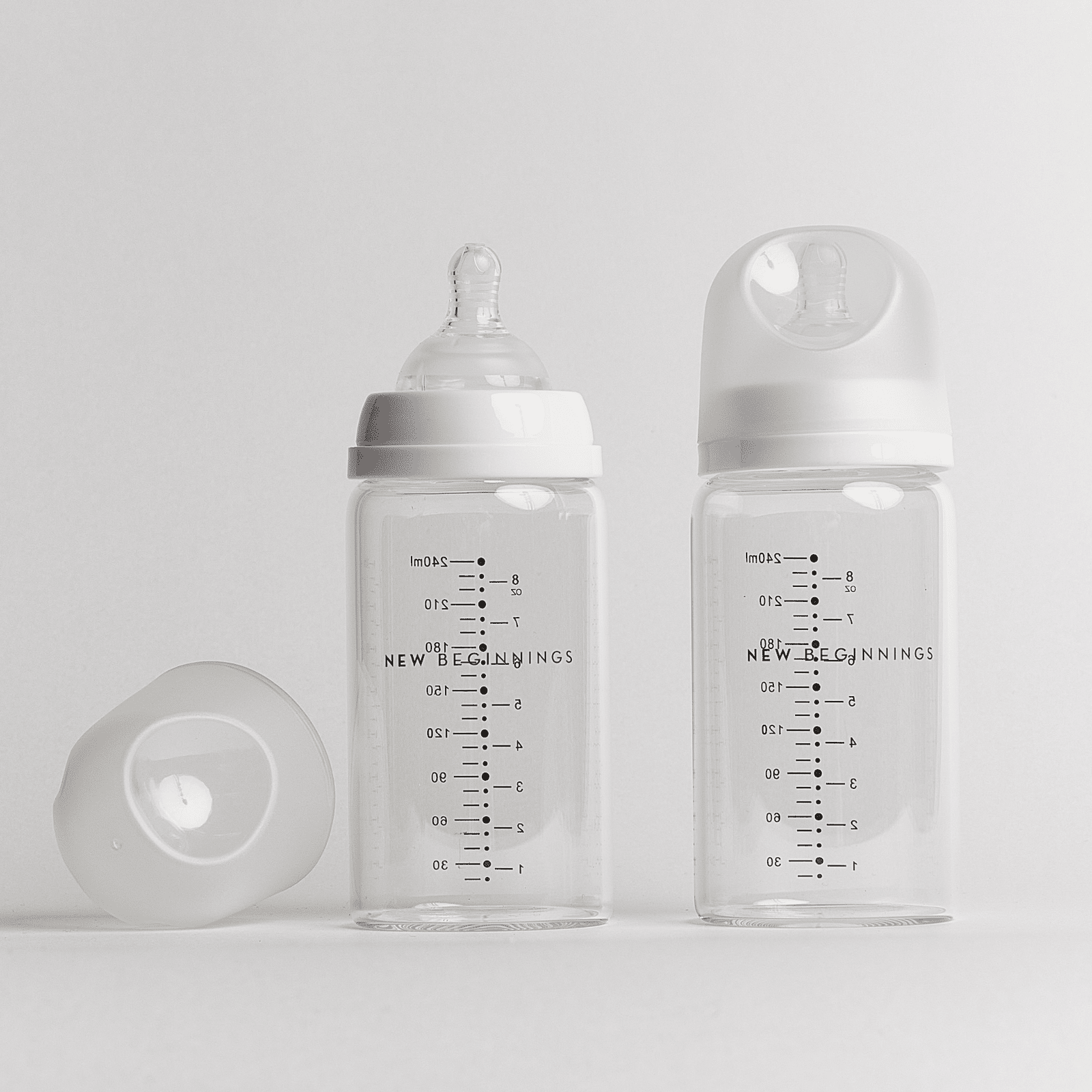
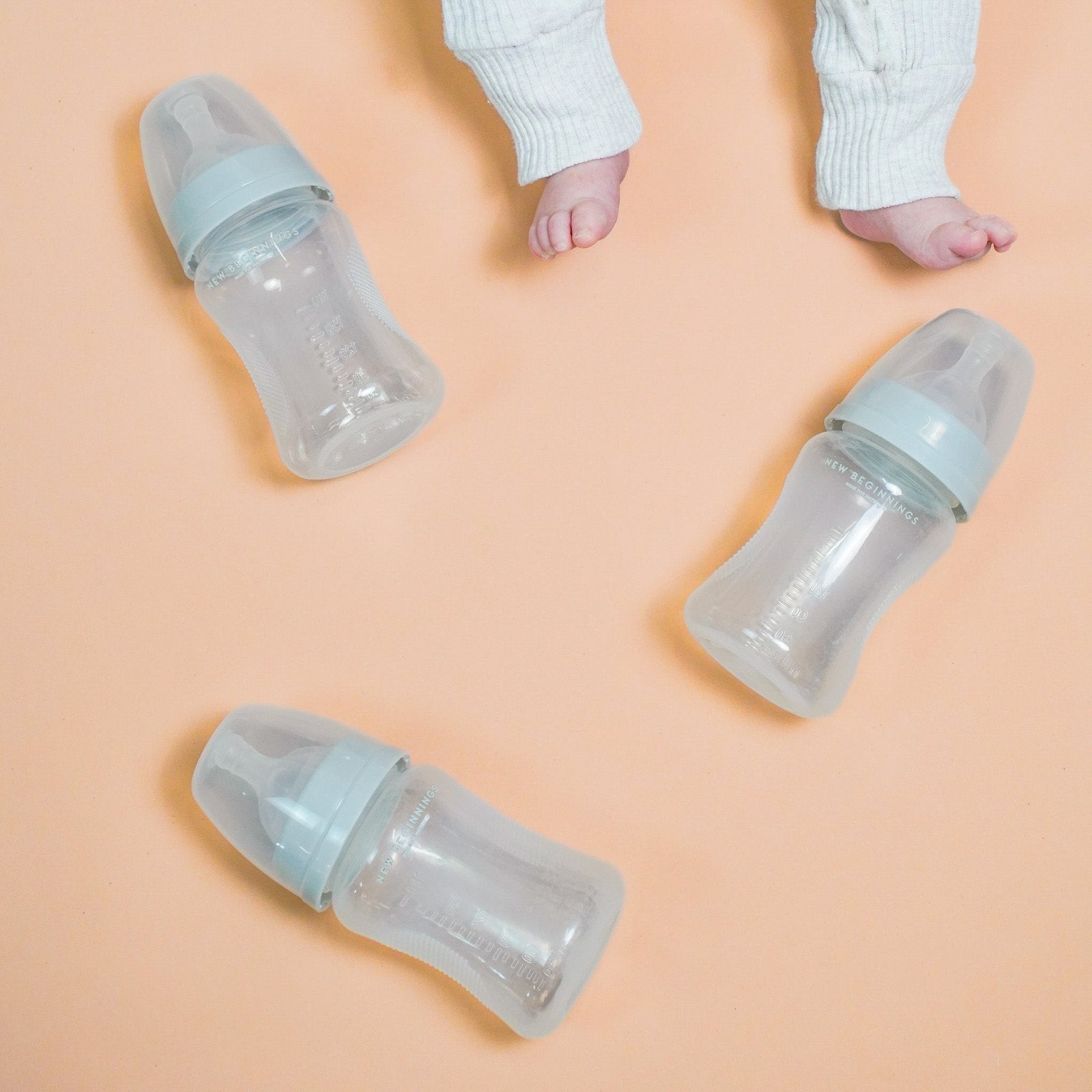
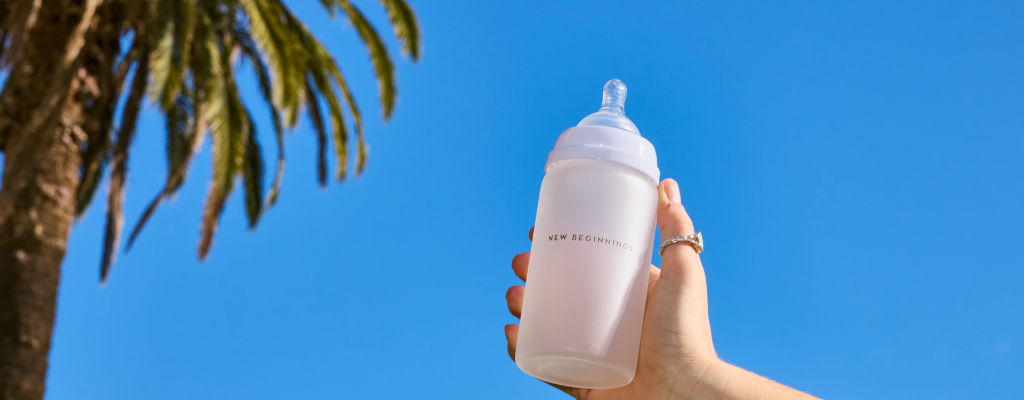
This is where glass baby bottles genuinely shine. Borosilicate glass, the material used in New Beginnings classic glass bottles and glass bottles with silicone outer, is specifically designed to handle sudden temperature changes. It will not easily crack moving from the fridge to warm water, and it will not degrade with repeated sterilisation. You can boil it, steam sterilise it, UV sterilise it, and it will come out exactly as you left it: clear, clean, and ready.
Plastic bottles, by comparison, can warp or cloud at higher temperatures, and repeated sterilisation accelerates this process. If you're sterilising multiple times a day across multiple feeds, that wear adds up quickly.
How Do You Make the Breast-to-Bottle Transition Smoother?
One of the most common concerns mums have when introducing a bottle is nipple confusion, or more accurately, nipple preference. If a bottle offers easier flow with less effort, some babies will start to prefer it over the breast. This can happen regardless of bottle material, but teat design plays a huge role.
A slow-flow teat that requires active sucking, similar to how a baby works at the breast, helps keep the transition smoother. New Beginnings glass bottles come with a food-grade silicone teat shaped to encourage a natural latch, along with a built-in anti-colic valve that reduces air intake and minimises wind and fussiness.
Timing also helps. Most lactation consultants recommend waiting until breastfeeding is well established before introducing a bottle. From there, offering a bottle consistently (but not replacing every breastfeed) helps your baby accept both without creating a strong preference for one over the other.
Is a Glass Bottle with Silicone Outer Better for Mixed Feeding?
If you love the idea of glass but you are nervous about breakage, especially during those bleary-eyed 2am feeds, the New Beginnings Glass Bottle with Silicone Outer is worth a look.
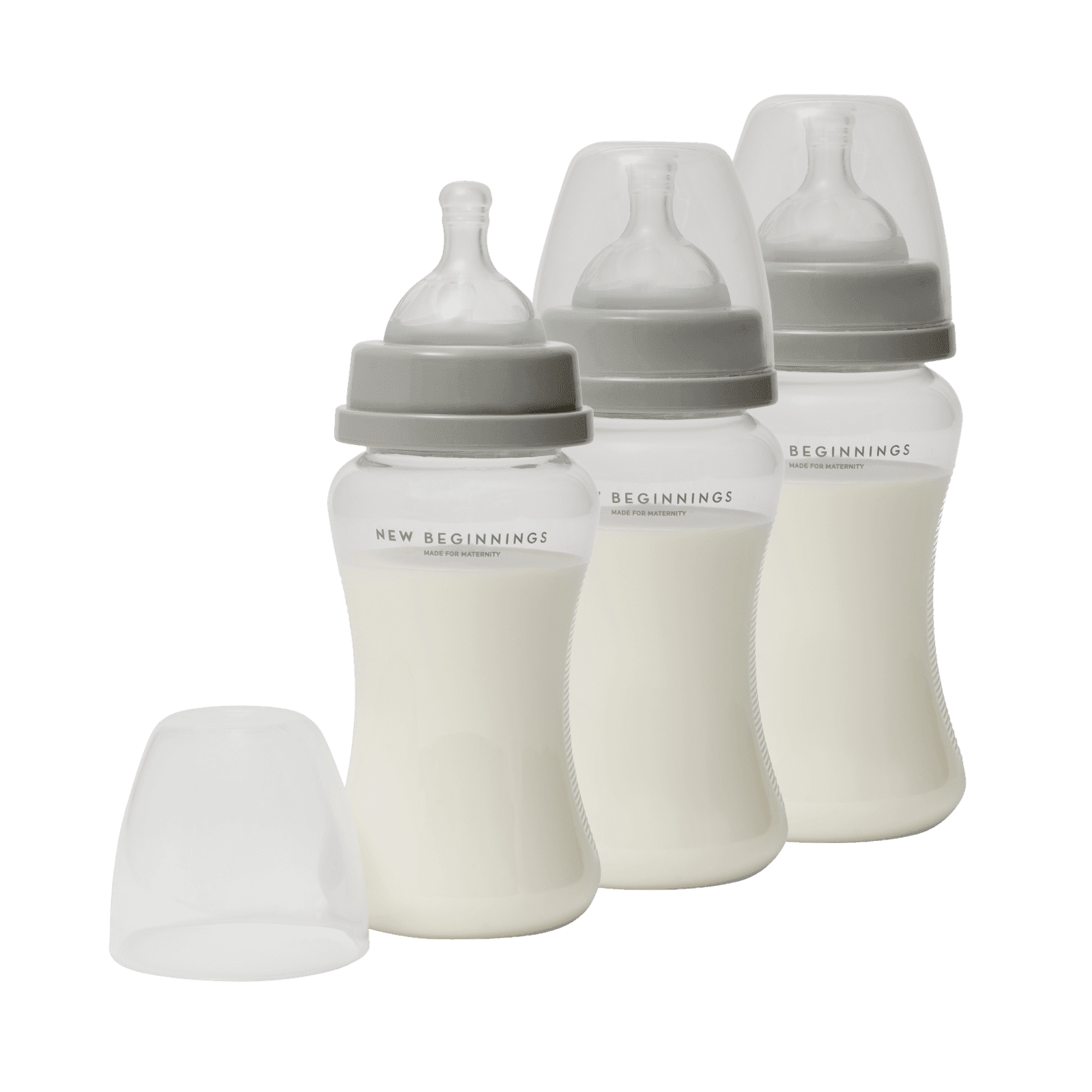
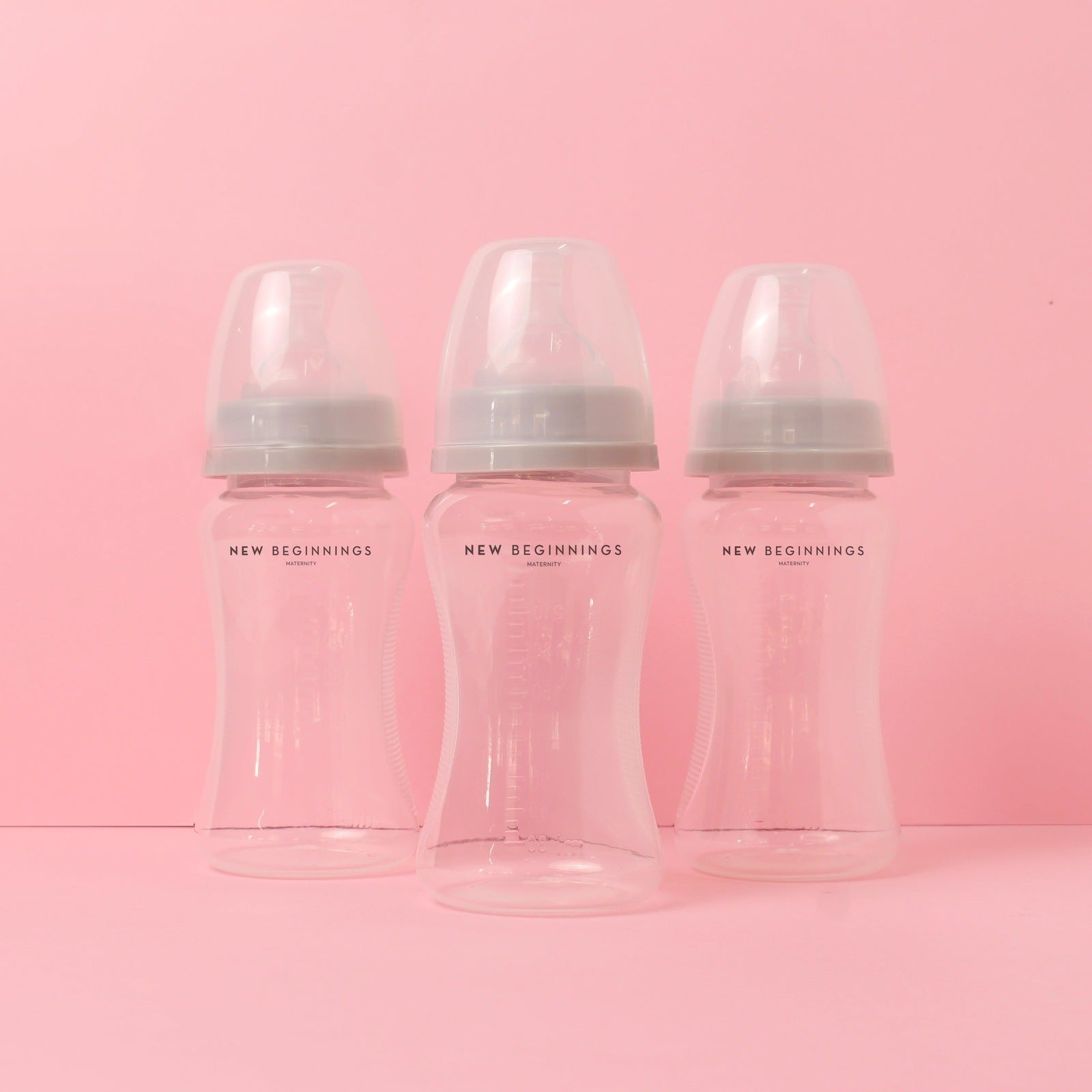
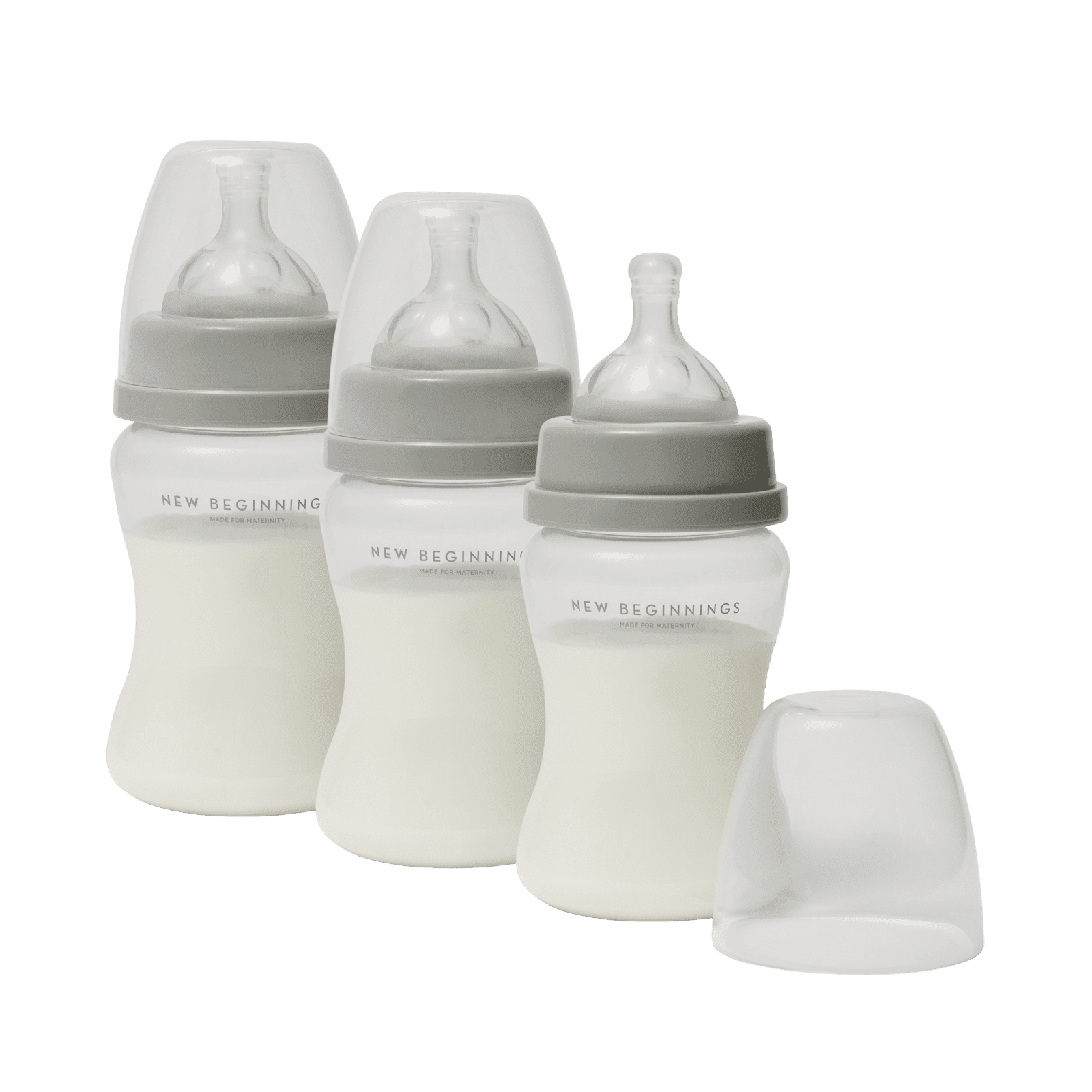
It is a borosilicate glass bottle at its core, wrapped in a soft silicone exterior that acts as a protective layer. The silicone gives you a better grip (handy when everything is happening one-handed), cushions knocks and drops, and makes the bottle easier for a partner or older baby to hold. You still get all the benefits of glass, the purity, the clarity, the chemical-free sterilisation, with a little extra everyday resilience built in.
Both the classic glass and the silicone-outer version are available in 120ml and 240ml sizes, so you can start small for newborn feeds and scale up as your bub's appetite grows.
- Classic Glass Bottle 240ml Twin
- Classic Glass Bottle 120ml Twin Pack
- Glass Bottle with Silicone Outer 240ml Twin
- Glass Bottle with Silicone Outer 120ml Twin
Browse the full New Beginnings bottle range to find the right fit for your feeding routine.

What Are the Best Tips for Mixed Feeding with Glass Bottles?
A few things that make the glass bottle routine easier for mixed feeding mums:
Warm gradually. Place the bottle in a bowl of warm water or use a bottle warmer rather than microwaving. A bottle warmer takes the guesswork out of getting the temperature right, which is especially reassuring in those early weeks when everything feels like a lot. Microwave heating is not recommended for breast milk regardless of bottle material, as it can create hot spots and destroy some of the milk's beneficial properties.
Sterilise before first use. Boil or steam sterilise your glass bottles before using them for the first time. After that, thorough washing with hot soapy water is generally sufficient for healthy, full-term babies, though sterilising regularly is still a good habit, especially in the newborn period.
Check teats regularly. Silicone teats do not last forever. Inspect them for any signs of thinning, stickiness, or discolouration and replace them when needed. The glass bottle itself will likely outlast multiple sets of teats.
Pace the bottle feed. Paced bottle feeding by holding the bottle more horizontally, allowing short breaks, and letting your baby control the feed, helps keep the experience closer to breastfeeding and reduces the risk of overfeeding or preference for the bottle.
Related Reading
- Glass vs Plastic Baby Bottles: Why Silicone-Coated Glass Wins for Safety & Simplicity
- Why Every Mum Needs a Wearable Pump (And How It Gave Me My Life Back)
- Tips for Breastfeeding and Returning to Work
- Breast Engorgement: Causes, Symptoms, and Relief
- The First Week of Breastfeeding: What to Expect
FAQs About Glass Baby Bottles for Mixed Feeding
Can I use glass baby bottles from birth?
Yes. Both the 120ml and 240ml New Beginnings glass bottles are suitable from birth. The 120ml size is ideal for the newborn stage when feed volumes are smaller and more frequent, while the 240ml size suits growing babies with bigger appetites.
Are glass baby bottles safe to sterilise in a UV steriliser?
Yes, glass is fully compatible with UV sterilisers, steam sterilisers, microwave sterilisers, and boiling water. Unlike plastic, glass will not warp or degrade from repeated sterilisation at high temperatures.
When should I introduce a bottle if I'm mixed feeding?
Most lactation consultants suggest waiting until breastfeeding is well established, typically around three to four weeks postpartum, before introducing a bottle. This gives your supply time to regulate and reduces the likelihood of your baby developing a strong preference for the bottle. Visit our bottle range to find a slow-flow teat designed to support this transition.
Can I pump directly into a glass bottle?
This depends on your pump. New Beginnings glass bottles have a wide-neck design, so compatibility will vary by pump brand. Many mums pump into their pump's collection containers and then transfer to glass bottles for warming and feeding. Check your pump's specifications to confirm compatibility.
How do I warm breast milk in a glass bottle?
Place the glass bottle in a bowl of warm (not boiling) water for a few minutes, or use a bottle warmer. Always test the temperature of the milk on your inner wrist before feeding. Never use a microwave to warm breast milk, as it destroys some nutrients and can create uneven hot spots.