(From one very tired, very well-fed mum to another)
Before I had a baby, I thought bottles were simple. Then I found myself in the baby aisle, nine months pregnant, comparing “anti-colic vent systems” and “breast-like teats” while wondering if I’d missed an entire parenting course.
If you’re feeling the same way, take it from someone who’s been there, it’s not about the fanciest bottle on the shelf. It’s about finding one that actually works for your baby, your routine, and your sanity.
Here’s what really matters when you’re choosing your baby’s first bottle.
Why Bottle Choice Matters
Your baby will feed up to a dozen times a day in those early weeks. A good bottle can make those feeds calm, comfortable, and leak-free. The wrong one? That’s when you get air bubbles, colic, and tears (sometimes yours).
The right baby bottle should:
• Feel natural for your baby to latch onto
• Regulate milk flow to prevent gulping and wind
• Be easy to hold, assemble, and clean
• Adapt as your baby grows
Once I stopped chasing trends and started focusing on those four things, bottle shopping finally made sense.

How to Choose a Baby Bottle (Without the Overwhelm)
When I finally figured it out, it came down to five simple steps.
1. Start with size
Newborns only need small bottles, around 120 mL to 160 ml. Bigger bottles (240 mL +) are perfect once your baby’s appetite grows, but early on they just mean wasted milk.
2. Pick a material that fits your lifestyle
Do you sterilise often? Feed half-asleep at night? Travel a lot? Each material suits a different rhythm and we’ll get to that shortly.
3. Focus on the teat
This is the business end of feeding. Choose one that’s soft, flexible, and shaped to mimic breastfeeding. A slow-flow teat is best for newborns; anti-colic valves are non-negotiable for reducing wind and discomfort.
4. Think about comfort - for you
If you’re holding a bottle ten times a day, grip matters. Wide-neck bottles are easy to clean and fill; narrow-neck bottles fit smaller hands. Silicone-coated glass gives a soft, non-slip hold (and feels surprisingly luxe).
5. Test before you invest
Babies are picky. Buy two or three bottles in your preferred material first. Once bub shows a clear favourite, stock up on that style and you’ll thank yourself later.

Top Bottle Material Options
Glass Bottles: Pure, Safe, and Long-Lasting
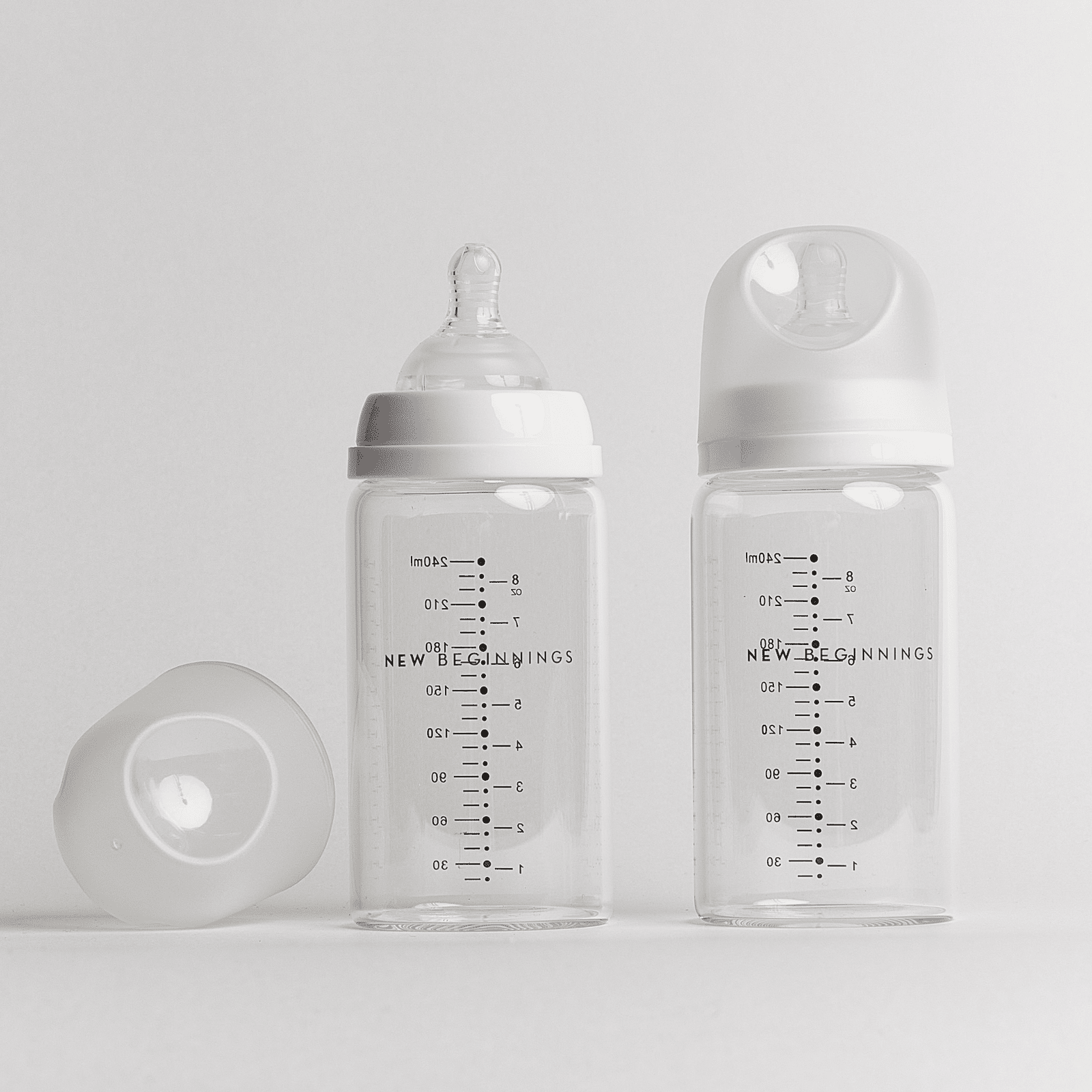
Glass bottles have made a serious comeback — and for good reason. They’re naturally free from BPA, BPS, and microplastics, meaning there’s no risk of chemicals leaching into milk. They also stay crystal clear after endless washes and don’t absorb odours (which is a small mercy when you find one hiding under the pram).
The New Beginnings Classic Glass Bottle is made from borosilicate glass, lightweight yet strong enough to handle temperature changes. You can go from fridge-cold to warm water without worrying about cracks.
Pros
• Completely chemical-free and odour-resistant
• Perfect for regular sterilising
• Durable and clear over time
• Feels solid and premium
Cons
• Slightly heavier than plastic
• Can break if dropped on tile or concrete
If you want something safe, simple, and built to last through multiple babies, glass is the clear winner.
Silicone-Coated Glass: The Best of Both Worlds
If the thought of pure glass makes you nervous, silicone-coated glass is your best friend.
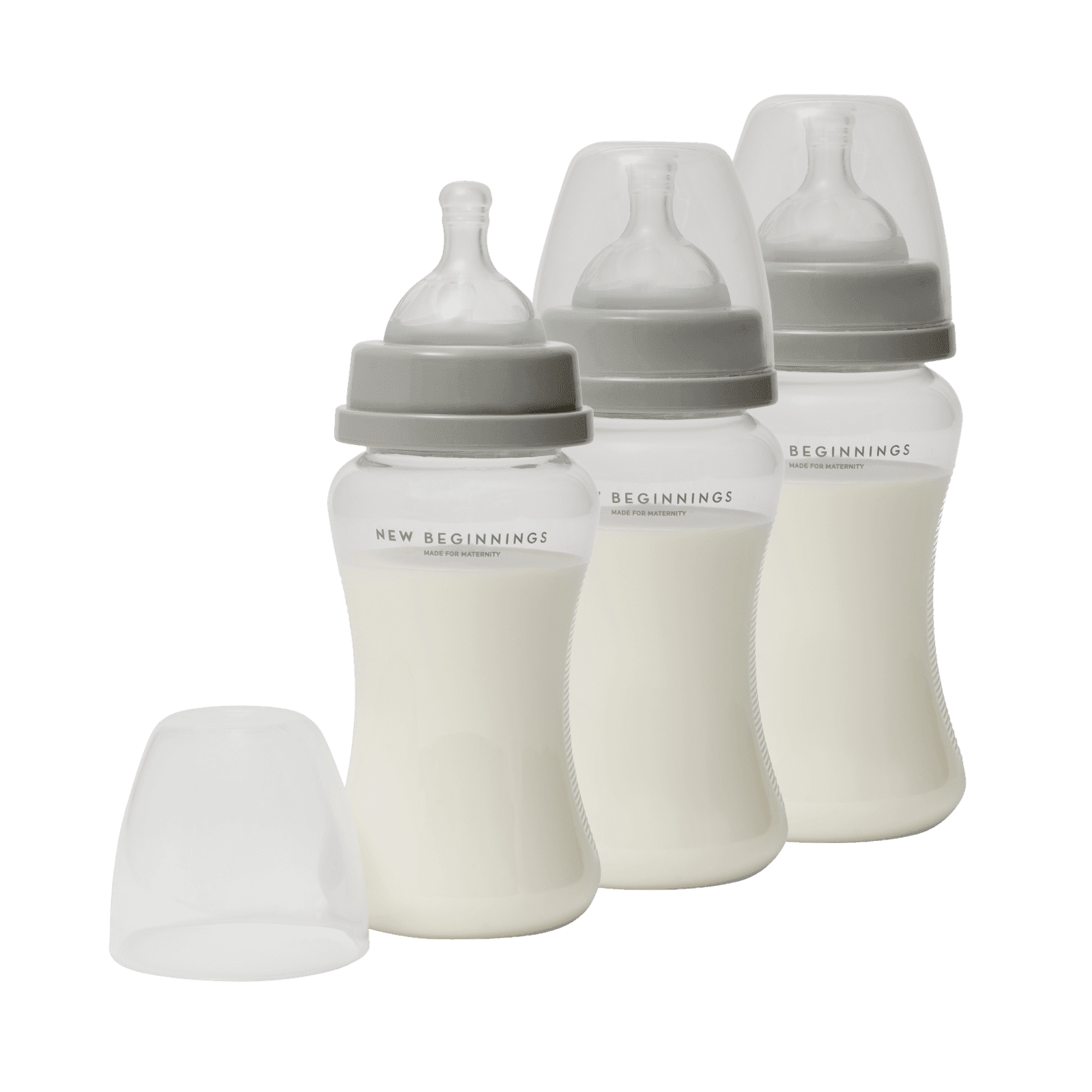
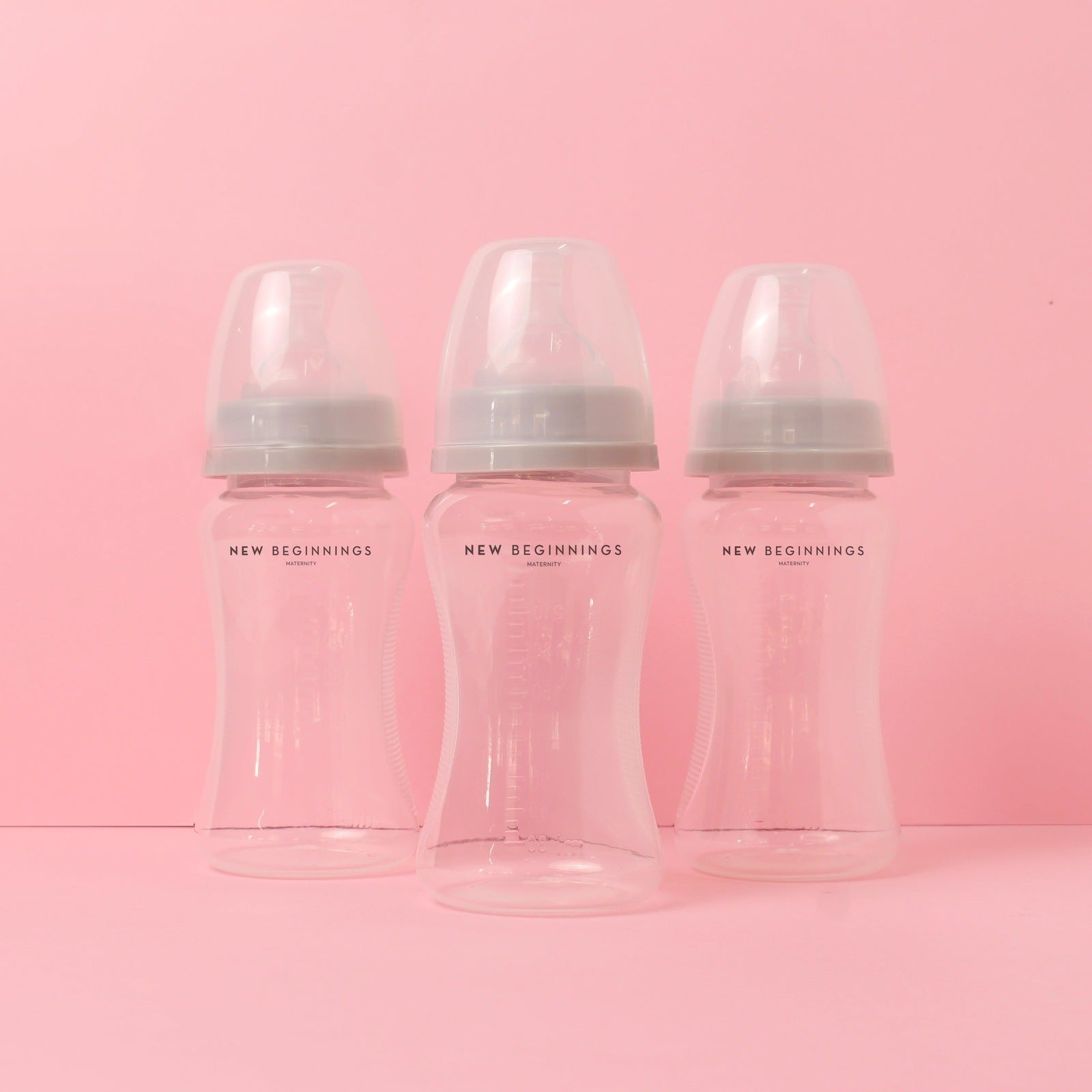
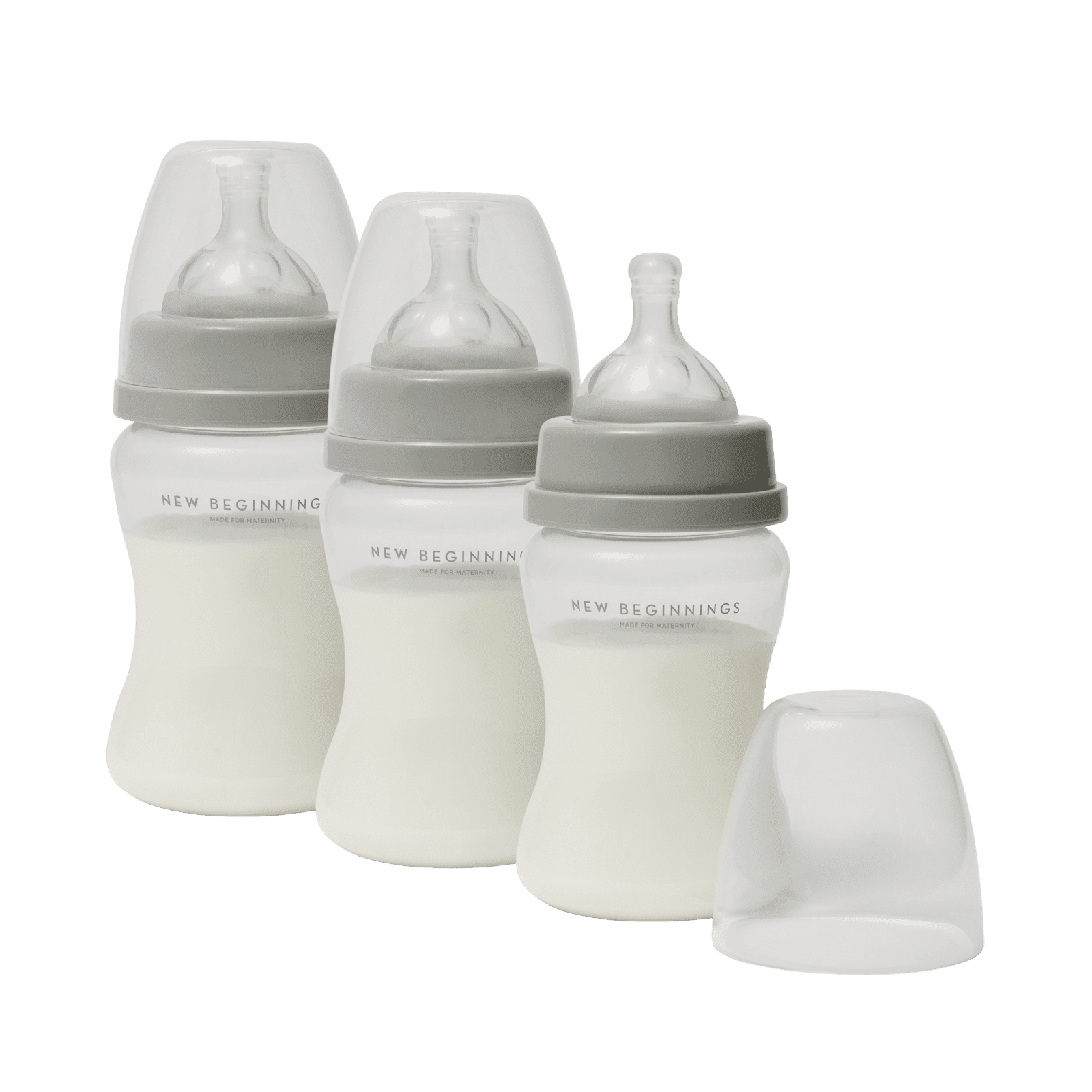
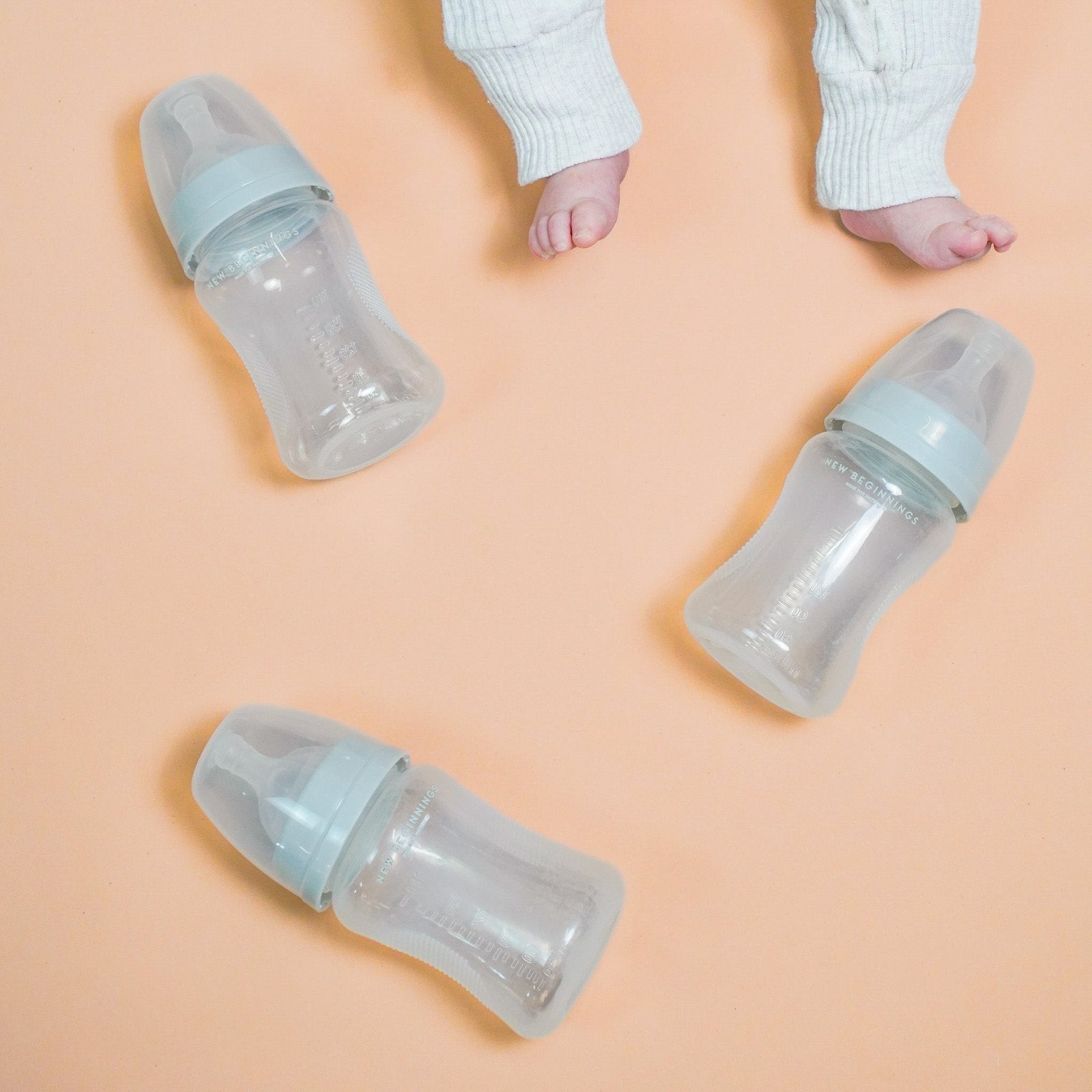
The New Beginnings Silicone-Coated Glass Bottle wraps sturdy glass in a soft, protective layer that adds grip and cushions bumps.
It’s especially handy during those half-awake night feeds when coordination isn’t your strong suit. The silicone makes the bottle comfortable to hold, reduces slipping, and helps contain fragments if it ever hits the floor.
Pros
• Safe, clean glass interior with a protective outer layer
• Easy to hold, even one-handed
• Cushions drops and knocks
• Sleek, modern design
Cons
• I can’t name any?
This bottle has become my go-to. It’s safe, practical, and just feels nice to use, something you’ll appreciate after the tenth feed of the day.
 Teats: Small Details, Big Difference
Once you’ve chosen the bottle, pay attention to the teat, it’s where the magic (and sometimes the chaos) happens.
A great teat should feel soft and natural, let milk flow smoothly, and keep air bubbles out. If your baby is gulping milk or refusing the bottle altogether, it’s probably not the bottle, it’s the teat flow.
New Beginnings teats are made from ultra-soft, BPA-free silicone designed to mimic breastfeeding, helping babies switch between breast and bottle without confusion. Built-in anti-colic valves prevent air intake, reducing wind and tummy discomfort.
Pro Tip: If bub seems frustrated mid-feed,adjust the flow rate before swapping bottles. Sometimes the simplest tweak solves the problem.
The Affordability Factor
Let’s be honest, bottles are one of those sneaky baby expenses that add up fast.
Glass and silicone-coated bottles cost a little more upfront, but they last far longer. They don’t warp, discolour, or retain smells, so you won’t be replacing them every few months. In the long run, they’re the smarter (and more sustainable) investment.
When to Upgrade or Switch Baby Bottles?
Your baby’s needs evolve quickly, and so should your bottles. Consider an upgrade when:
• Feeds are faster or fussier: This usually means your baby needs the next flow-rate teat.
• Teats start thinning or splitting: Replace every two to three months or sooner if you spot wear.
• You’re expressing or combining feeding: Choose a bottle that connects to your breast pump for convenience.
Once you’ve found a bottle your baby loves, you can usually stick with that style for months, just update the teat as they grow.
Choosing a baby bottle doesn’t need to be complicated. Focus on safe materials, comfortable teats, and a design that fits your life. Everything else is just noise.

Newborn Baby Bottle FAQs
Are glass bottles safe for newborns?
Yes. Modern borosilicate glass is durable and temperature-safe. It’s ideal for sterilising and won’t crack under normal use.
What’s the benefit of silicone-coated glass?
It offers all the safety of glass with a protective, non-slip coating that makes it easier to handle and helps prevent breakage.
How many bottles should I start with?
Four to six is a good number. It gives you enough for a full day’s feeds while others are drying or sterilising.
When should I replace teats?
Every two to three months or when they start to feel thin, cloudy, or sticky.