I'll admit it, the first time I picked up a glass baby bottle in store, my brain went straight to worst case scenario. Baby drops it. Bottle smashes. Glass everywhere, milk everywhere, tiny bare feet nearby. I put it back on the shelf and grabbed the plastic one instead.
It took me three bottles, two bad smells I couldn't get rid of, and one very stained teat before I actually looked into glass properly.
Turns out my fear was based on the wrong picture entirely. I was imagining a wine glass. What I actually needed to picture was a Pyrex dish.
If you're standing in the same spot I was, torn between wanting the purity of glass and worrying about what happens the second it meets your kitchen floor, here's the honest answer.
Does Glass Actually Break Easily? Here's the Truth
Short answer? Not the way you're picturing it.
New Beginnings glass baby bottles are made from borosilicate glass, the same tough, heat resistant material used in laboratory equipment and oven dishes. It's engineered to handle sudden temperature changes without cracking, which is exactly what a bottle goes through every single day between the fridge, the steriliser, and warm water.
That doesn't mean it's indestructible. Glass can still break. But "can break under extreme force" is a very different fear to "breaks easily," and most of what you're picturing (a light knock on the bench, a wobble on the change table, a gentle roll off the couch) is well within what borosilicate glass is built to survive.
The bigger safety habit isn't avoiding glass. It's checking any feeding product regularly for wear and tear, and not using it if it's damaged, which is standard advice for baby products generally, not just bottles. [1]
The Silicone Sleeve Fixes the Part That Actually Worries You
Here's the thing. Most parents aren't actually worried about glass itself. They're worried about the drop.
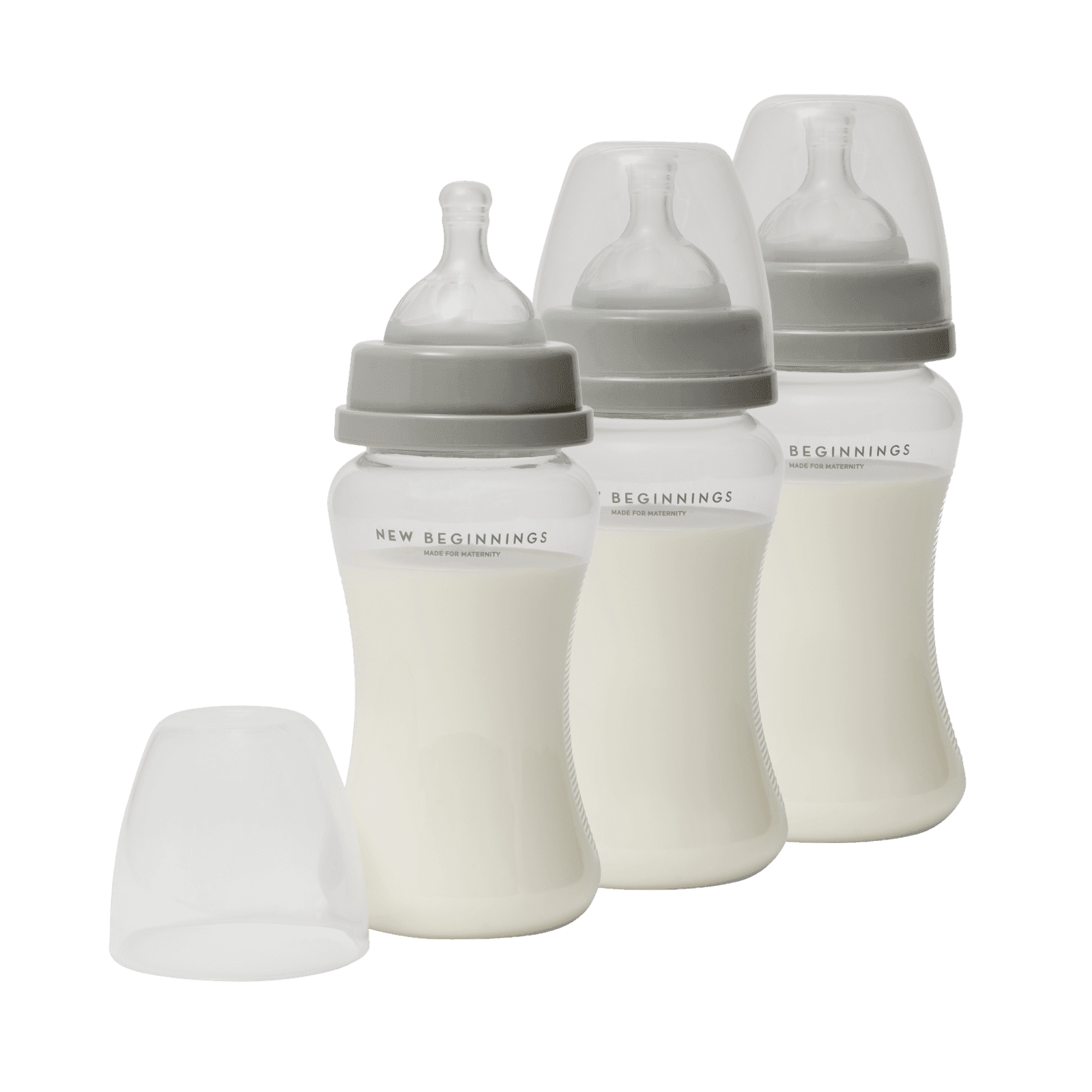
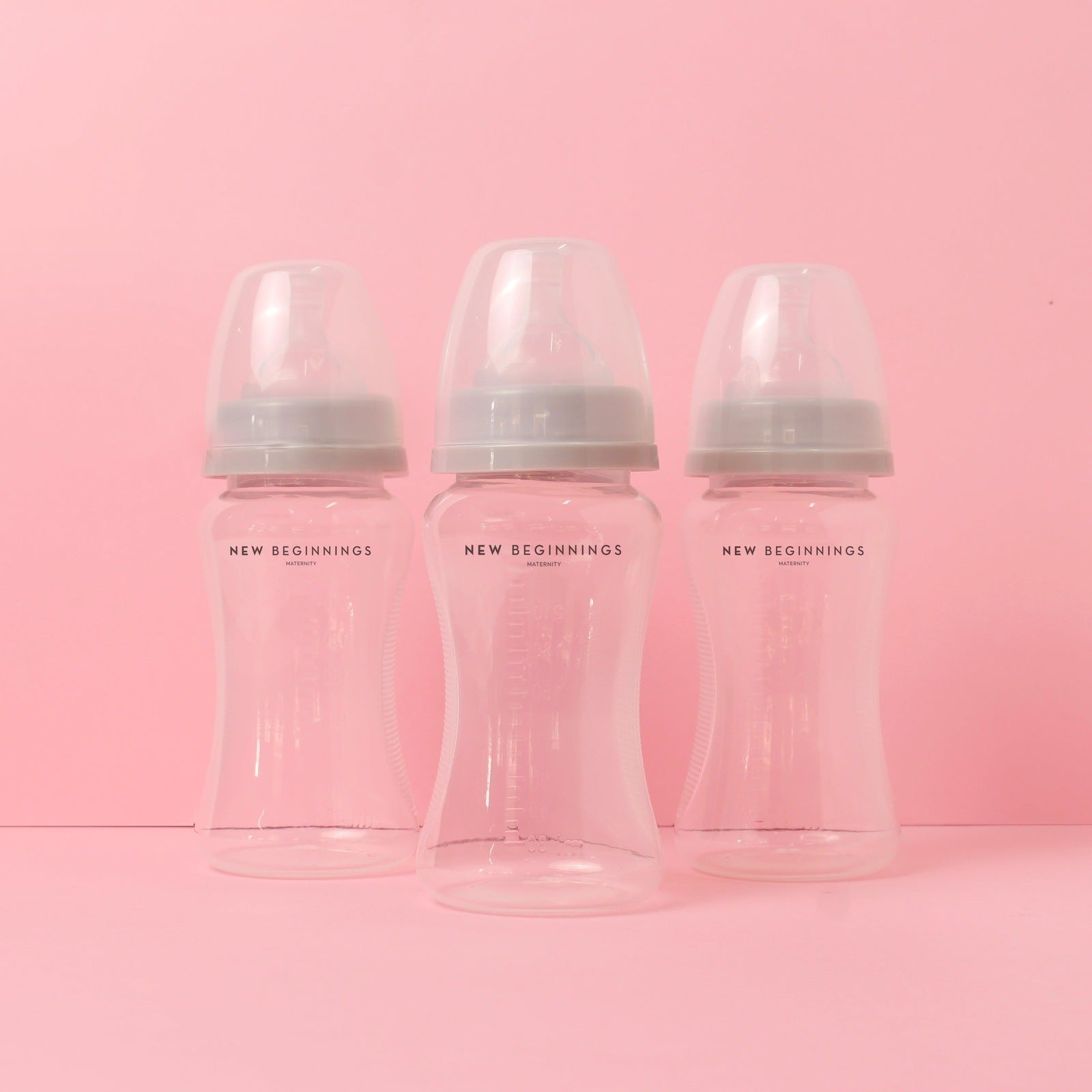
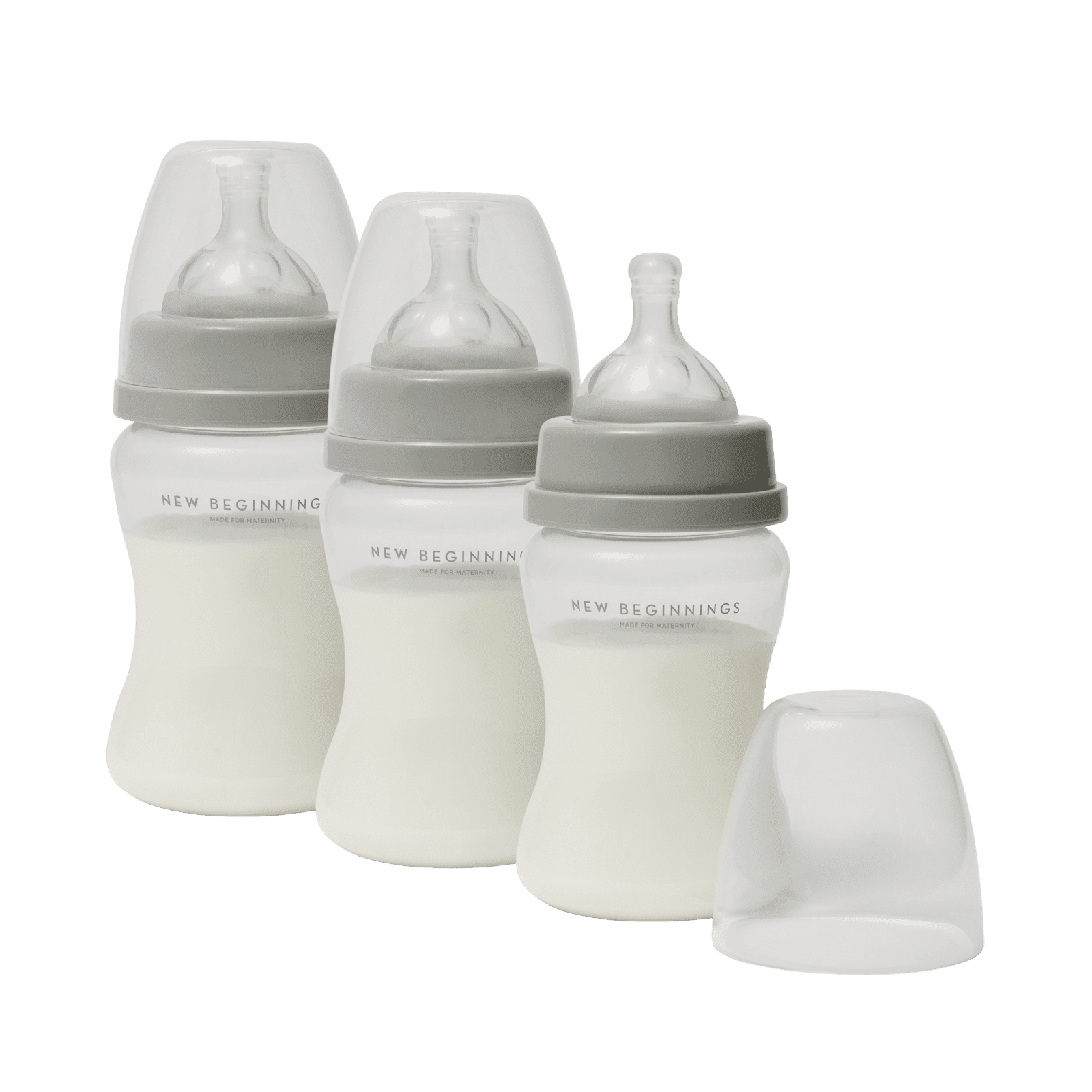
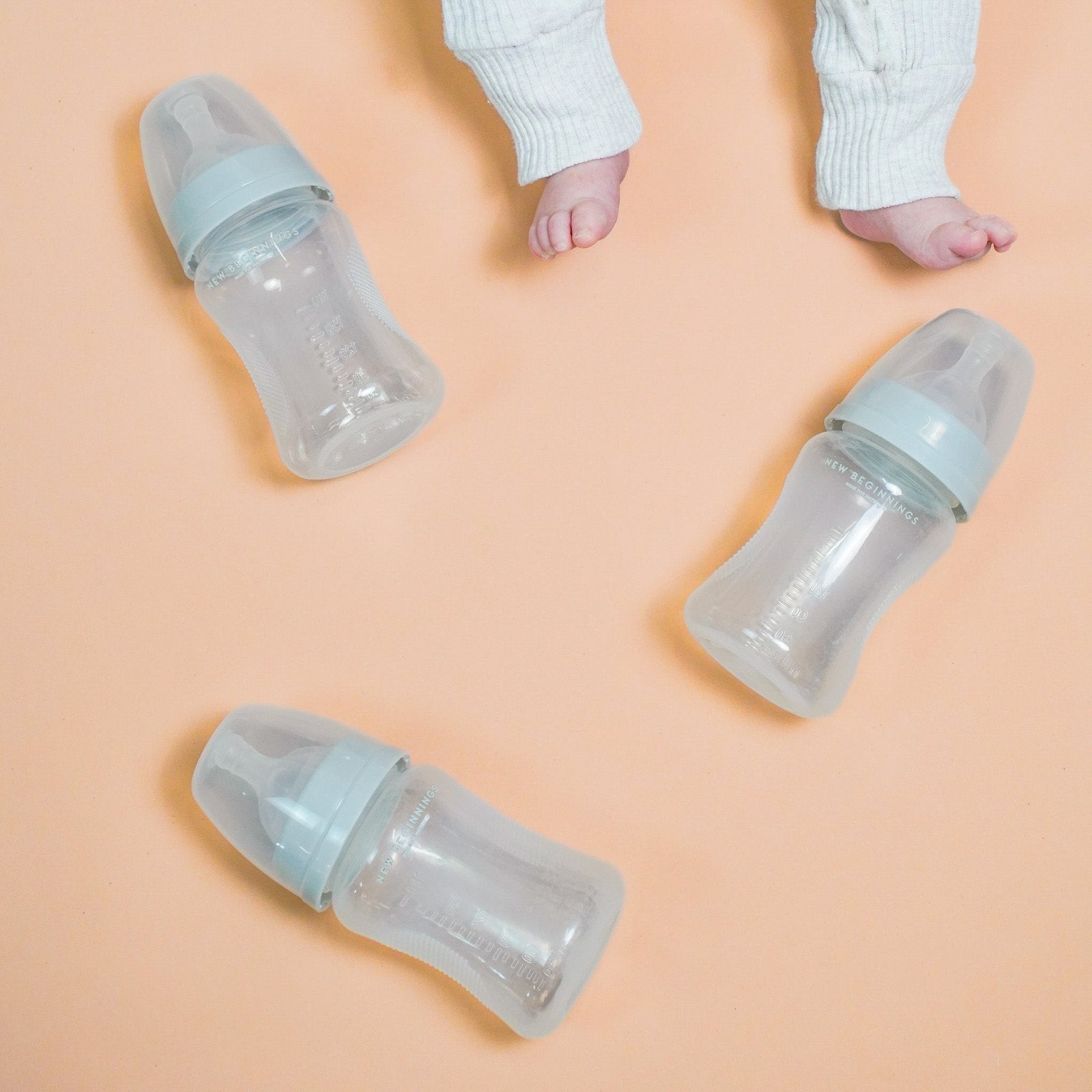
That's exactly what the Glass Bottle with Silicone Outer was designed to solve. It's the same pure borosilicate glass on the inside, wrapped in a soft silicone sleeve on the outside. The silicone acts as a cushion, absorbing knocks and adding real grip for hands that are damp, tired, or holding a baby at the same time.
The Outer Silicone Really Does Work
I love these perfect size little bottles for my new born, and again how wonderful to have glass bottle options for babies as well. I even dropped one of these on the concrete accidentally and it didn't smash, so the outer silicone really does work!
— Shearna O., Glass Bottle with Silicone Outer
It's available in a 120ml twin pack, ideal for those tiny newborn feeds, and a 240ml twin pack for when your baby's appetite grows into it. If breakage is genuinely your biggest hesitation, this is the version built for exactly that worry. If you're still working out which style suits your feeding routine at all, our guide on how to choose the right newborn baby bottle walks through the whole decision.

What About the Classic Glass Bottle, No Sleeve?
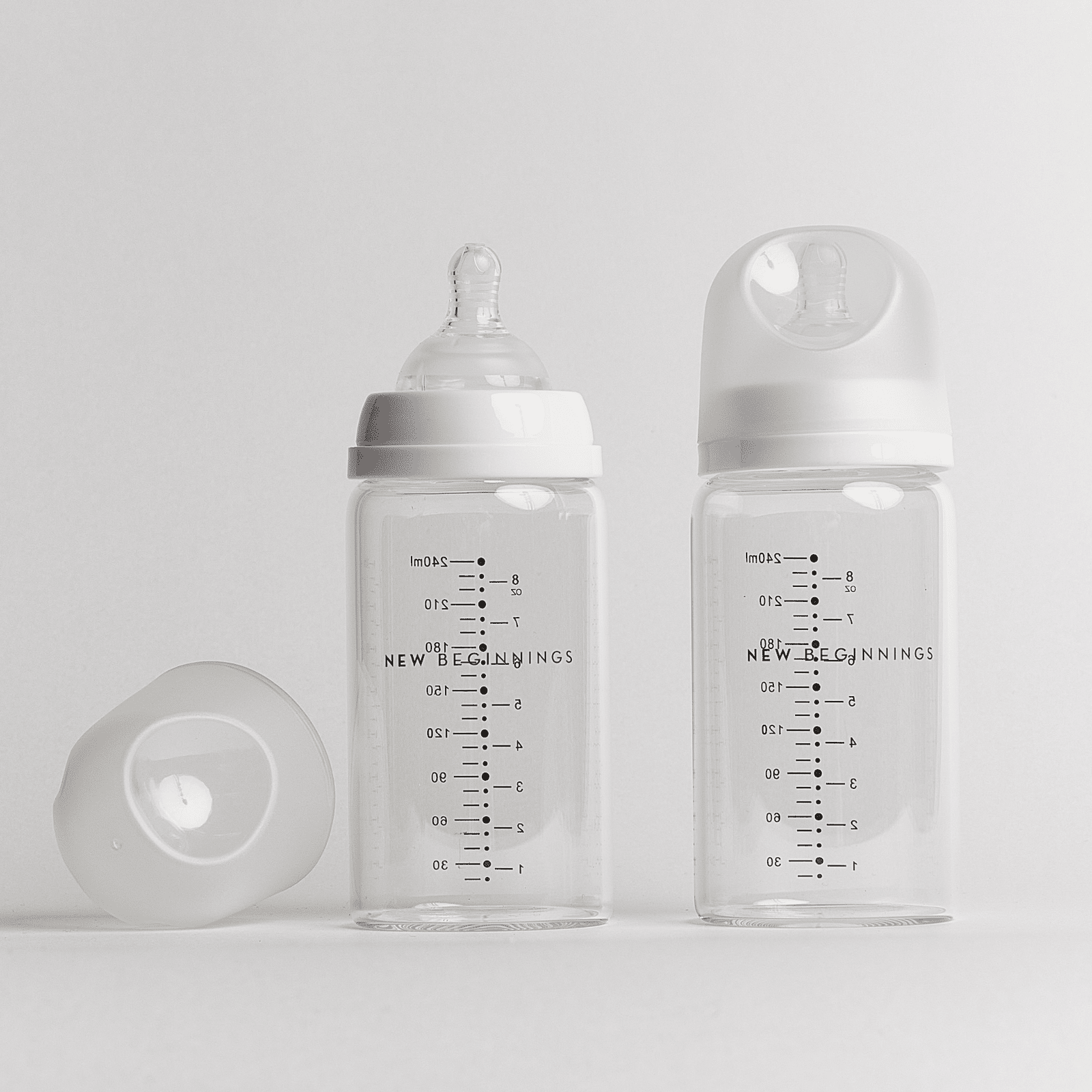
If you'd rather keep things simple with pure glass, the Classic Glass Bottle is still a genuinely sturdy option. It's the same borosilicate glass, without the silicone layer, so it's the lighter, more streamlined choice for parents who mostly feed at home and want that crystal clear, no fuss glass feel.
It comes in the same two sizes, a 120ml twin pack for the early weeks and a 240ml twin as your baby's feeds get bigger. Plenty of families run both styles side by side, Classic for calm kitchen bench feeds, silicone outer for the pram, the nursery, and anywhere little hands are involved. Our guide to choosing between glass bottle styles breaks down which combination suits different routines if you're weighing it up.
What Glass Actually Gets Right (That Plastic Quietly Doesn't)
While we're addressing the fear, it's worth addressing the thing nobody warns you about with plastic either.
A 2020 study published in the peer reviewed journal Nature Food found that polypropylene bottles, the most common plastic bottle material worldwide, can shed a significant number of microplastic particles during normal sterilising and formula preparation, with the amount increasing sharply the hotter the water gets. [2]
Borosilicate glass doesn't have that problem. It's non-reactive, doesn't leach anything into milk when heated, and can be boiled, steamed or UV sterilised repeatedly without breaking down. Given how often bottles get sterilised in that first year, this is genuinely a bigger everyday factor than most parents realise going in. One New Beginnings mum made the switch for exactly this reason, and wrote about it in why I swapped plastic bottles for glass baby bottles, if you want the full story from someone who's been through the same decision.
Does Glass Actually Last Longer Than Plastic?
This is the part that doesn't get talked about enough. Plastic bottles don't last forever either, they just fail quietly instead of obviously.
Plastic scratches with every wash, clouds over after a few months of sterilising, and can hold onto smells no amount of dishwashing liquid seems to shift, which is exactly what sent me looking at glass in the first place. Borosilicate glass doesn't scratch the same way, doesn't cloud, and doesn't absorb odours, so a bottle you buy at eight weeks can genuinely still be in good condition at eight months.
That longevity is worth factoring into the cost, not just the sticker price on the shelf. A glass bottle that lasts the full first year is often better value than replacing a clouded, smelly plastic one every few months. If you're pulling together everything you need before baby arrives, our feeding prep checklist for first time parents covers where bottles fit into the bigger list, and our feeding products range (bottles, sterilising, and everything storage related in one place) covers the rest.

What To Do If a Glass Bottle Ever Does Crack
If you ever do notice a chip or a crack, the answer is simple. Stop using that bottle straight away and don't try to make it work a little longer. This is honestly the same rule that applies to any feeding product, glass or otherwise, checked regularly and retired the moment it's damaged.
It's also worth remembering that a small chip is a "replace this bottle" moment, not a "something's wrong with glass bottles" moment. Every material has a version of this rule. Plastic bottles get quietly retired for scratches and cloudiness, glass just makes the moment more obvious.
So, Is It Actually Worth the Worry?
Here's the honest answer. Glass bottles are not fragile in the way most parents fear. They're heat resistant, they don't degrade, and with a silicone sleeve, drops are genuinely well managed. The purity you're chasing doesn't have to come with the anxiety you're picturing.
Most parents who make the switch say the same thing. The bottle they were nervous about ends up being the one they trust the most, precisely because it doesn't scratch, doesn't smell, and doesn't quietly wear out the way plastic does.
If you've been putting off glass because of the "what if it breaks" fear, that fear is doing more work in your head than it needs to. The silicone sleeve exists for exactly that reason, so you can have the glass you actually want without white knuckling every feed. Explore our full range of baby feeding essentials if you're building out the rest of your kit alongside it.

Related Reading
More from the Spill the Milk blog:
- Why I Swapped Plastic Bottles for Glass Baby Bottles
- How to Choose the Right Newborn Baby Bottle
- A Simple Feeding Prep Checklist for First-Time Parents
- Glass Baby Bottles for Mixed Feeding: Why Material Choice Still Matters
- Tips for Breastfeeding and Returning to Work
FAQs About Glass Baby Bottles
Do glass baby bottles break easily if dropped?
Not under normal use. Borosilicate glass is heat and impact resistant, and the Glass Bottle with Silicone Outer adds an extra cushioning layer specifically to reduce breakage risk from everyday drops.
What's the difference between the Classic Glass Bottle and the Silicone Outer version?
Both use the same borosilicate glass. The Classic Glass Bottle is pure glass with no outer layer, while the Glass Bottle with Silicone Outer wraps that same glass in a soft, grippy silicone sleeve for extra durability and easier handling.
Can glass baby bottles go from the fridge straight into warm water?
Yes. Borosilicate glass is designed to handle sudden temperature changes without cracking under normal use, which is one of the main reasons it's favoured for feeding bottles that move between fridge, warmer and steriliser all day. Our guide to caring for glass baby bottles day to day has more detail.
Is glass or plastic safer for sterilising?
Glass holds up better long term. It won't cloud, warp or shed particles the way some plastics can during repeated heat exposure, and it's fully compatible with boiling, steam and UV sterilising methods, along with the rest of our baby cleaning and sterilisation range.
What size glass bottle should I start with?
Most families start with the 120ml size for newborn feeds, then move to 240ml as appetite grows. Both the Classic Glass Bottle and Glass Bottle with Silicone Outer ranges come in both sizes, so you can match the bottle to the stage.
What should I do if my glass bottle gets a chip or crack?
Stop using it immediately and replace it. This applies to any feeding product, and it's a simple habit rather than a mark against glass specifically. Our full baby bottles collection makes it easy to swap in a fresh one.
Are glass bottles worth it for parents nervous about breakage?
For most families, yes. The Glass Bottle with Silicone Outer was created specifically to address breakage concerns while keeping every benefit of feeding from pure glass.