If you’ve ever stood in front of your mirror, tape measure in hand, wondering how your boobs managed to change this much without permission, welcome. You’re in the right place.
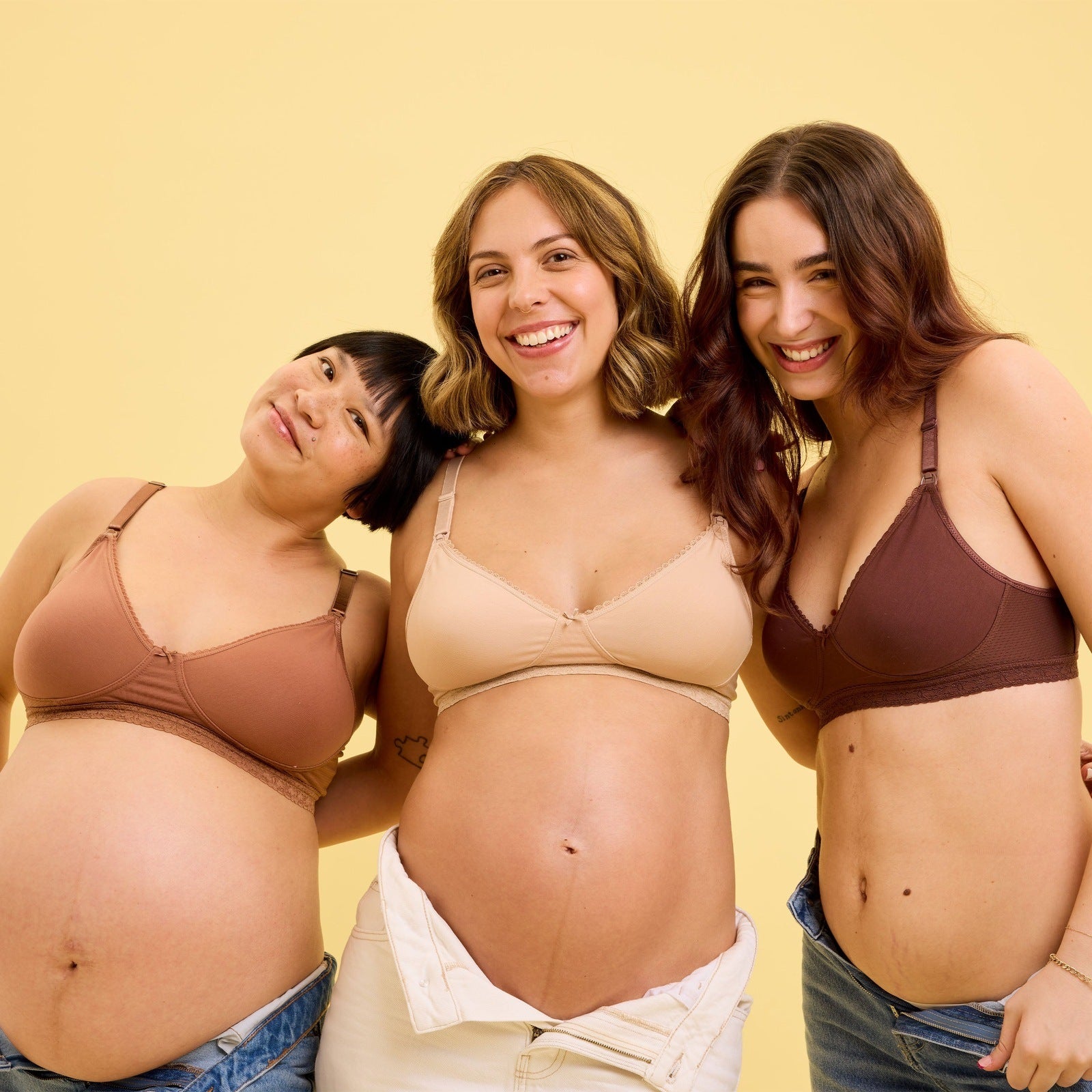
Pregnancy and breastfeeding have a way of throwing your body a series of plot twists. Your ribcage expands. Your breasts grow. Then they grow again. Then they swell, soften, firm up, leak, feel sore, or feel huge by lunchtime and different again by dinner. Suddenly your pre-pregnancy bra size means absolutely nothing.
After multiple pregnancies and far too many bras that were “almost right”, here’s the honest truth: measuring for a maternity bra doesn’t need to be complicated — but it does need to be realistic. This isn’t about chasing a perfect size. It’s about comfort, support, and choosing something that can move with your body as it changes.
Let’s do this properly.

A Quick Reality Check Before You Measure
Your maternity bra size is not fixed. It will change during pregnancy, again when milk comes in, and again as feeding settles. That’s normal. You’re not doing anything wrong.
The goal here muma is not precision, it’s flexibility.
How to Measure Your Maternity Bra Size (At Home, In 2 Minutes)
All you need is a soft tape measure. No padding, no pushing things around, no holding your breath.
Step 1: Measure your bust (chest circumference)
Stand upright in a non-padded bra or no bra. Wrap the tape measure around the fullest part of your bust, usually across the nipples. Keep the tape level across your back and breathe normally.
Write this number down in centimetres.
Step 2: Measure your underbust (band measurement)
Now wrap the tape around your body just under your breasts, where your bra band sits. This should feel snug but not tight. Keep it level all the way around.
Write this number down in centimetres.
Now thus measurement is the foundation of your bra fit and the most important one to get right.

Step 3: Estimate your cup size (the quick calculation)
Subtract your underbust measurement from your bust measurement.
Bust measurement (cm) minus underbust measurement (cm) equals your cup difference.
Use this guide to estimate cup size:
14–16 cm = Cup B
17–19 cm = Cup C
20–21 cm = Cup D
22–24 cm = Cup E (DD)
25–27 cm = Cup F (DDD)
If this feels wildly different to your pre-pregnancy size, you’re not imagining it, pregnancy bodies rewrite the rules entirely. It's completely normal.
Step 4: Match your underbust to your New Beginnings size
Take your underbust measurement and match it to the New Beginnings size chart. This helps translate your measurements into the right size range for our bras.
You can check the maternity bra size chart.
If you’re sitting between sizes, always size up. Restriction is not your friend during pregnancy or breastfeeding.
Step 5: Choose stretch if you’re between sizes or still changing
If you’re buying before your milk comes in, noticing daily size changes, or hovering between sizes, flexible sizing matters more than exact numbers.
This is where uGrow™ technology comes in.
 Why uGrow™ Bras Make Measuring Less Stressful?
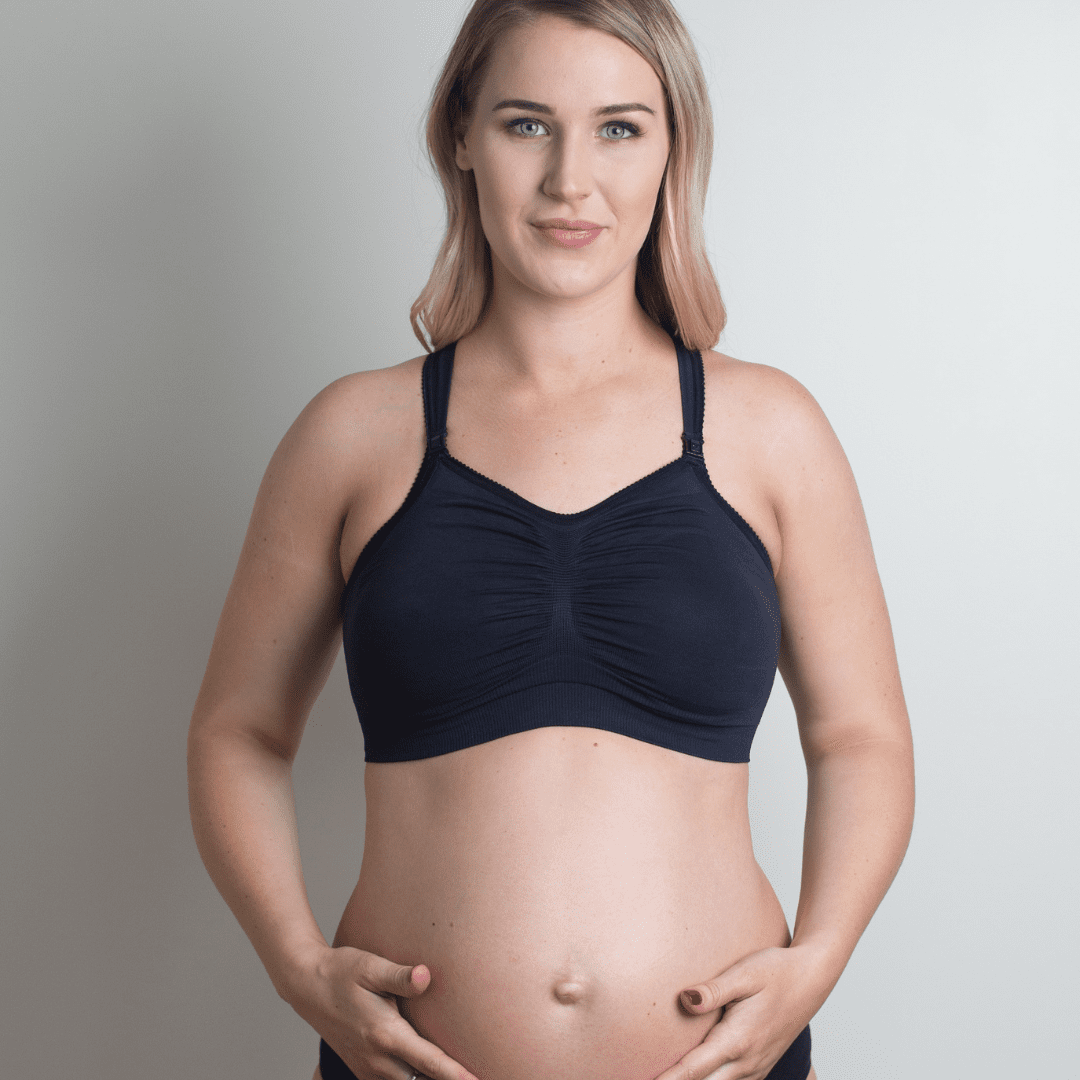
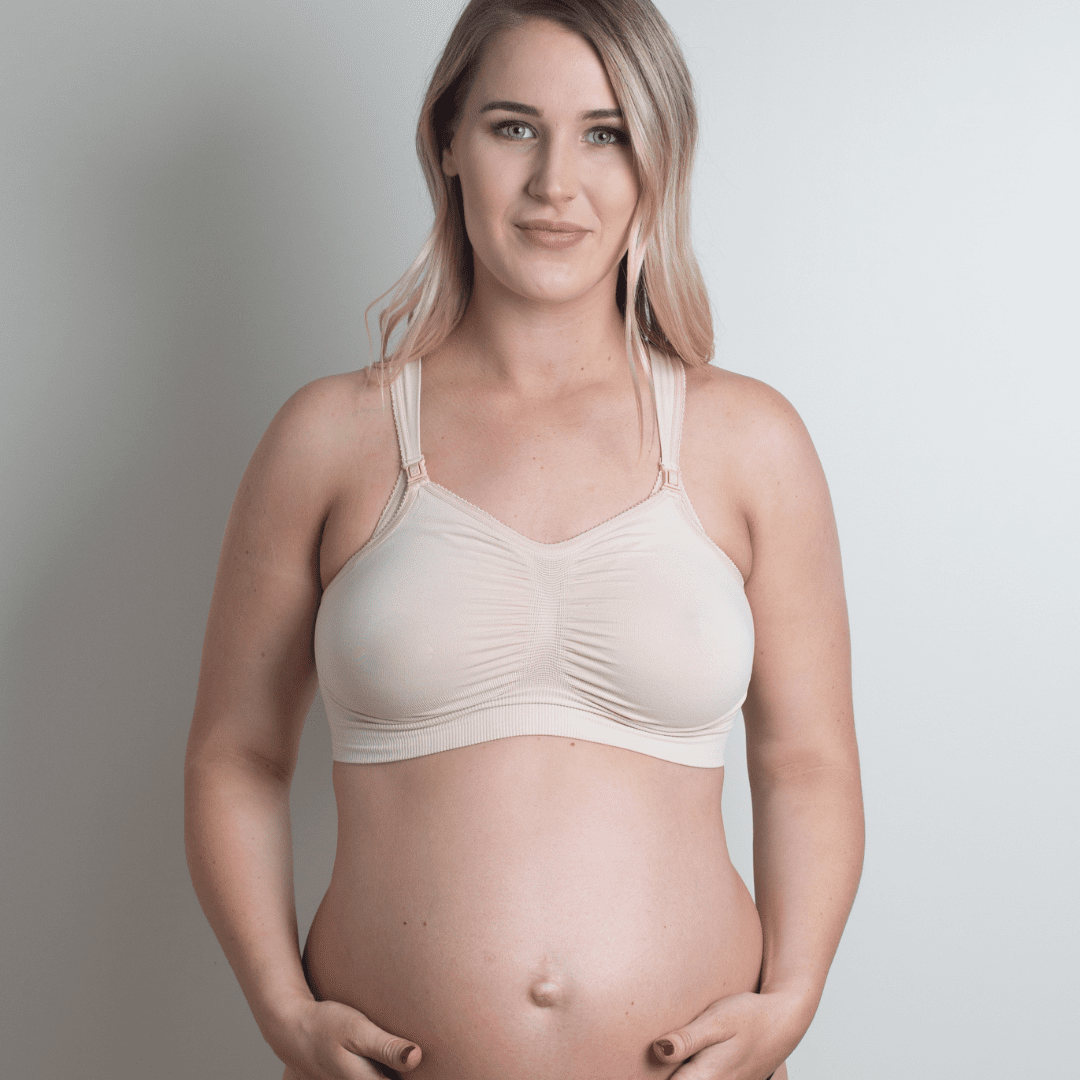
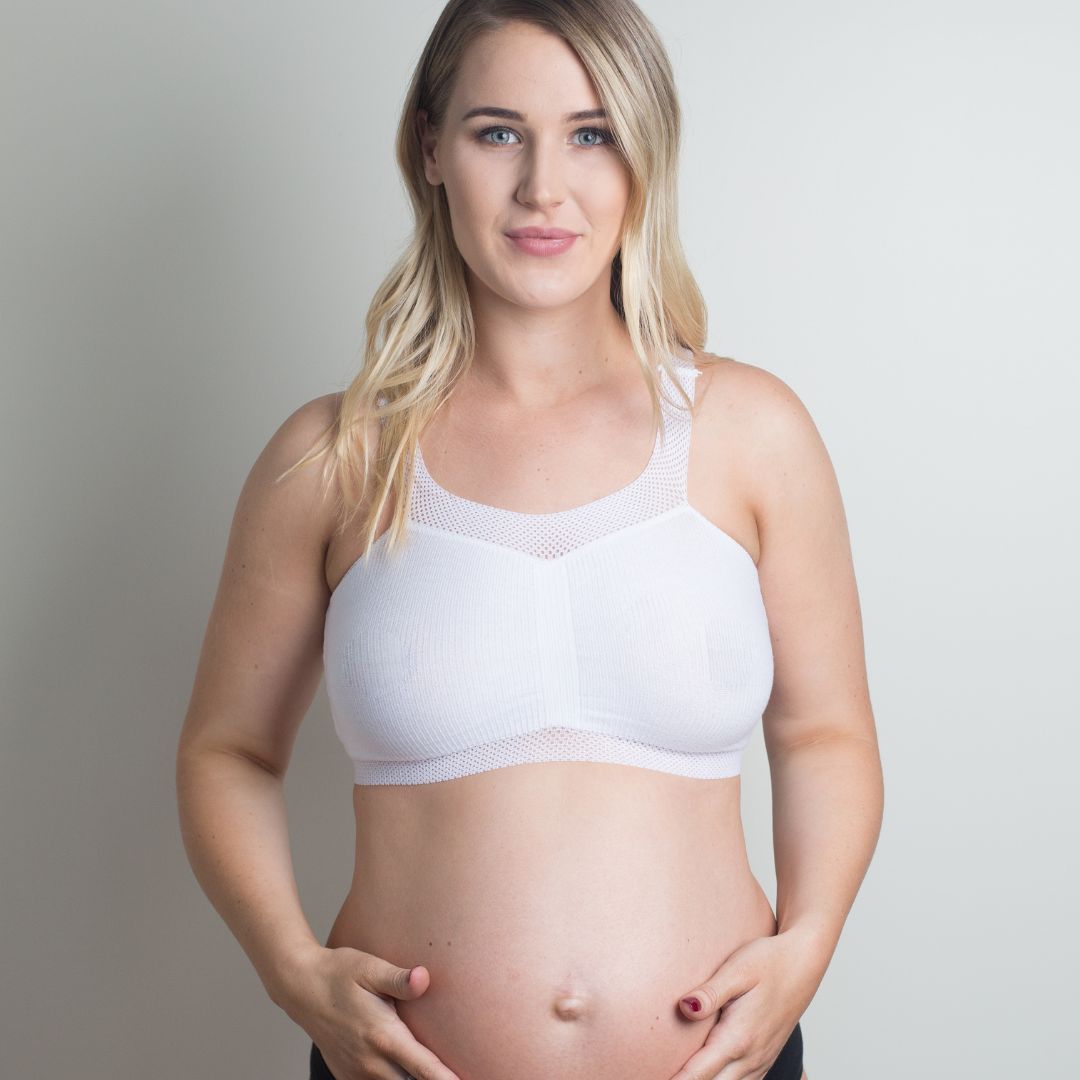
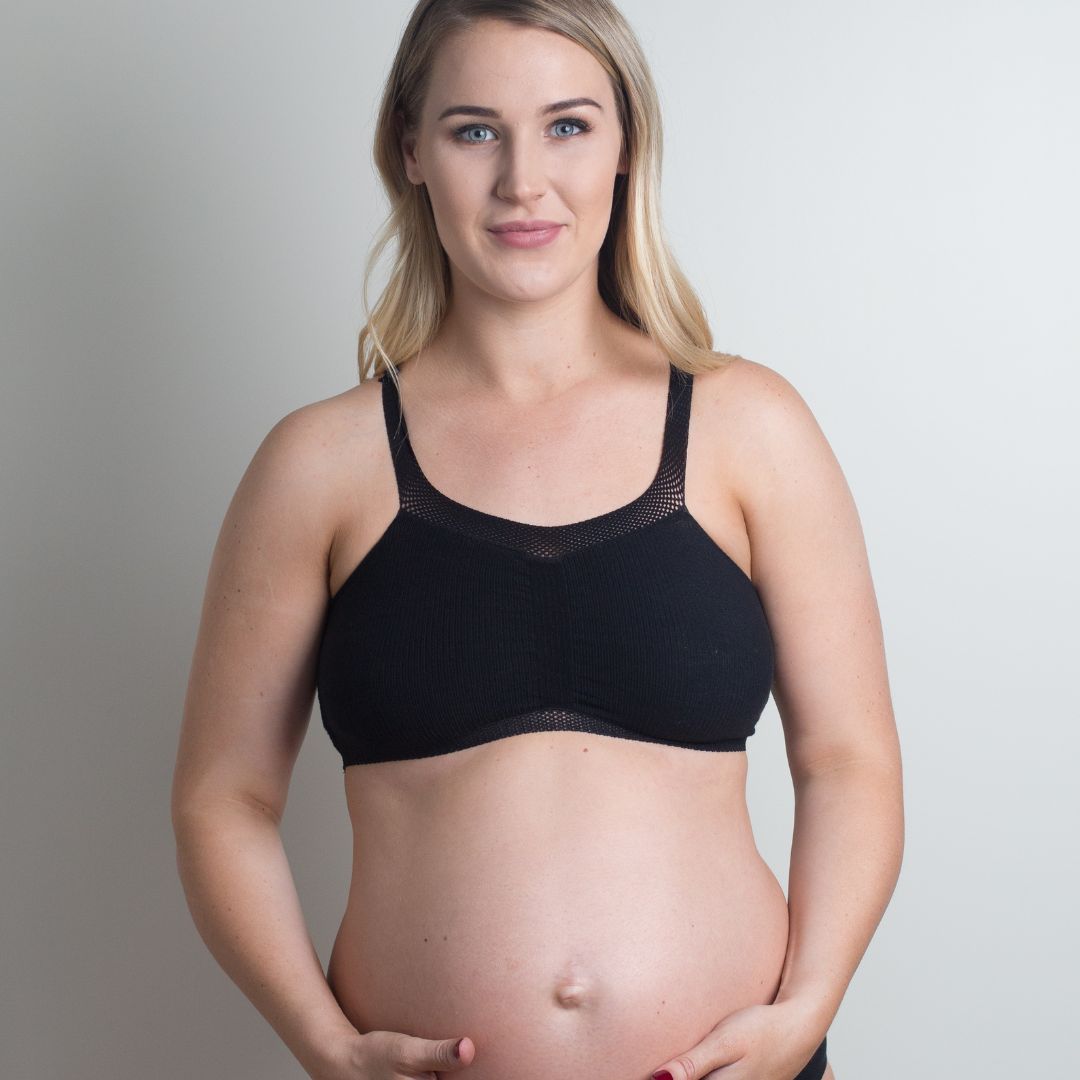
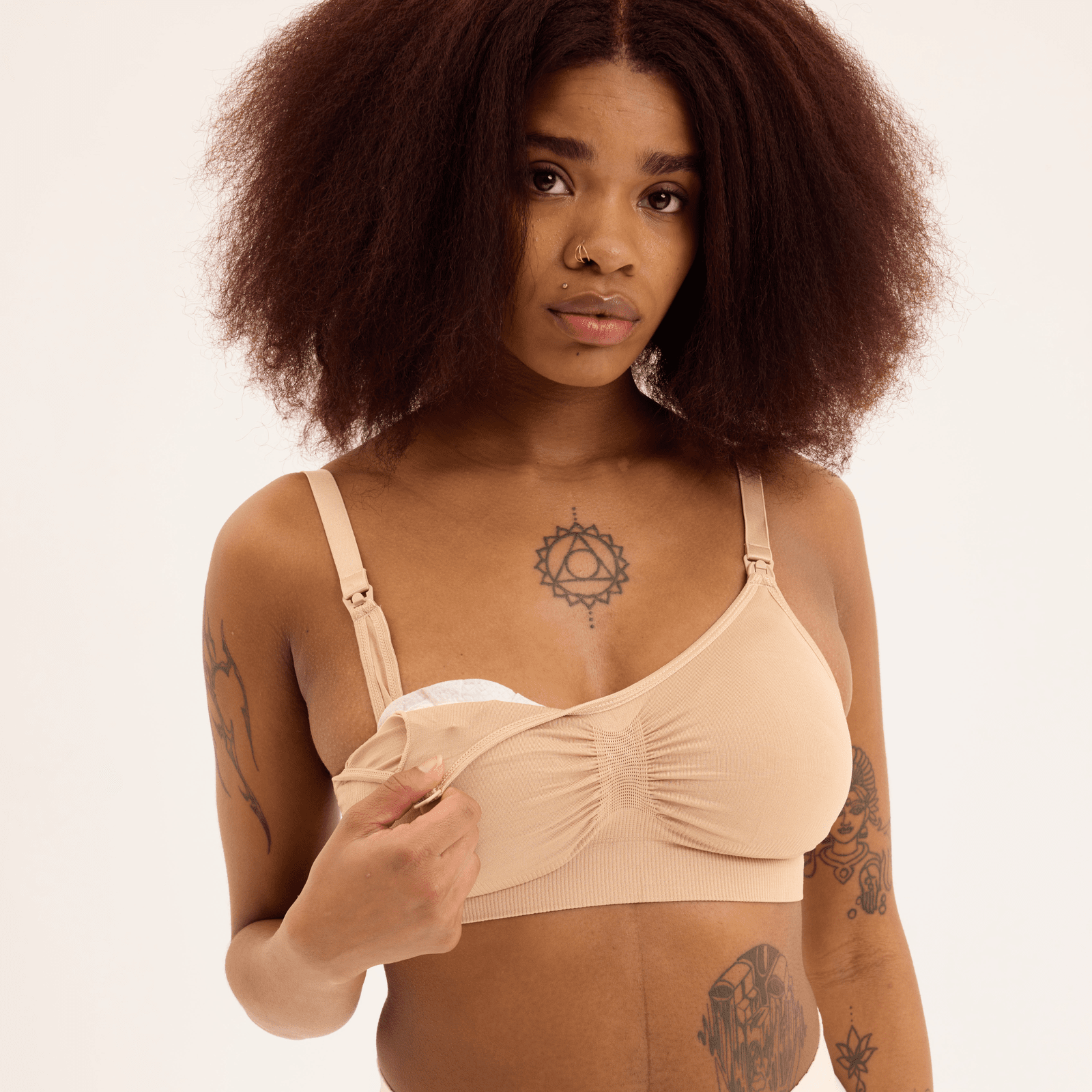
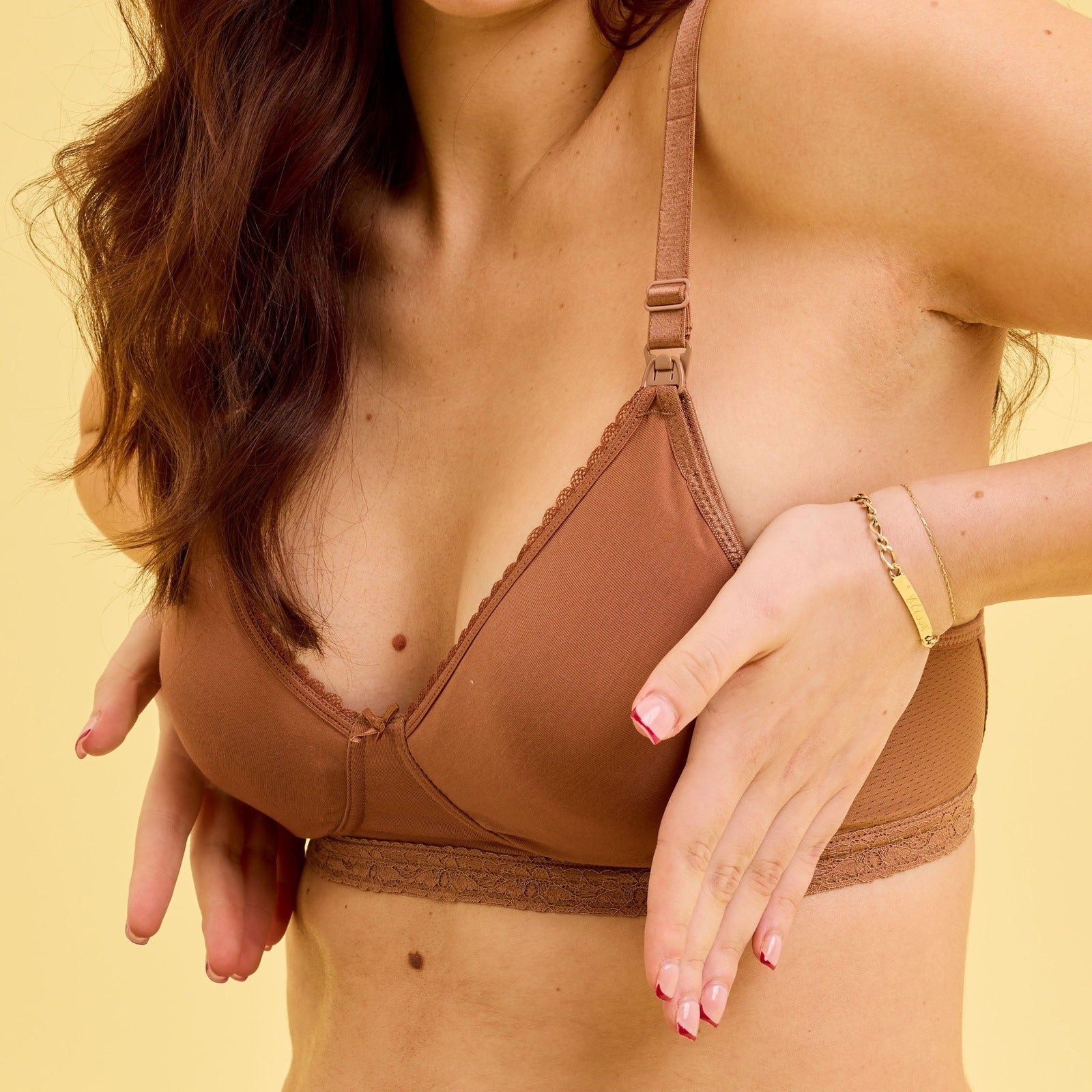
uGrow™ bras are designed to stretch across band and cup ranges, which means they adapt as your body changes, instead of forcing you to remeasure every few weeks.
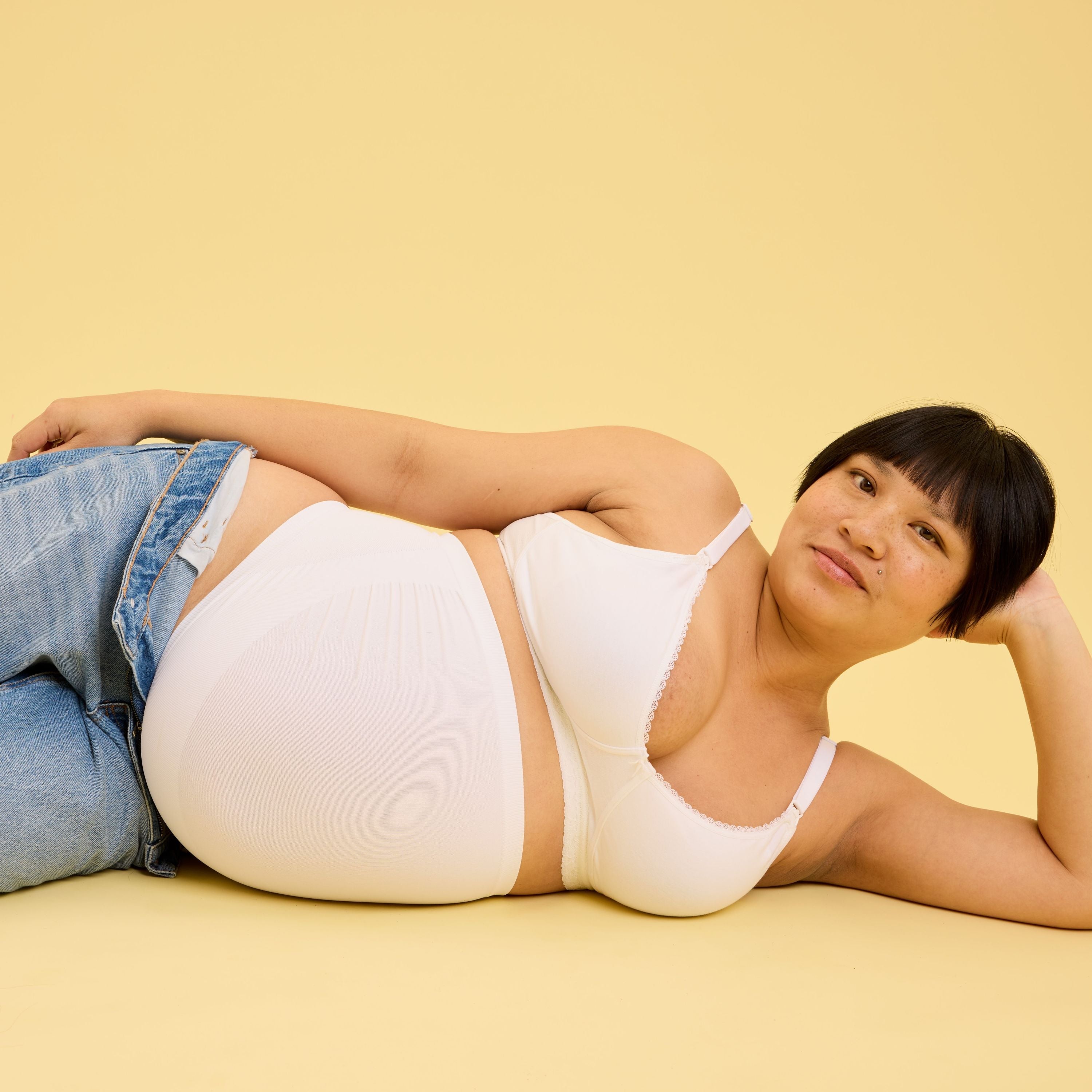
They’re designed to move with you, supporting growth during pregnancy, that first wave of milk coming in, and the day-to-day changes that come with breastfeeding. Instead of boxing you into a fixed size, they give your body the space it needs to do its thing.
You can explore the uGrow™ maternity bra range.
They’re especially helpful if:
- You’re between sizes
- Your breasts are still growing
- You want one bra to last across multiple stages
- You’re tired of guessing
When Is the Best Time to Measure for a Maternity Bra?
If you’re pregnant, the sweet spot is usually late second trimester to early third trimester. Your ribcage has expanded, your breasts have grown, and things are more predictable.
If you’re breastfeeding, measure once your milk supply has settled, but still choose stretch. Your size will continue to fluctuate.
If you’re somewhere in the messy middle, that’s completely normal. Choose comfort and flexibility over perfection.

FAQs: Measuring Maternity Bra Size
Should I size up in maternity bras?
Often yes, especially in the band. Your ribcage expands during pregnancy and early postpartum and comfort is essential.
How many maternity bras do I need?
Most mums rotate two to three bras so they can wash and rest them without stress.
Can I wear the same bra for pregnancy and breastfeeding?
Yes, if it’s designed for both, like uGrow™ bras, that flexibility is a game changer.
What if my size keeps changing?
That’s completely normal. Choose bras with stretch, adjustable straps, and flexible sizing so you’re not constantly replacing them.