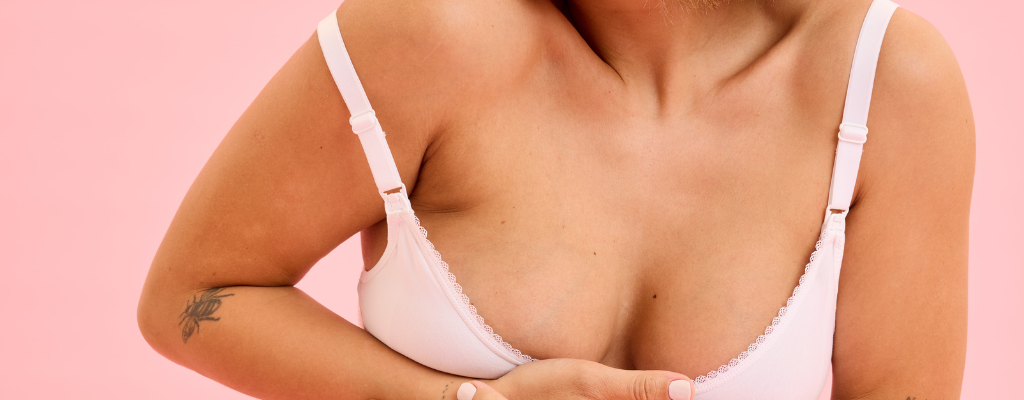
You brought home a newborn and, somewhere in the chaos of the first few days, you reached for one of your regular bras and it just didn't work anymore. Too tight under the arm. Cutting in across the chest. Sitting wrong in a way you can't quite explain but can absolutely feel.
Bra fit after birth is one of the most overlooked parts of postpartum recovery, and if you're struggling with bra fit after birth right now, you are not doing anything wrong. You spend months adjusting to a pregnant body, then the baby arrives and everyone assumes your body is done changing.
This guide walks you through what's actually going on in those early postpartum weeks, when it makes sense to get remeasured, and how to choose bras that can keep up with a body that's still finding its new normal. No guesswork, no judgement, just the practical honest version of what to expect.
What actually happens to your breasts after birth?
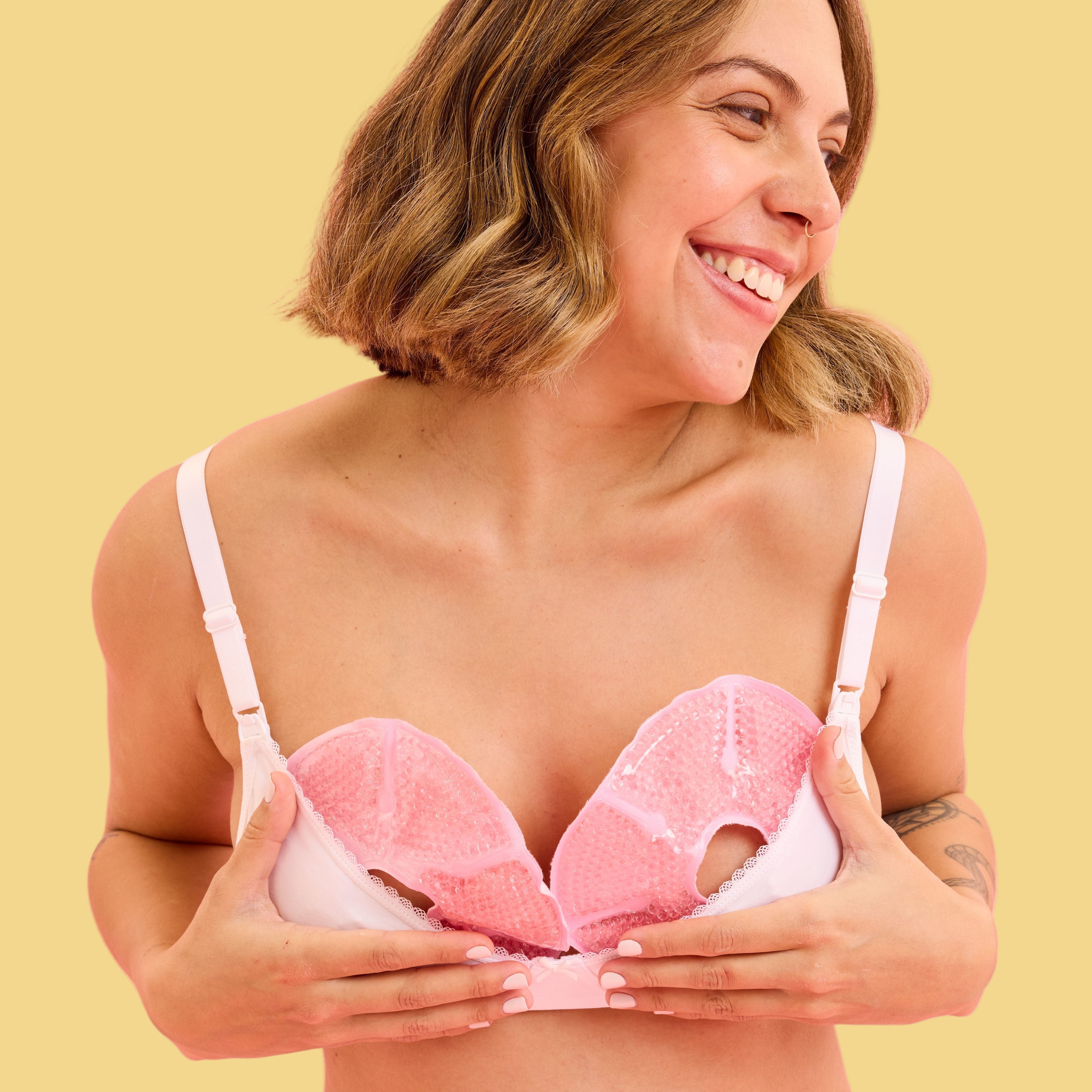
Your breasts go through a rapid, dramatic change in size in the first three to five days after birth as your milk comes in. This is sometimes called engorgement, and it's your body switching from making small amounts of colostrum to a much larger volume of mature milk. For many mums, this means going up a full cup size, sometimes more, in a matter of days [1].
Why does milk coming in change your size overnight?
It happens because your body doesn't yet know how much milk your baby needs, so it tends to overproduce at first while your supply calibrates to demand. That overproduction is what makes your breasts feel full, heavy, and noticeably larger, sometimes within hours. It can catch you off guard even if you already knew it was coming, because the scale of the change is hard to picture until it's happening to you.
How long do these changes last?
For most mums, the intense fullness of engorgement settles within one to two weeks as your supply regulates, though your overall size may stay different from your pre pregnancy size for as long as you're breastfeeding. Your body generally takes around six weeks to recover from birth more broadly, and breast changes often continue well past that as feeding patterns shift, milk supply adjusts, and hormones settle [2]. This is exactly why one bra bought in hospital rarely sees you through the whole postpartum period.
Why doesn't your pre pregnancy bra fit anymore?
Your pre pregnancy bra doesn't fit because it was built for a body that no longer exists, at least not right now. The band, the cup shape, and often the underwire were all fitted to your body before pregnancy, breastfeeding, and the fluid and tissue changes that come with both.
What's the problem with underwire after birth?
Underwire is designed to sit flat against your ribcage and follow the natural curve underneath your breast tissue. When your breasts change size or shape quickly, that curve shifts, and underwire that once sat comfortably can start digging in, pressing on breast tissue, or sitting at an angle that's uncomfortable at best. For breastfeeding mums specifically, ill fitting underwire has also been linked to blocked ducts, because it can put pressure directly on milk producing tissue. This is a big part of why wire free styles, like the maternity and nursing bras most New Beginnings customers move into postpartum, tend to be recommended for the early months.
When should you get remeasured after birth?
You should get remeasured for a bra around one to two weeks after birth, once the initial engorgement has settled, and again at around six weeks once your supply has regulated. Measuring too early, while you're still engorged, often means buying a bra that's already too big a few weeks later. Measuring too late means spending weeks in something that doesn't support you properly.
A simple rule that works for a lot of mums is to remeasure at these three points: once your milk has come in and settled a little, again around the six week mark, and then anytime you notice persistent discomfort, whether that's gaping cups, a band riding up, or straps digging in.

How do you measure yourself at home?
You can measure yourself accurately at home with a soft tape measure and about five minutes, without needing to visit a fitting room.
How do you measure your band size?
Wrap the tape measure around your ribcage, directly under your breasts, keeping it level all the way around your back. It should sit snug enough to stay in place but loose enough that you can breathe comfortably.
How do you measure your cup size?
Measure around the fullest part of your bust, usually across the nipple line, keeping the tape parallel to the floor. The difference between this measurement and your band measurement is what determines your cup size. If you want a visual guide to match your numbers to an actual size, the New Beginnings size chart breaks this down step by step.
What should you look for in a postpartum bra?
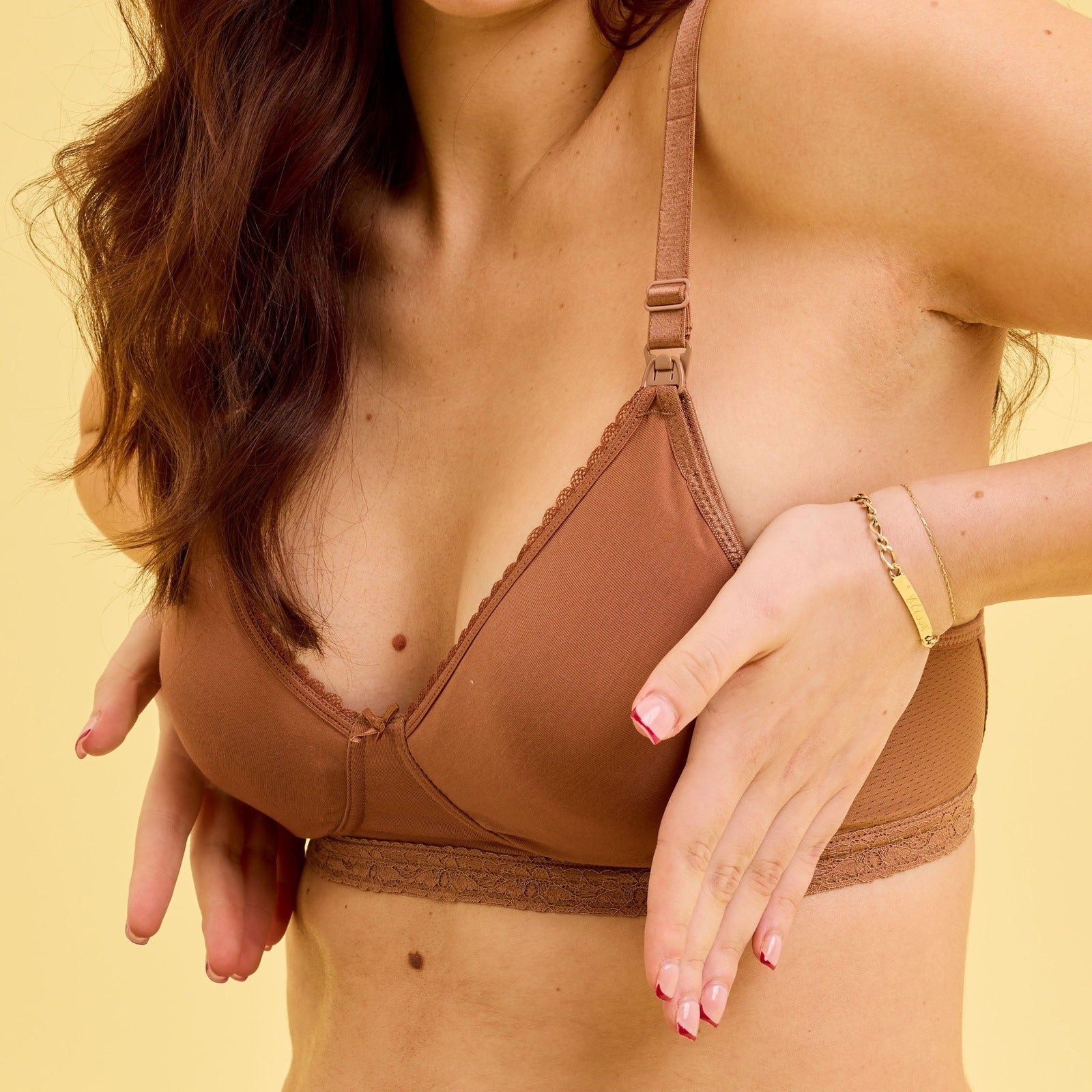
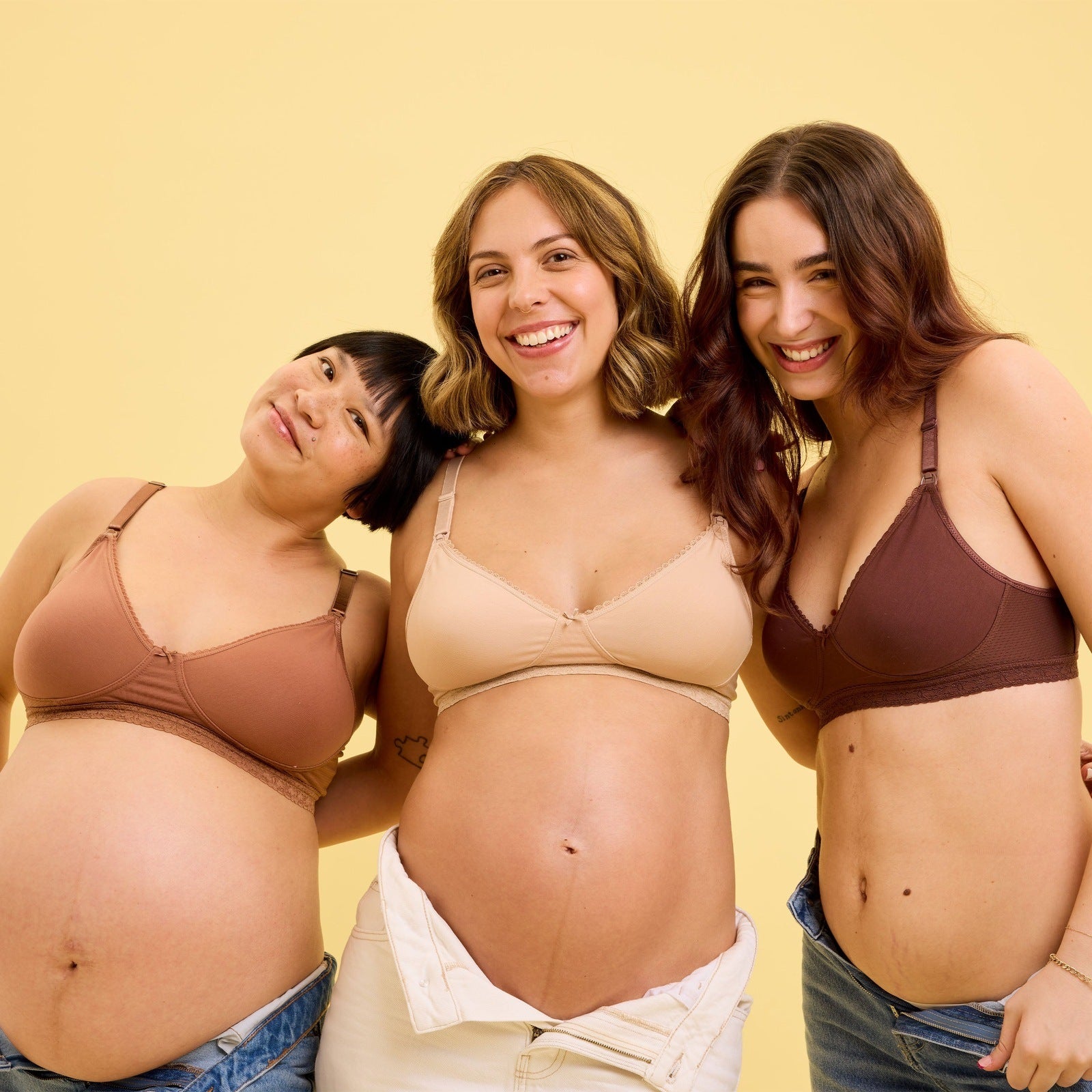
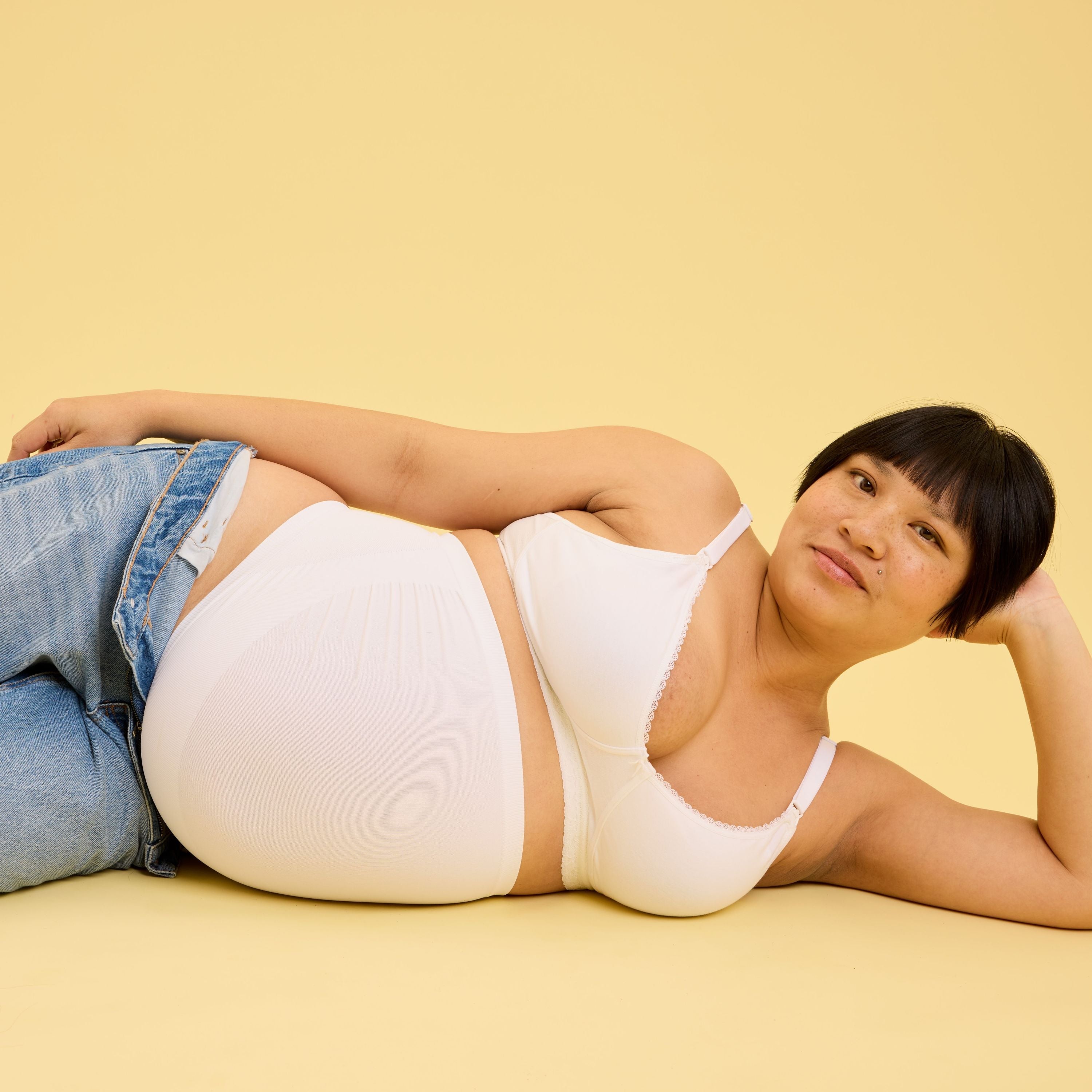
A good postpartum bra should be wire free, offer real support without digging in, and give you easy access for feeding if you're breastfeeding or expressing. Beyond that, comfort against sensitive, still healing skin matters more in these first weeks than anything else.
Why does wire free support actually hold up?
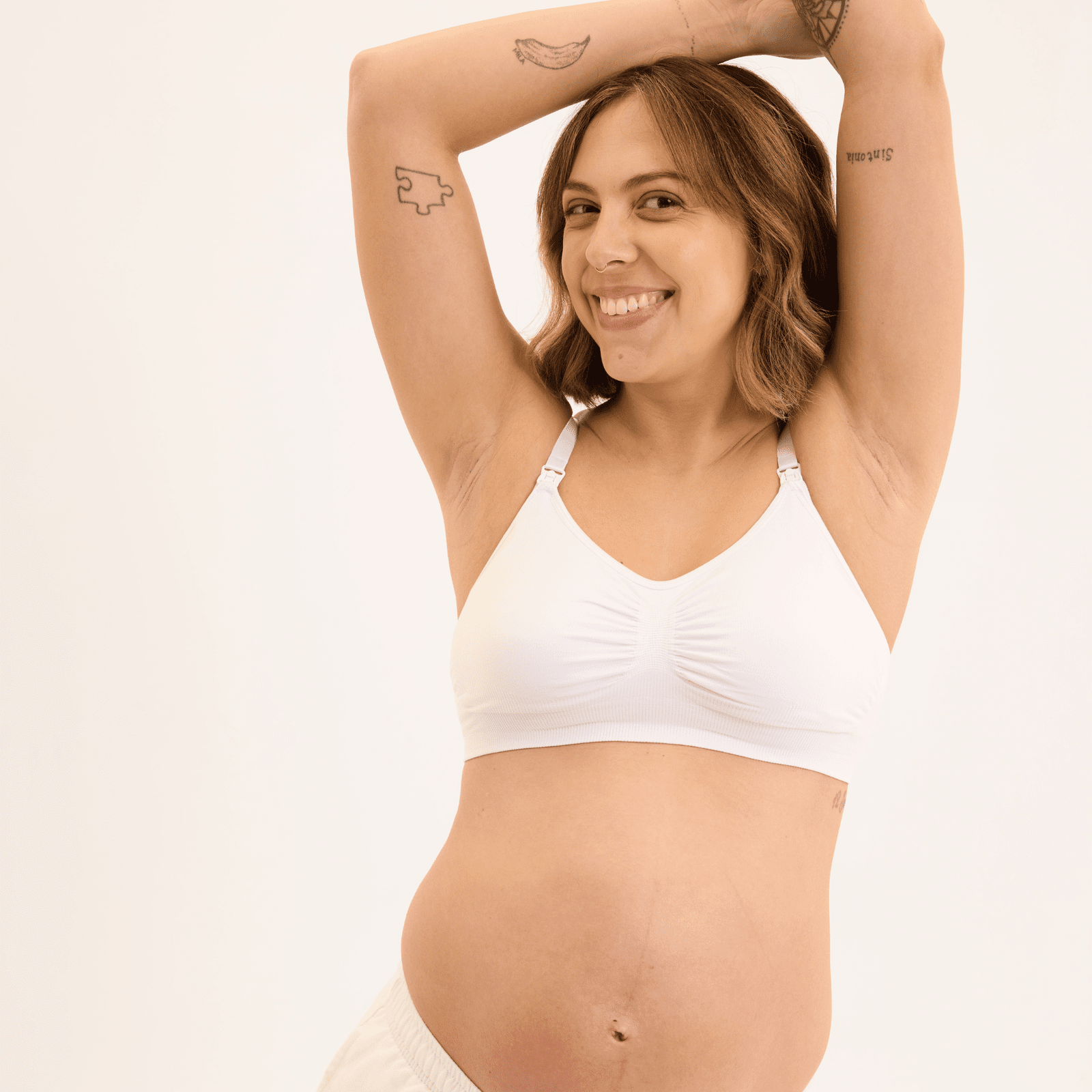
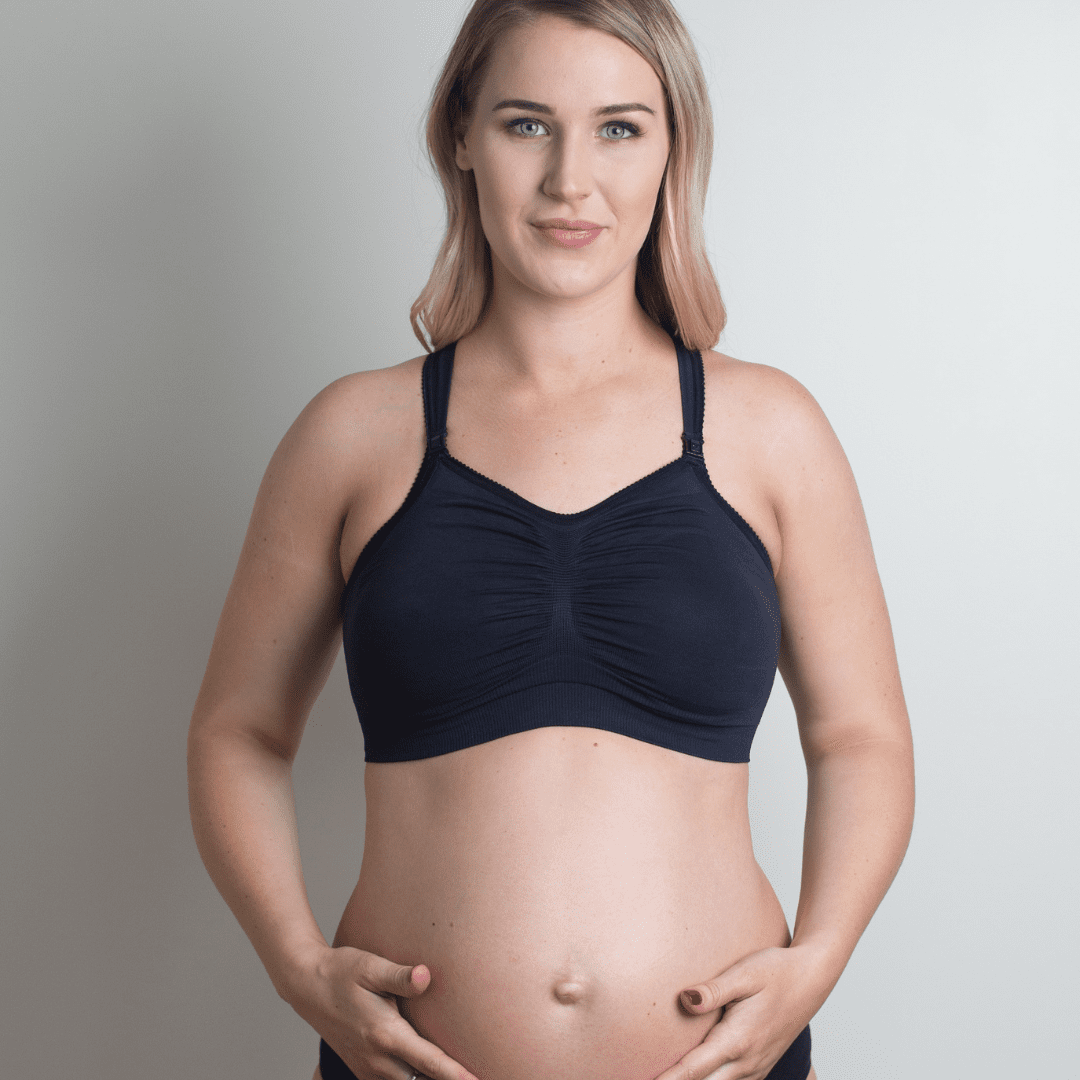
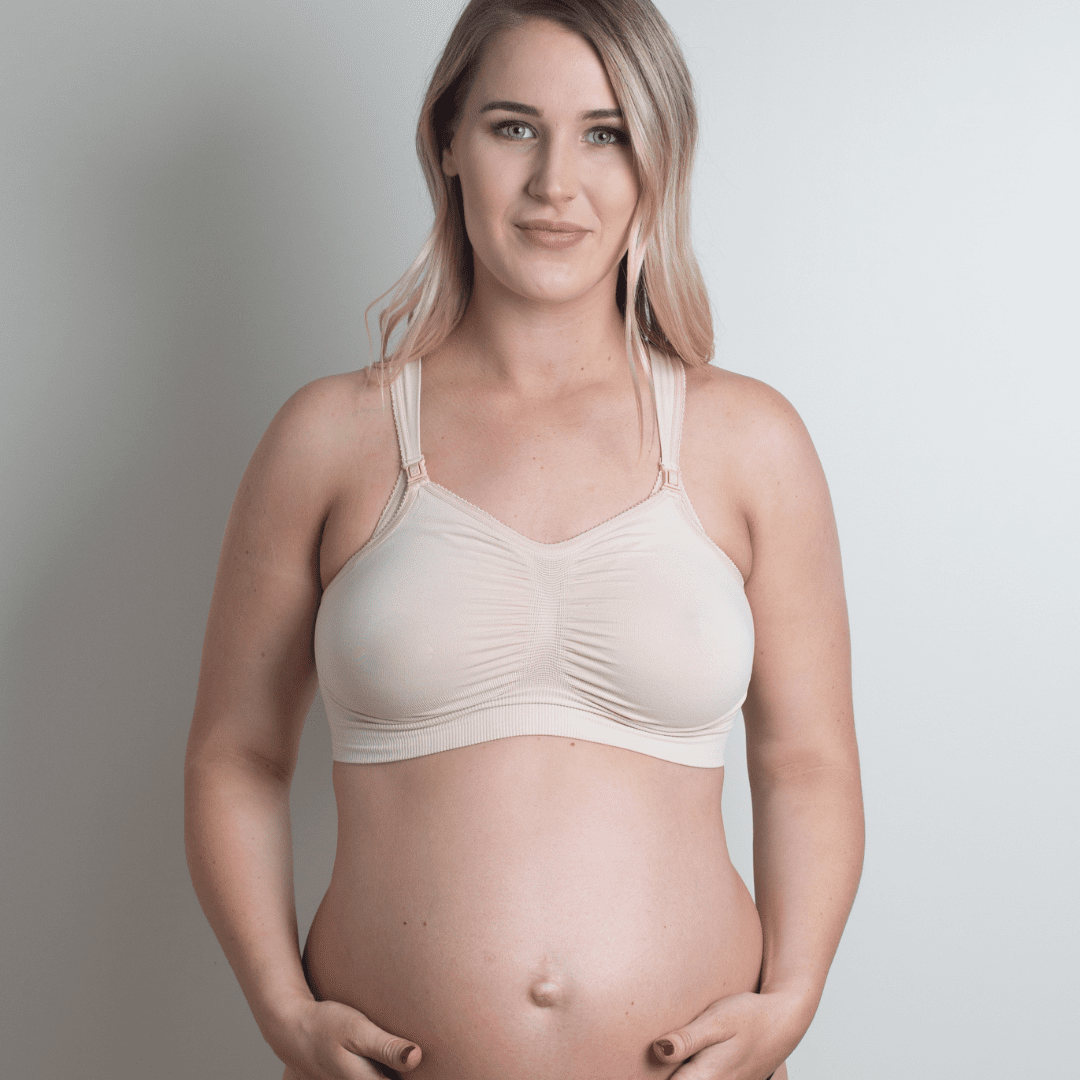
Wire free doesn't have to mean unsupportive. Bras built with structured, stretch fabric panels can offer genuine lift and support without a single piece of wire, which matters when your breasts are heavier and more sensitive than usual. The Everyday Maternity Bra is a common first pick for exactly this reason, giving daily support through seamless, stretch construction that moves with you as your size settles.
What makes nursing access easy, day and night?
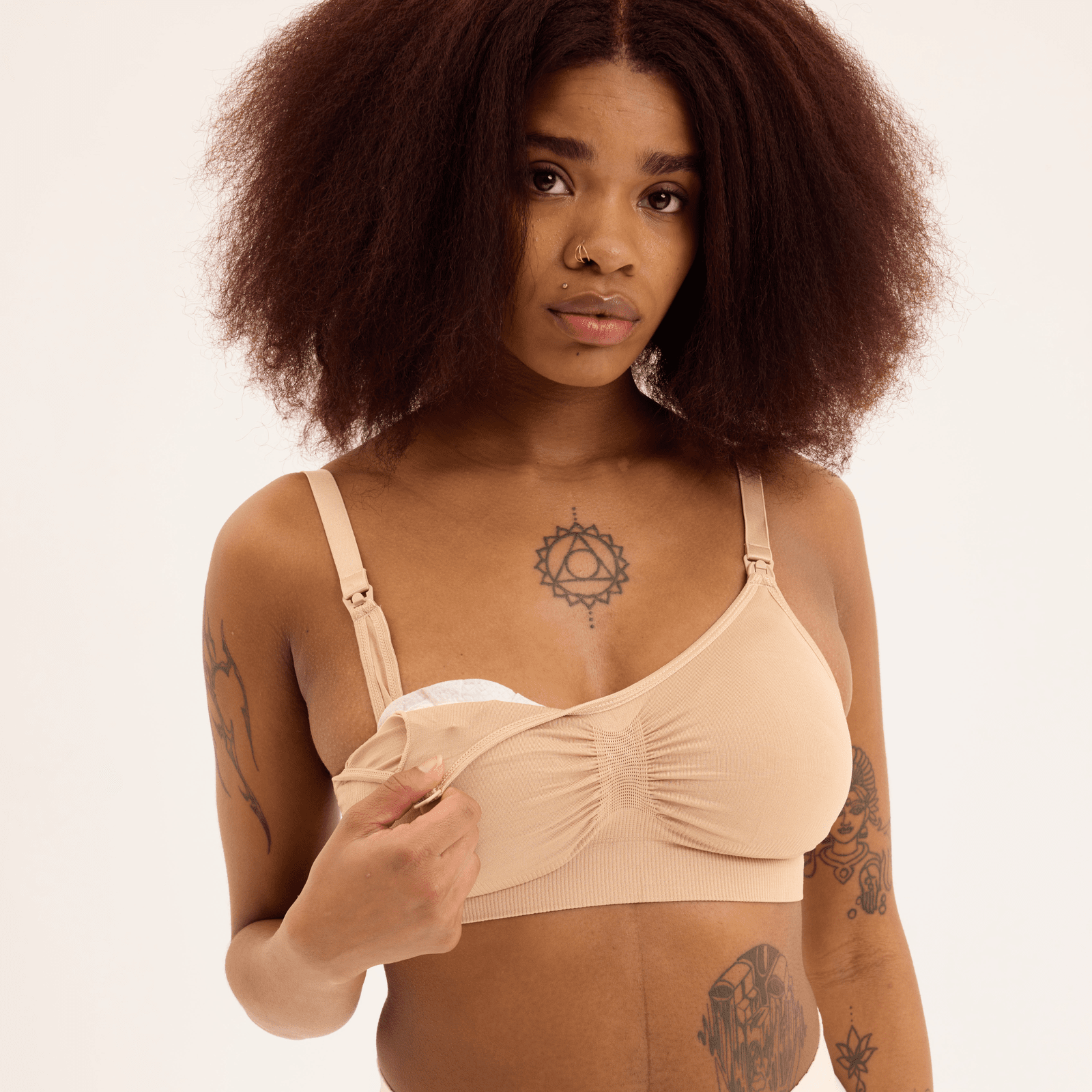
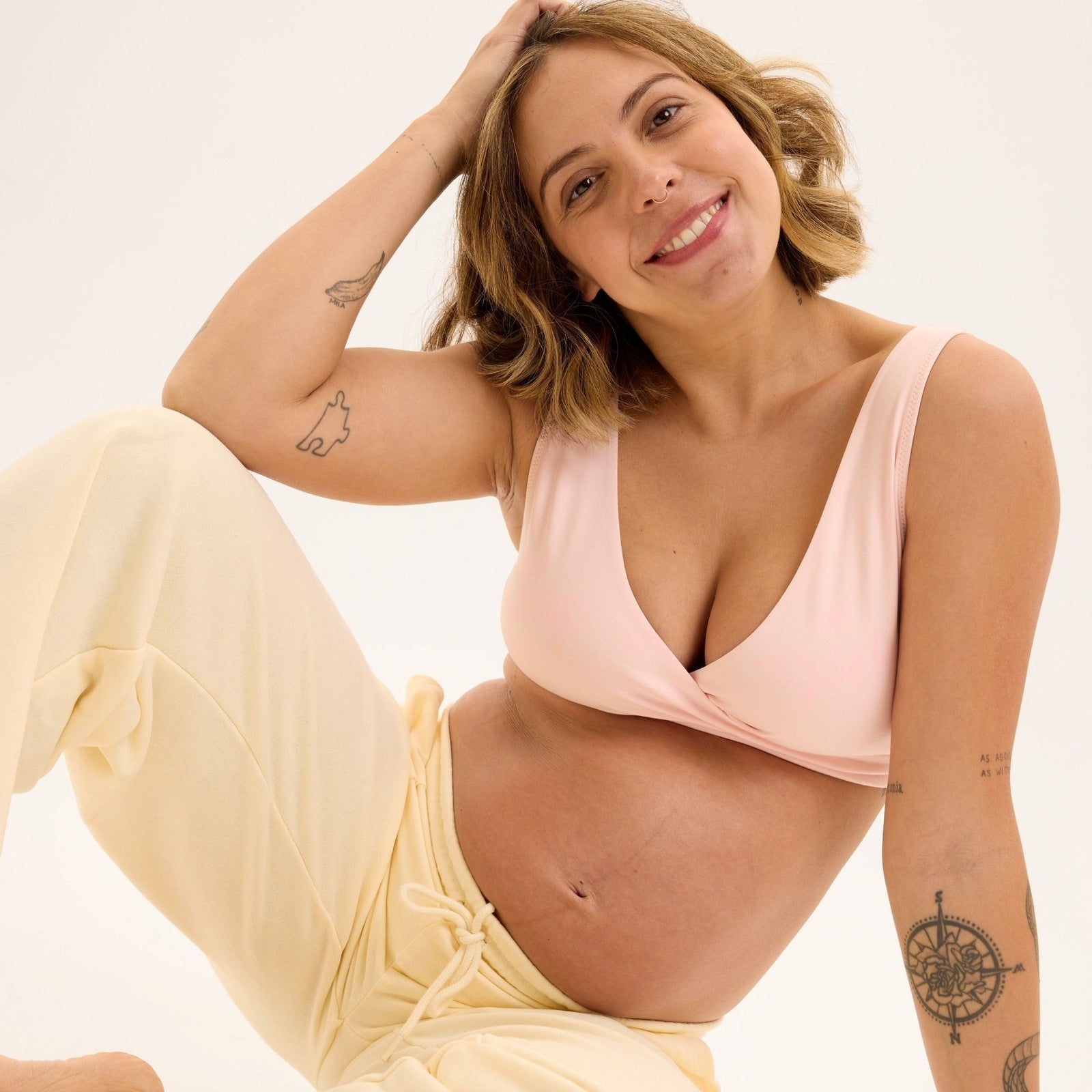
If you're breastfeeding, one handed access matters more than you'd expect when you're also holding a baby, a burp cloth, and possibly a cup of tea that's gone cold. Drop down cups or front clips make a genuine difference here. The Low Cut Diamond Maternity Bra is designed with this kind of easy access in mind, with soft, lightly moulded cups that stay comfortable through repeated feeds.
"5 Stars"
"I’m bigger busted, but there was no issue with these bras. They were so comfortable with no bulkiness to them and wearing them to bed wasn’t as unpleasant as some other bras can be. I still wore them even when I stopped breastfeeding. The sizing was pretty much true to size, based on the sizing chart."
— RENAE, Everyday Maternity Bra

What if your size keeps changing?
If your size keeps changing over the following weeks and months, that's genuinely normal, and it doesn't mean you need an entirely new wardrobe every time. This is where fabric technology can help take some of the guesswork out of buying bras during a stage when your body isn't holding still. New Beginnings bras use UGrow™ technology, a stretch fabric weave designed to adapt across several cup sizes of change, so a single bra can realistically take you from the fuller early days through to a more settled supply later on, without needing to be replaced every few weeks.
How many postpartum bras do you actually need?
Most mums find three bras is a practical minimum in the postpartum period, on the logic of one to wear, one in the wash, and one spare for the days that don't go to plan. Beyond that baseline, it's worth having a mix of styles for different parts of your day rather than relying on one bra for everything.
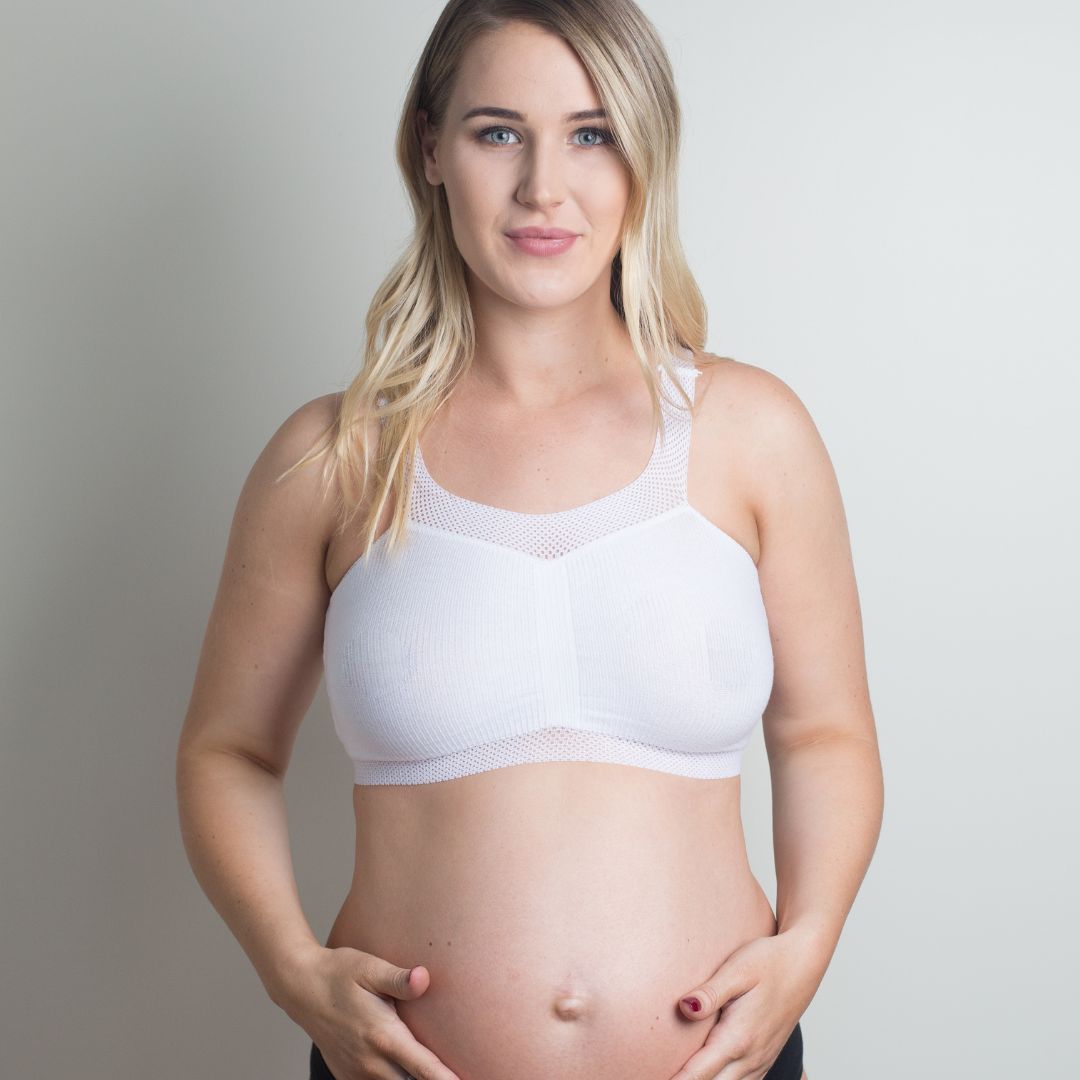
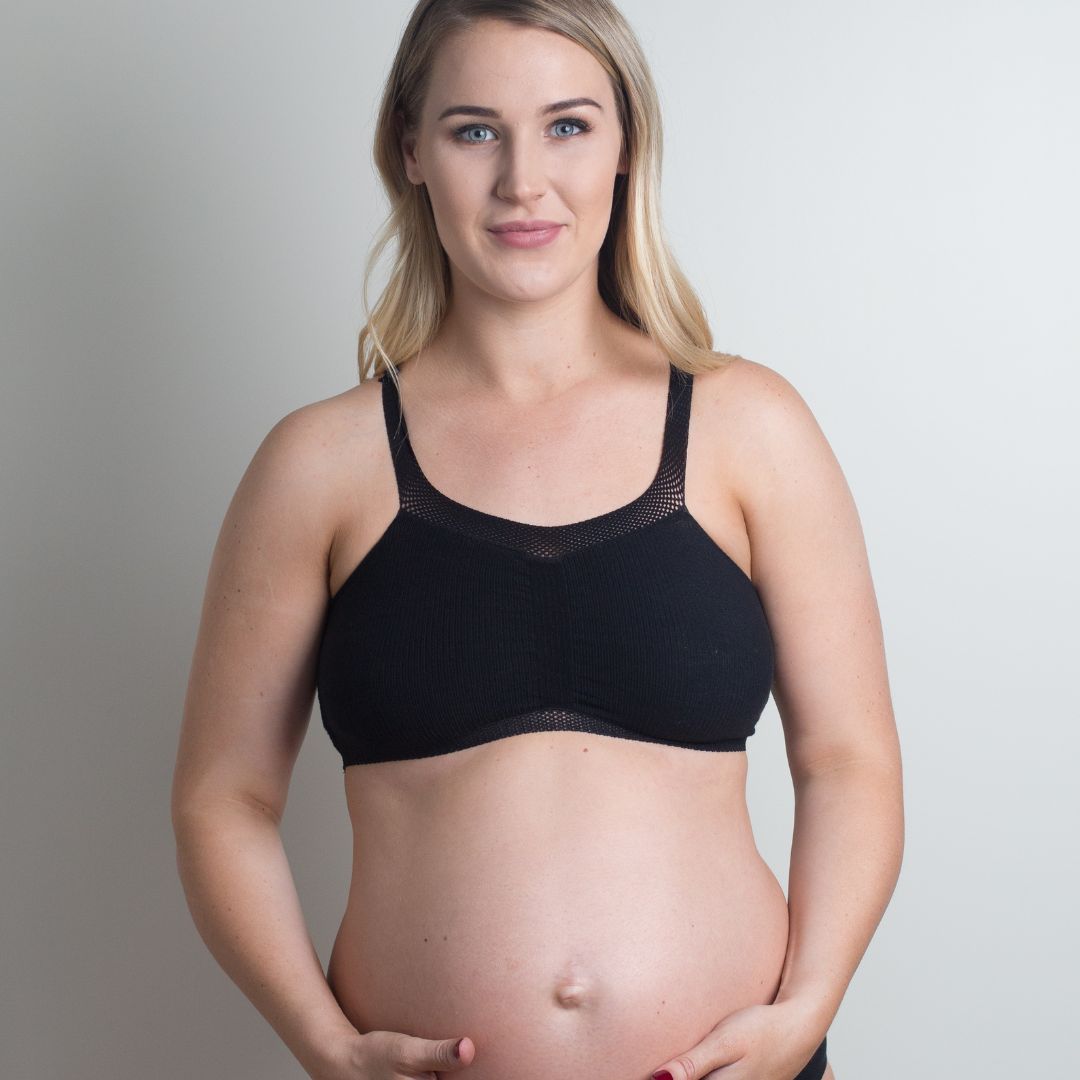
A soft, seamless style like the Lounge Crop Top Bra is worth having for overnight and low key days at home, when gentle support matters more than shaping. If you're getting back into gentle movement, a supportive option like the Active Maternity Bra is worth having on hand, since regular sports bras rarely accommodate a fuller, more sensitive chest comfortably. And as feeding routines start to change further down the track, a transitional style such as the Easyfeeding Bra is designed to flex with fluctuating size as your body adjusts again.
What should be in your postpartum bra toolkit?
If you're building out your postpartum drawer from scratch, here's a simple starting point.
- Everyday Maternity Bra: all day wire free support for the early weeks
-
Low Cut Diamond Maternity Bra: easy access, lightly moulded cups for frequent feeds
- Easyfeeding Bra: flexible support as your feeding routine changes
You can browse the full range in the postpartum product collection if you'd rather see everything in one place.
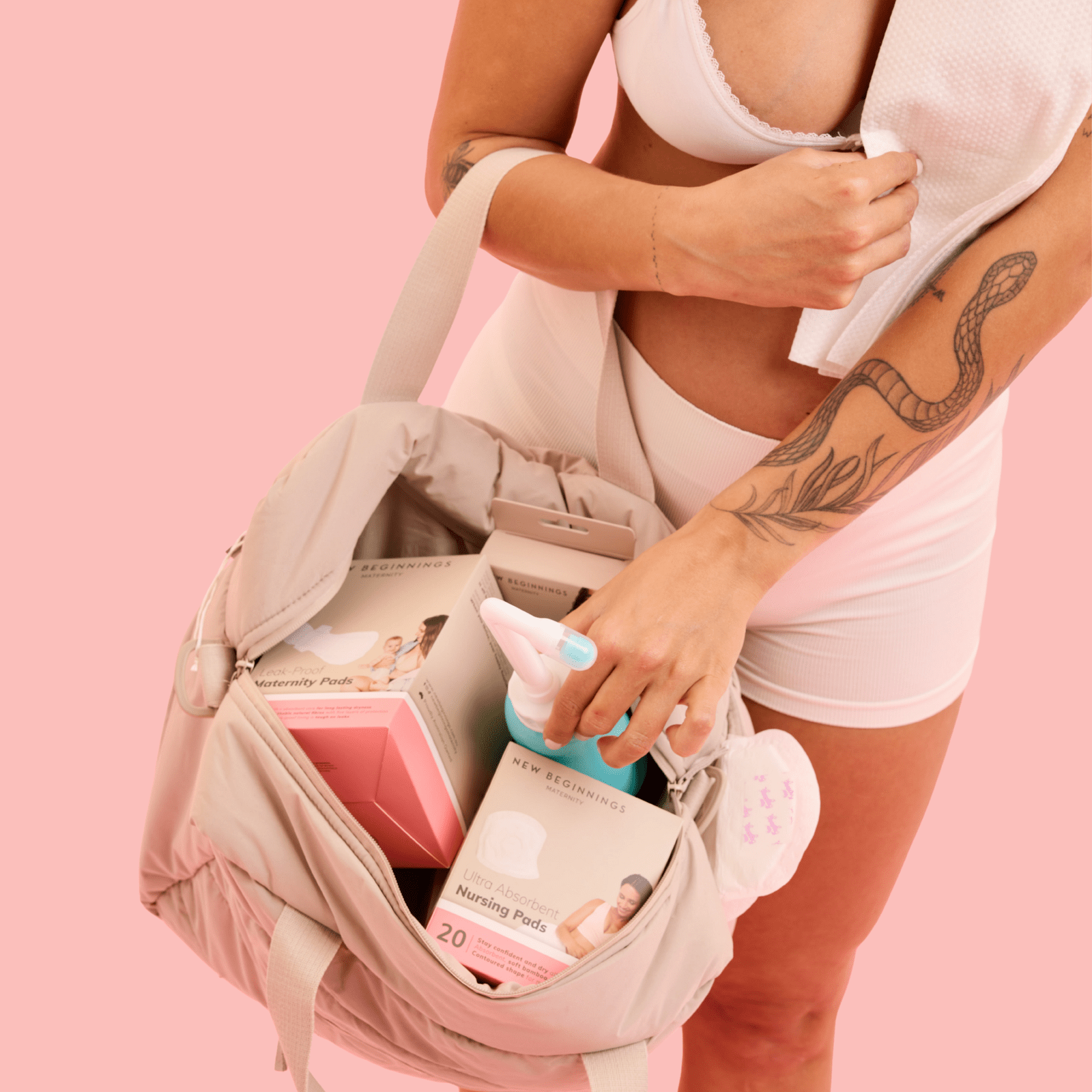
Bra fit is really just one piece of the wider postpartum recovery picture. A lot of mums are sorting this out around the same time they're stocking up on Maternity Pads, so it's worth grabbing both while you're at it. You'll find the rest of what's useful in those first few weeks in the postpartum product collection.
It's worth saying too, the way your bra fits is only one small piece of a much bigger adjustment happening in these months. How your body looks and feels after birth can bring up a lot, and it's completely okay if that's part of what's going on for you right now. There's no rush to feel a certain way about any of it, and support is available if you want to talk it through [3].
You don't need to have this all figured out in week one. Bra fit after birth is a moving target, and that's not a flaw in your planning, it's just what a body doing this much work looks like. Remeasure when it feels right, keep a few different styles on hand for different parts of your day, and give yourself the same patience you'd give a friend going through exactly the same thing.
Whatever stage you're at, from the first overwhelming days to months down the track, your comfort is allowed to be the priority. You'll get there.
More from the Spill the Milk blog
- Maternity vs Nursing Bras: What's the Difference, and Do I Need Both?
- 10 Tips for a Pain Free Breastfeeding Experience
- Postpartum Pads vs Disposable Undies: Which is Right for You?
- Healing Postpartum Foods and Nutrients

Frequently Asked Questions
1. When should I get remeasured for a bra after having a baby?
A good rule of thumb is once around one to two weeks after birth, once the initial fullness from your milk coming in has settled, and again around six weeks once your supply has regulated. If anything feels uncomfortable in between, that's your sign to remeasure sooner rather than waiting. You can check your numbers against the New Beginnings size chart anytime.
2. Why doesn't my old bra fit after birth?
Your pre pregnancy bra was fitted to a body that's changed shape, size, and tissue composition through pregnancy, birth, and breastfeeding. Underwire in particular tends to stop sitting properly once your breasts fill or change shape, which is why most mums move into wire free maternity and nursing bras for this stage.
3. How many nursing bras do I actually need after birth?
Most mums find three is a practical baseline, one to wear, one in the wash, and one spare. Beyond that, having a mix of styles, like the Everyday Maternity Bra for daily wear and the Easyfeeding Bra for later on, covers you as your needs shift.
4. Can I keep wearing an underwire bra after having a baby?
It's generally best to avoid underwire in the early postpartum weeks, since pressure from wire sitting incorrectly has been linked to blocked ducts in breastfeeding mums. Most mums find wire free styles more comfortable through this stage, and our guide on maternity versus nursing bras breaks down what to look for instead.
5. When will my breasts settle into a normal size after birth?
The intense fullness from engorgement usually eases within one to two weeks as your milk supply regulates, though your overall size may stay different from your pre pregnancy size for as long as you continue breastfeeding [1]. If you're finding feeding uncomfortable during this adjustment, our pain free breastfeeding guide has practical tips.
6. What's the best bra to sleep in during the early postpartum weeks?
Look for something soft, seamless, and completely wire free, since your chest is likely to be sensitive and fuller than usual overnight. A style like the Lounge Crop Top Bra is designed specifically for gentle, low-pressure support, and you'll find similar options in the nursing and breastfeeding collection.
7. What other postpartum products should I have on hand besides bras?
Bras are just one part of it. Most mums also keep Disposable Postpartum Undies on hand for the first few weeks, alongside pads and cooling relief for perineal healing. You can see the full range in the postpartum care collection.