Pumping in the fourth trimester: the real version
Picture it. The house is quiet, the baby monitor is glowing, and you're typing "how often should I pump" into your phone with one thumb. Sound familiar?
The first 12 weeks after birth, often called the fourth trimester, come with a steep learning curve. Expressing breast milk can buy you a little freedom, let someone else take a feed and build a small freezer stash. It can also raise a hundred new questions.
This guide tackles the big three: when to start pumping breast milk, how often to pump, and the surprises no one mentions at antenatal class.
When to start pumping breast milk
Timing comes down to one thing: how feeding is going right now.
Feeding at the breast is going smoothly? Hold off for a bit. Supply needs roughly a month to find its rhythm, so plenty of families introduce a regular expressed feed somewhere around 4 to 6 weeks. Until then, hand expressing a little before a feed can take the edge off an overfull breast and make latching easier (The Royal Women's Hospital).
Baby can't feed at the breast yet? Perhaps they arrived early, are unwell or are in special care. In that case, start expressing as soon as you can after birth. Colostrum, your very first milk, comes out best by hand, and a pump can join in alongside (The Royal Women's Hospital).
Other good reasons to reach for the pump (Better Health Channel):
- Topping up after a breastfeed
- Lifting a supply that needs a boost
- Easing breasts that feel rock hard
- Handing a night feed over to your partner
- Prepping for your return to work
Still unsure which camp you're in? A quick chat with your midwife, child and family health nurse or a lactation consultant can clear it up.
How often to pump: building a newborn pumping schedule
Your body works on supply and demand. Each time milk is removed, it gets the message to make more. So the best rhythm is one that mirrors how often your baby feeds.
Exclusively pumping, or trying to build supply? Aim for 8 to 10 sessions across 24 hours, with at least one during the night (The Royal Women's Hospital). Little and often beats long and rare (Australian Breastfeeding Association).
Here's what 8 sessions, about 3 hours apart, could look like:
- 6am, 9am, 12pm, 3pm, 6pm, 9pm, 12am and 3am
Mostly feeding at the breast? One session a day is usually enough to tuck some milk away. Straight after the first morning feed is a popular time, as many women feel fullest then.
How long should each session take? Roughly 15 minutes. Once the flow tapers off, give it a couple more minutes to coax out another let-down. Going past 30 minutes rarely adds much (Australian Breastfeeding Association).
What's a normal amount? Early volumes are tiny, and that's by design. A rough guide per feed (Australian Breastfeeding Association):
|
Baby's age |
Amount per feed |
|---|---|
|
First 24 hours |
2 to 10ml |
|
24 to 48 hours |
5 to 15ml |
|
48 to 72 hours |
15 to 30ml |
|
72 to 96 hours |
30 to 60ml |
Between 1 and 6 months, the average baby takes about 750 to 800ml a day, with plenty of natural variation.
Pumping tips for new mums
Small changes, big difference. Try these to make expressing breast milk run more smoothly.
- Set up your spot. Water bottle, snack, phone charger, done. A calm body lets milk flow more easily (Raising Children Network).
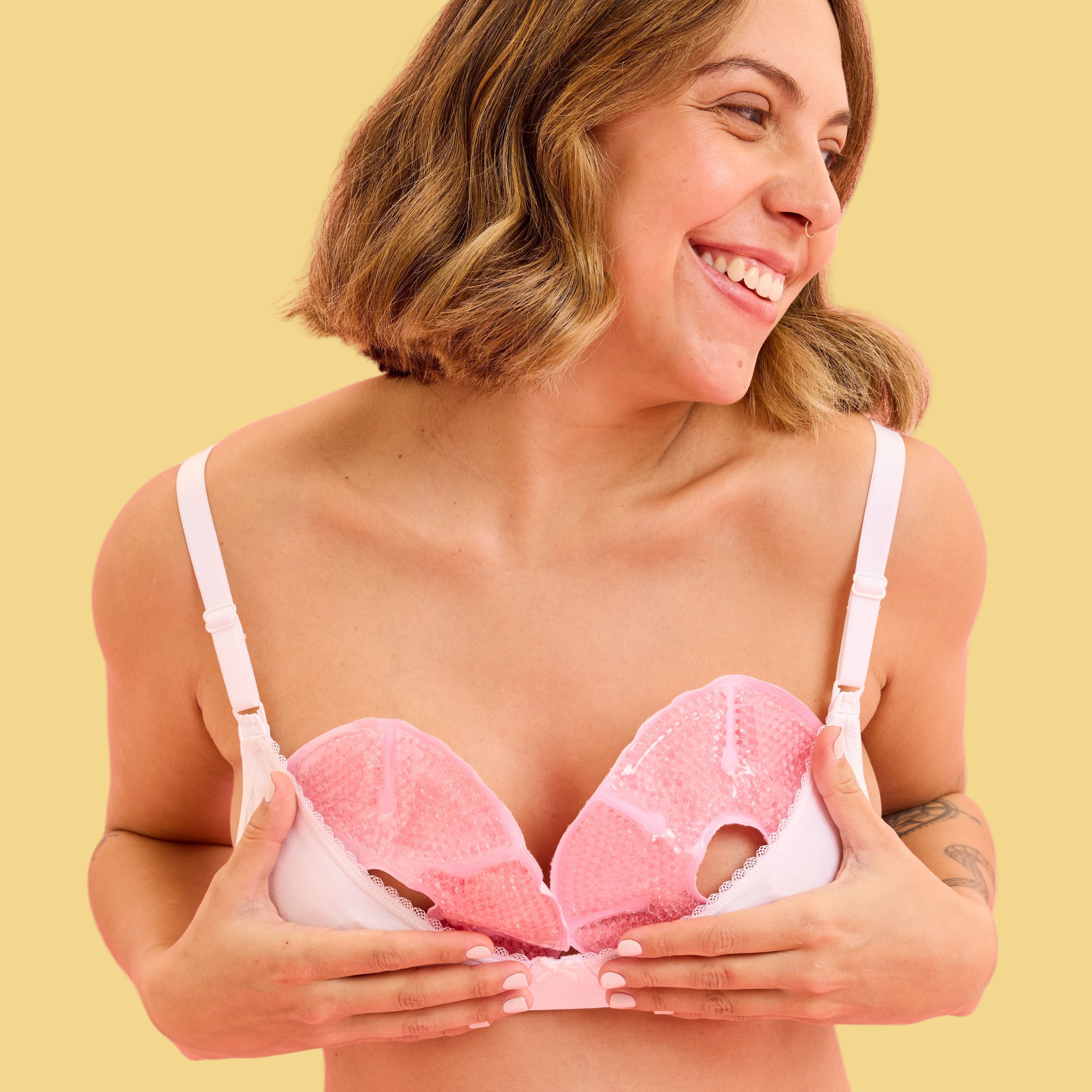
- Add some warmth. A warm cloth, one of our hot and cold breast packs or a gentle breast massage beforehand helps get things moving.
- Bring baby to mind. If you're apart, a photo, a short video or even their singlet can help trigger a let-down.
- Comfort first, power second. Maximum suction doesn't mean maximum milk, and it can leave you sore. Go for the strongest setting that still feels comfortable (Better Health Channel).
- Get your flange size right. Too big or too small can pinch, rub and leave milk behind. Your midwife or a lactation consultant can check the fit.
- Finish with your hands. A minute or two of hand expressing at the end helps drain the breast more fully.
- Dress for the job. A soft nursing bra makes quick sessions and hands-free pumping far simpler.
How long expressed milk keeps (Raising Children Network):
|
Where |
How long |
|---|---|
|
Room temperature (26°C or lower) |
6 to 8 hours |
|
Fridge (5°C or lower, at the back) |
Up to 72 hours |
|
Freezer compartment inside the fridge |
2 weeks |
|
Freezer with its own door |
3 months |
|
Deep freezer (-20°C or lower) |
6 to 12 months |
Date every breast milk storage bag, use the oldest first, and skip the microwave when warming.
What nobody tells you about pumping
A few truths we wish someone had shared sooner.
- The pump isn't a measuring jug. Your baby removes milk far more efficiently than any machine, so a small yield doesn't mean a low supply.
- Yields go up and down. Morning sessions are often the most generous, while evenings tend to be slower. That's normal.
- There's a learning curve. Early sessions can feel clumsy and slow. Your body needs time to warm up to the pump (Better Health Channel).
- The dishes multiply. Valves, membranes, bottles, repeat. A second set of parts can save your sanity at midnight.
- It should never hurt. A tugging feeling is fine. Pain, cracked nipples or nipples turning white are a cue to check your flange size and suction.
- Feelings are part of it. Some women find pumping calming, others find it draining. Whatever you feel is OK, and a fed baby is what counts.
- Freezer goals on social media aren't real life. A handful of bags in the freezer is a genuine win.
If pumping hurts or your supply is worrying you, talk to your midwife or GP, or call the Australian Breastfeeding Association's National Breastfeeding Helpline on 1800 686 268.
Not sure where to turn? Our guide on why breastfeeding support matters (and where to find it) is a good place to start.
Wearable breast pumps: worth the hype?
For mums juggling a lot, often yes. A wearable breast pump tucks inside your bra with no tubes or cords, so you can express while making toast, replying to messages or settling your little one.
Our Wearable Breast Pump, powered by LacTech™ technology, is designed for exactly those moments:
- 4 pumping modes, each with 9 levels, so you can find what feels right
- Three flange sizes (19mm, 21mm and 24mm) plus a nipple ruler to help you find your fit
- Up to 2.5 hours of pumping on one charge, with USB-C charging
- Ultra-quiet and cordless, so you can pump around the house (or on a Teams call)
- Up to 180ml per cup, with a handy pour spout
Wearable, electric or both? Many mums use both. A wearable shines when you're on the move, and an electric pump like our Single Electric Breast Pump or the 3 In 1 Breast Pump is a great fit for your main session at home.
Whichever way you go, get the flange fit checked and team it with a supportive nursing bra.
Pumping FAQs
When should I start pumping breast milk? When breastfeeding is going smoothly, many families start around 4 to 6 weeks, after supply has had time to settle. If your baby can't feed at the breast, begin expressing as soon as possible after birth.
How often should I pump for a newborn? For exclusive pumping or building supply, aim for 8 to 10 sessions every 24 hours, with at least one overnight. If you mainly breastfeed, one session a day usually covers a backup supply.
How long should a pumping session last? About 15 minutes for most people. Carry on for a couple of minutes once the flow slows. More than 30 minutes is rarely needed.
How much breast milk should I pump? Expect small amounts at first, around 2 to 10ml per feed in the first 24 hours. Between 1 and 6 months, babies average about 750 to 800ml a day.
Can I use a wearable breast pump at night? Yes. With no tubes or cords, a wearable pump makes overnight sessions simpler and lets you stay tucked up in bed.
How long does expressed breast milk last in the fridge? Up to 72 hours at 5°C or below, kept towards the back of the fridge.
Find the rhythm that fits you
Every pumping journey looks a little different, and there's no gold star for doing it by the book. Start when it suits your family, keep sessions short and frequent, and be kind to yourself while you both figure it out. You've got this, mumma.
Want to make expressing a little easier? Browse our breast pumps and pumping essentials, and find the setup that fits your day.
This article is general information only and isn't a substitute for advice from your midwife, GP or lactation consultant.
Sources
- Expressing breast milk, The Royal Women's Hospital
- Exclusive expressing, Australian Breastfeeding Association
- Breastfeeding: expressing breastmilk, Better Health Channel
- Expressing and storing breastmilk, Raising Children Network
- Wearable Breast Pump, New Beginnings